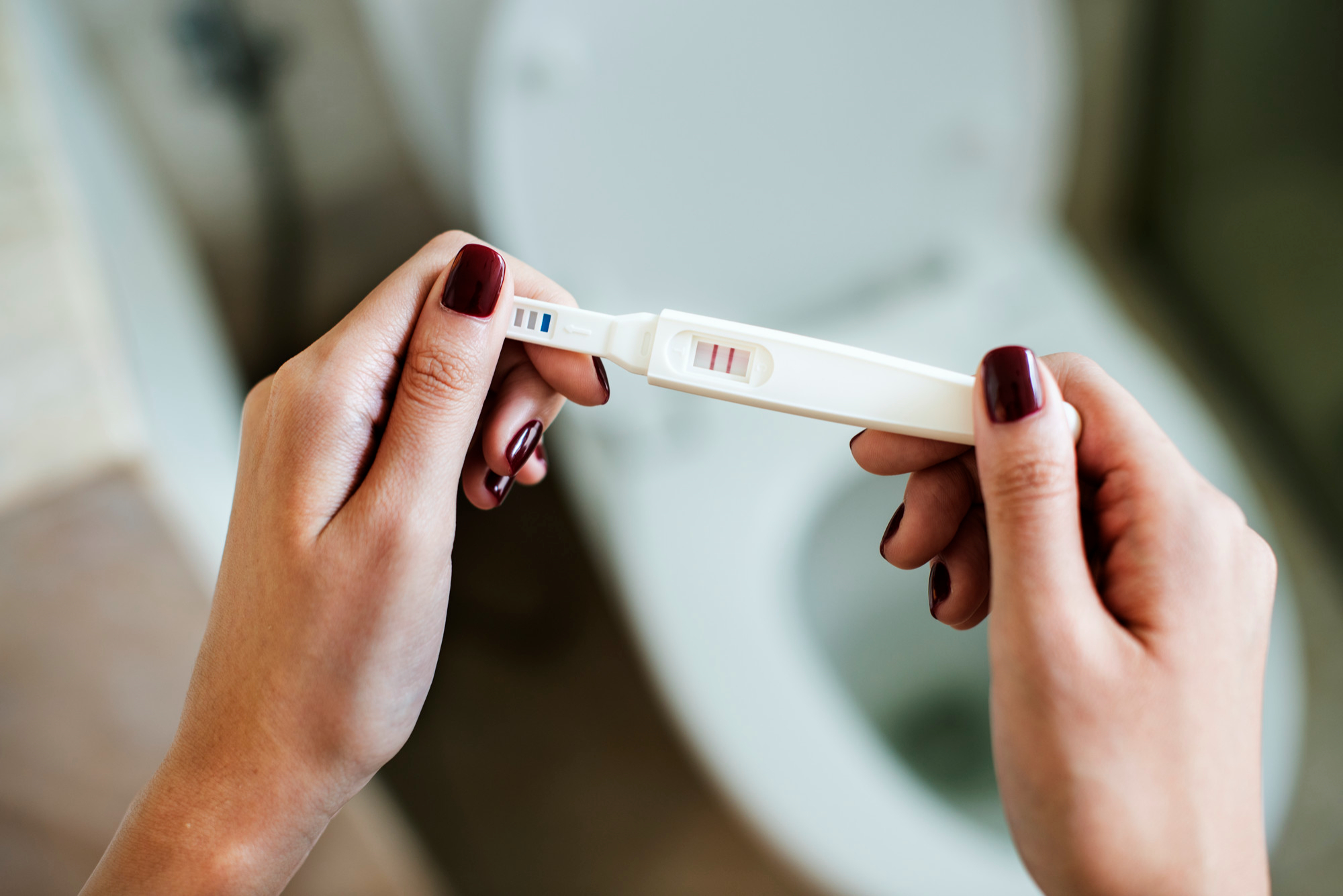
This guide is a complete, practical reference for pregnancy testing itself: how tests detect hCG, when to take one for the most reliable result, how the major types of tests differ, step-by-step instructions for using one correctly, how to read a line or digital result without second-guessing it for twenty minutes, what positive and negative results actually confirm, why false positives and false negatives happen, and what changes in situations like recent fertility treatment, a recent pregnancy loss, or irregular cycles. It closes with a full FAQ and a glossary of the terms used throughout. If you’re looking for a broader picture of early pregnancy symptoms alongside testing, our pregnancy symptoms guide and day-by-day early symptoms guide cover that ground in more depth than this article attempts to; this one stays focused on the test itself.
Key takeaways
- Pregnancy tests detect hCG (human chorionic gonadotropin), a hormone the placenta starts producing after implantation. No hCG in your system, no positive test — regardless of how you feel.
- Testing after a missed period gives the most reliable result. Testing earlier is possible with sensitive tests, but the earlier you test, the higher the chance of a false negative simply because hCG hasn’t risen high enough yet.
- Home urine tests are about 99% accurate when used correctly and at the right time — the “when” and “correctly” are doing most of the work in that statistic, not the test itself.
- False negatives are far more common than false positives. Testing too early, diluted urine, and misreading the result window cause the vast majority of unexpected negatives.
- A genuine positive line has color; an evaporation line does not. Reading a test within its specified time window is the single most effective way to avoid a misread result.
- Recent fertility treatment, a recent pregnancy loss, and certain rare medical conditions can all affect how a test result should be interpreted — these situations deserve their own section later in this guide.
- A positive test is a starting point, not a finish line. It confirms hCG is present; it does not confirm a due date, viability, or what you want to do next. Those are separate questions worth separate, unhurried answers.
How Pregnancy Tests Work: The Science Behind the Result
Every pregnancy test on the market — home, clinical, urine, or blood — is built around detecting the same single hormone. Understanding what that hormone is and how a test actually finds it explains almost everything else in this guide, from why timing matters so much to why a faint line can mean something real.
What hCG Is and Where It Comes From
The Hormone Behind Every Positive Test
Human chorionic gonadotropin, universally shortened to hCG, is a hormone produced by cells that will go on to form the placenta. It doesn’t exist in a person’s body in meaningful amounts outside of pregnancy (with a small number of rare exceptions covered later in this guide), which is what makes it such a reliable marker: unlike a symptom such as fatigue or nausea, which can have dozens of unrelated causes, hCG’s presence has a very short list of explanations, and pregnancy is overwhelmingly the most common one.
How hCG Levels Rise After Implantation
hCG enters the bloodstream once the fertilized egg implants in the uterine lining, typically six to twelve days after conception, and then rises quickly — commonly doubling every two to three days during the first several weeks, according to patient-education guidance from Mayo Clinic and the American Pregnancy Association. Some of that hCG is filtered into urine, which is what a home test detects, while a blood draw measures it directly and can pick up smaller amounts slightly earlier. This rapid rise is also why the difference between testing three days apart can be the difference between a negative and a clearly positive result — hCG in very early pregnancy isn’t rising gradually, it’s roughly doubling on a two-to-three-day clock.

How a Test Actually Detects hCG
Antibody Strips and the Chemistry of a Line
Inside a home pregnancy test is a paper strip coated with antibodies that bind specifically to hCG. When urine flows across the strip, any hCG present binds to a first set of mobile, dye-tagged antibodies, and that combined complex then binds again to a second, fixed line of antibodies further along the strip — the “test line.” Enough hCG produces enough bound dye to become visible as a line or symbol; too little hCG, and no visible line forms, or one is too faint to be read confidently at all. A second, separate “control line” uses different antibodies that always bind regardless of hCG, which is how a test confirms it’s working properly — a test with no control line, whatever the test line shows, should be treated as invalid and repeated with a new test.
Sensitivity Ratings Explained (mIU/mL)
Every test has a sensitivity threshold, expressed in milli-international units per milliliter (mIU/mL) of hCG — essentially, the minimum concentration of hormone the test is built to detect. Standard home tests are commonly rated around 25 mIU/mL, while tests marketed for “early result” or “early detection” are often rated closer to 10 mIU/mL, meaning they can pick up a positive at a lower hCG concentration and, in principle, a few days earlier. A lower mIU/mL threshold is not a different technology so much as a more sensitive version of the same antibody-strip design, and it matters most in the days right around a missed period, when hCG concentrations for different people can vary widely even at the exact same number of days past ovulation.
| Timing | Typical urine hCG range | Standard test (~25 mIU/mL) | Early-result test (~10 mIU/mL) |
|---|---|---|---|
| 10 days past ovulation (before missed period) | Highly variable; often under 25 mIU/mL | Often negative | Sometimes positive |
| Day of missed period (~14 DPO) | Often 25–100+ mIU/mL, but varies widely | Usually positive if pregnant | Usually positive if pregnant |
| 3–5 days after missed period | Typically well above 100 mIU/mL | Reliably positive if pregnant | Reliably positive if pregnant |
Ranges are general patterns drawn from Mayo Clinic and American Pregnancy Association patient-education material, not a guarantee for any individual cycle. hCG rise varies enough between people that these are useful expectations, not fixed rules.
When to Take a Pregnancy Test for the Most Reliable Result
Almost every unexpected pregnancy-test result — positive or negative — traces back to timing. This section walks through how to think about testing day, why “days past ovulation” is a more useful frame than the calendar date, and how to get the most accurate sample once you’ve decided to test.
Understanding the Testing Timeline
Days Past Ovulation vs. Days Past a Missed Period
Two different clocks get used when people talk about testing timing, and mixing them up is one of the most common sources of confusion. “Days past ovulation” (DPO) counts from the estimated day of ovulation, which is when conception would have happened; “days past a missed period” counts from the day a period was expected and didn’t arrive, which is roughly 14 days after ovulation in an average cycle. A test taken at “10 DPO” and a test taken “4 days before your missed period” can refer to the same day, but only if your luteal phase — the time between ovulation and your period — is close to the typical 14 days. For a full explanation of how conception dating and colloquial “week” language can diverge, our guide to very early signs at 1 week goes through this distinction in detail.
Why Cycle-Length Variability Changes the Math for Everyone
Ovulation doesn’t always happen on the same cycle day, even for people with generally regular periods, and the luteal phase itself can range from about 10 to 16 days depending on the person. This means two people who both test “on the day their period is due” may actually be testing at meaningfully different points past ovulation, and someone with a longer or more variable cycle may be testing “early” relative to ovulation without realizing it. If your cycles are irregular, testing based on a fixed calendar date is less reliable than testing based on how many days it’s been since you’d expect your period, given how long your cycles usually run — and if you don’t track ovulation directly, a slightly later test date is a reasonable way to compensate for that uncertainty.
Should You Test Early or Wait?
The Case for Waiting Until the Missed Period
Waiting until the day of a missed period, or a few days after, is consistently the timing most likely to produce an accurate result, because by that point hCG has usually risen well above what even a standard-sensitivity test requires. Mayo Clinic’s patient guidance specifically recommends testing after the first day of a missed period for this reason. Waiting isn’t just about avoiding disappointment from a false negative — it also avoids the confusing experience of a faint, hard-to-read line that neither confirms nor rules out pregnancy, which is far more common in the days immediately before a missed period than after it.
What “Early Detection” Tests Actually Promise
Tests marketed for early detection generally claim they can detect pregnancy a number of days before a missed period, and that claim is genuine — but it’s a claim about test sensitivity, not about when hCG reliably reaches a detectable level in every pregnancy. Even the most sensitive home test can’t detect hCG that isn’t there yet, and hCG levels at, say, 8 or 9 DPO vary enormously between different pregnancies. An early-result test bought with realistic expectations — as a “maybe, worth confirming later” tool rather than a guarantee — is a reasonable choice; one used with the expectation of a fully trustworthy answer several days before a missed period is more likely to lead to a false negative and unnecessary worry.
Getting the Most Accurate Sample
Why First-Morning Urine Matters
Urine collected first thing in the morning, after several hours without urinating overnight, is typically the most concentrated urine of the day, which means any hCG present is at its highest measurable concentration. This matters most in the days right around a missed period, when hCG levels may be just at or below a test’s detection threshold; a few hours of accumulated concentration can be the difference between a faint line and no line at all. Once hCG is reliably high — generally a week or more past a missed period — sample timing matters much less, and testing at any time of day is usually just as reliable.
Hydration, Timing, and Other Sample Factors
Drinking large amounts of fluid before testing dilutes urine and can lower the concentration of hCG enough to cause a false negative in an otherwise-positive early pregnancy, which is part of why “I tested negative in the afternoon after drinking a lot of water” is such a common story behind an initial false negative. Following the specific instructions for your test — how long to hold the strip in the stream, how many drops to apply, how long to wait before reading — also affects reliability more than people tend to assume; a rushed or incorrectly performed test isn’t measuring anything different, but it introduces avoidable error into a result that’s otherwise fairly dependable.
Types of Pregnancy Tests and How They Compare
“Pregnancy test” covers a wider range of products and procedures than the phrase suggests — from a $1 strip bought at a pharmacy to a lab-run blood test that measures an exact hCG number. The right choice depends mostly on how soon you want an answer, how much certainty you need, and whether a health care provider is already involved.
At-Home Urine Tests
Standard Strip and Cassette Tests
Strip tests (a thin paper strip dipped directly into a urine sample) and cassette tests (a plastic housing with a small well for drops of urine) work the same way internally and are typically the least expensive option. Cleveland Clinic notes that at-home urine tests are about 99% effective when used correctly and at the right time — with “correctly” and “right time” carrying real weight, since a large share of unexpected results trace back to one of those two factors rather than a flawed test. Results usually appear as one or two lines, or a plus/minus symbol, within a manufacturer-specified window, typically a few minutes.
Digital and Smart Tests
Digital tests use the same antibody-strip chemistry internally but interpret the line electronically and display a word (“Pregnant” or “Not Pregnant”) or a clear symbol instead of a line to read yourself. Their main advantage isn’t higher accuracy — the underlying chemistry is the same — it’s removing the ambiguity of judging a faint line, which is where a meaningful share of self-reported “confusing results” come from with line-based tests. Some digital tests also estimate how many weeks since ovulation, based on the concentration of hCG detected, though this is an estimate rather than a precise dating method and shouldn’t replace a provider’s dating based on an ultrasound.
Ovulation Tests vs. Pregnancy Tests: Don’t Mix Them Up
Ovulation predictor kits look similar to pregnancy tests and also use a line format, but they detect a different hormone — luteinizing hormone (LH) — for a different purpose (predicting ovulation, not detecting pregnancy). Because LH and hCG are structurally related, some people have used an ovulation test near a missed period and read a “positive” as pregnancy-related; this section of the guide exists specifically because that mix-up is common enough to be worth flagging early, and it’s covered in more depth later in the dedicated section on this exact confusion.
Clinical and Laboratory Tests
Qualitative Blood Tests
A qualitative blood test, drawn at a clinic or lab, answers the same yes/no question as a home urine test — is hCG present above a threshold — but blood tests are generally more sensitive and can detect pregnancy slightly earlier, sometimes seven to ten days after conception according to Cleveland Clinic’s patient-education material. Qualitative blood tests are used less often than home urine tests in everyday situations simply because they require a clinic visit and lab processing time for a result that a $10 home test can usually provide just as reliably a few days later.
Quantitative (Beta hCG) Blood Tests
A quantitative blood test measures the exact amount of hCG in the blood, reported as a specific number rather than a positive/negative result. This is the test used when a provider wants to track how a pregnancy is progressing — since hCG in a typical early pregnancy roughly doubles every 48 to 72 hours, according to Mayo Clinic and American Pregnancy Association clinical references — or when there’s a reason to investigate further, such as unclear dating, a suspected multiple pregnancy, or concern about an ectopic pregnancy or early loss. A single quantitative number, on its own, is less informative than a pair of numbers taken 48 hours apart, since the rate of change usually matters more than any single value.
| Test type | What it measures | Typical turnaround | Best used for |
|---|---|---|---|
| Home urine strip/cassette | hCG present above threshold (yes/no) | Minutes, at home | First-line testing for most people |
| Home digital test | hCG present above threshold (yes/no), displayed as words | Minutes, at home | Reducing ambiguity in reading a result |
| Clinical qualitative blood test | hCG present above threshold (yes/no) | Same day to a few days (lab-dependent) | Slightly earlier detection via a provider |
| Clinical quantitative (beta hCG) blood test | Exact hCG concentration | Same day to a few days (lab-dependent) | Tracking rise over time; investigating concerns |
Choosing Between Home and Clinical Testing
Cost, Access, and Turnaround Time
For most people in most situations, a home urine test taken at the right time is just as trustworthy as a clinical test, at a fraction of the cost and with no appointment required. Home tests are widely available over the counter, often for a few dollars, and results are immediate. Clinical testing adds cost and a visit, and for a simple yes/no answer it usually doesn’t add meaningfully more certainty once you’ve timed a home test correctly.
When a Provider Visit Adds Real Value
A provider visit and blood test become genuinely more useful — not just more formal — in specific situations: when a home test result is ambiguous or inconsistent across repeat attempts, when there’s a reason to track hCG over time (recent fertility treatment, prior ectopic pregnancy, or concerning symptoms), or when confirming a pregnancy is the first step toward starting prenatal care, which itself typically needs a provider visit regardless of how the pregnancy was confirmed. A positive home test is generally a reasonable basis to schedule that first appointment rather than a reason to seek a blood test purely to “double-check” a clear result.
Step-by-Step: How to Take a Home Pregnancy Test Correctly
Most testing errors are procedural, not chemical — the test itself works as designed, but a rushed sample, a misread timing window, or an expired kit introduces error that has nothing to do with whether you’re actually pregnant. This section walks through the process in order.
Before You Test
Reading the Instructions for Your Specific Test
Every brand’s instructions differ slightly in exact wording, but the details that matter most are consistent: how to collect the sample (midstream, dipped, or in a cup), how long to expose the strip, and — critically — the exact window of time in which to read the result. Skimming the box and testing “the way I remember doing it last time” is a common, avoidable source of error, especially since different tests in the same household (a leftover ovulation test box, a different brand of pregnancy test) can have meaningfully different timing requirements.
Checking the Expiration Date and Storage Conditions
Pregnancy tests have an expiration date printed on the packaging and, less obviously, on the individual foil pouch or test itself. An expired test’s antibody chemistry can degrade, which more often produces an unreliable negative than a false positive — meaning an expired test that says “not pregnant” is less trustworthy than the same result from a fresh test. Tests should also be stored at normal room temperature; a test left in a hot car or a freezing mailbox for an extended period may not perform as the manufacturer intended, even before its printed expiration date.
During and After the Test
Collecting and Applying the Sample
Whether you’re holding the absorbent tip directly in your urine stream, collecting a sample in a clean cup and dipping the strip, or using a dropper to apply drops to a cassette well, the goal is the same: get an adequate, uncontaminated sample onto the detection area for the length of time the instructions specify — typically just a few seconds. Applying too little sample, or applying it inconsistently (a quick dip instead of the full recommended time), can produce a weak or invalid result even when hCG is genuinely present at a detectable level.
Reading Results Within the Correct Time Window
Nearly every home test specifies both a minimum wait time (often one to three minutes) and a maximum time after which the result should no longer be trusted, commonly around ten minutes. A result read too early may show a false negative because the reaction hasn’t finished; a result read too late risks an evaporation line, described in detail in the next section, that can look deceptively like a faint positive. Setting a timer rather than estimating “about five minutes” is a small habit that meaningfully reduces misreads in either direction.
How to Read Your Results: Lines, Symbols, and What They Mean
This is the section most people actually come looking for — not the biology, but “what does this specific thing I’m looking at mean.” The short version: a genuine positive has color, a control line has to be present for any result to count, and time matters as much as the line itself.
Reading Line (Strip and Cassette) Tests
What Counts as a Positive Line
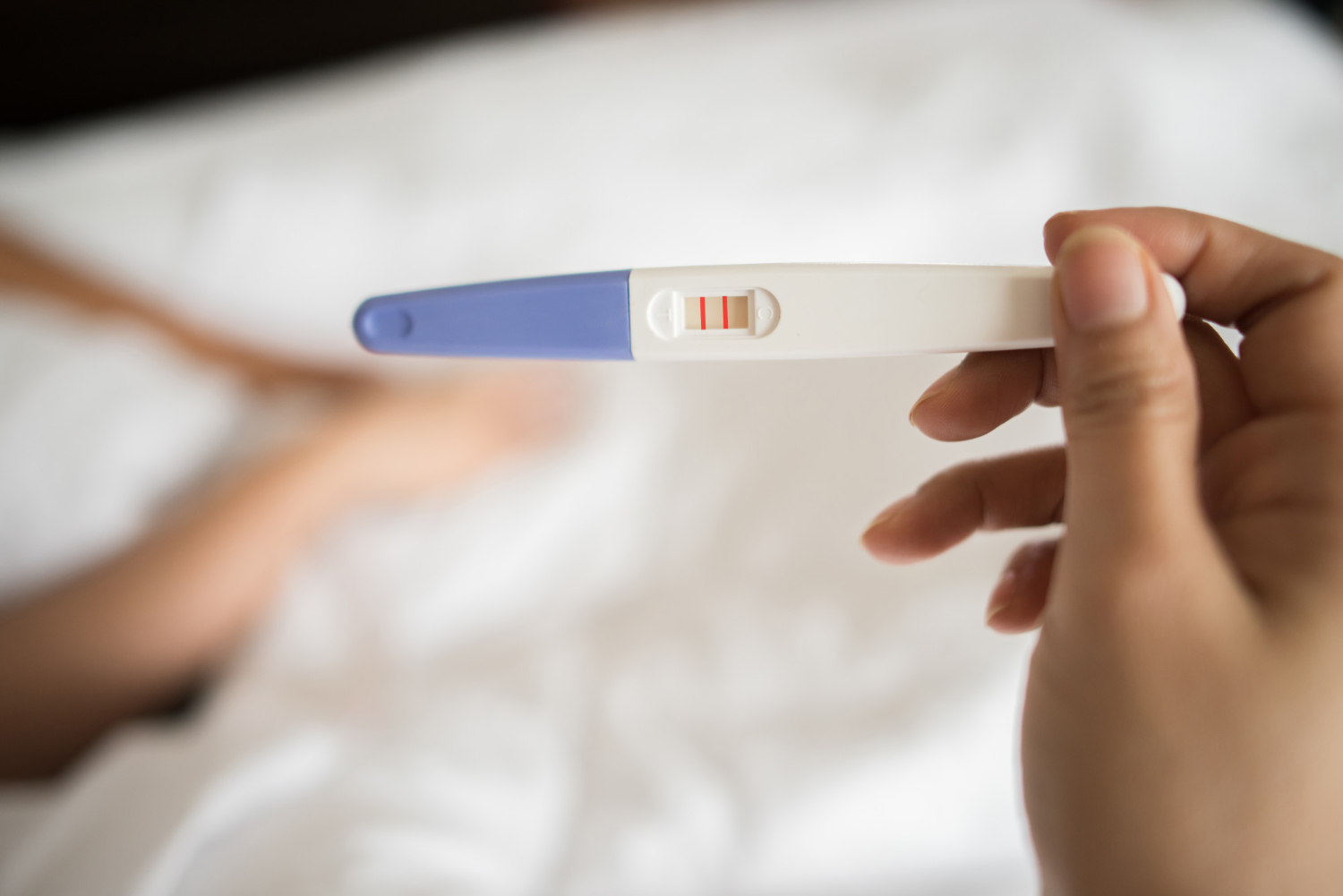
A valid positive result on a line test shows two lines: the control line (confirming the test worked) and a test line with visible color or dye, appearing within the manufacturer’s specified reading window. The test line does not need to be as dark as the control line to count as positive — hCG concentration, not line darkness relative to the control, determines a genuine result, and a lighter test line simply reflects a lower hCG concentration at the moment of testing, not a “weaker” or less valid pregnancy.
Faint Lines and What They Usually Mean
A faint but genuinely colored line most often means hCG is present but still at a relatively low concentration — common in the days right around a missed period, or when urine is more dilute than ideal. It is not a separate category from “positive”; if there’s real color, general patient-education guidance treats it as a positive result that’s simply reflecting an early or dilute hCG level, and it’s reasonable to confirm with a repeat test in 48 hours using first-morning urine, since hCG should rise noticeably over that window in a continuing pregnancy.
| What you see | Most likely meaning | Reasonable next step |
|---|---|---|
| Two clear, colored lines | Positive result | Confirm with a provider; consider a blood test if timing is uncertain |
| Control line + faint but colored test line | Likely positive; hCG present at a lower concentration | Retest in 48 hours with first-morning urine, or confirm with a provider |
| Control line + colorless line appearing after the read window | Likely an evaporation line, not a positive | Disregard results read outside the specified time window; retest properly |
| Control line only, no test line | Negative result | If a period is late or symptoms persist, retest in a few days |
| No control line at all | Invalid test, regardless of test line appearance | Discard and retest with a new kit |
Evaporation Lines vs. True Positives
Why Evaporation Lines Happen
An evaporation line can appear in the result window as urine dries on the test strip, typically well after the specified reading window has passed. Unlike a true positive line, an evaporation line usually has no actual color or dye in it — it’s a faint outline or shadow created by the drying process itself rather than by hCG-triggered antibody binding. Because it appears in the same location as a real test line, it’s easy to mistake for one, especially if a test is left sitting on the bathroom counter and glanced at again 20 or 30 minutes later.
How to Tell the Difference
Two checks reliably distinguish the two: timing and color. A result is only meant to be interpreted within its specified window (commonly a few minutes up to about ten); anything that appears after that window should be disregarded regardless of how it looks. Within the correct window, a genuine positive line has visible pink, blue, or the test’s designated color, while an evaporation line is typically colorless or gray. When in doubt, the most reliable fix isn’t squinting at the same test under different lighting — it’s taking a fresh test and reading it correctly the first time.
Reading Digital Tests and Invalid Results
What “Invalid” or “Error” Really Means
A digital test that displays “Invalid,” “Error,” or a blank screen after the specified wait time is reporting a test malfunction, not a pregnancy result — it means the internal reader wasn’t able to confirm the control line functioned correctly, for reasons that can include an insufficient sample, a manufacturing defect, or moisture exposure. It is not a form of “unclear positive” or “unclear negative”; it means the test needs to be repeated with a new kit rather than reread or interpreted further.
When to Discard a Test and Retest
Beyond invalid readings, a test should be discarded and repeated with a new kit any time the control line is missing on a line test, the sample was visibly insufficient, or the result was read well outside the specified time window in either direction. Reusing or re-examining the same physical test hours later, hoping a line will either appear or resolve into clarity, doesn’t produce a more accurate answer — it just extends the uncertainty. A fresh test, taken correctly, is faster and more reliable than trying to reinterpret an old one.
Understanding Positive Results
A positive test is a clear biochemical fact — hCG is present above the test’s threshold — but it’s easy to read far more certainty into it than it actually provides. This section covers what a positive result does and doesn’t confirm, and reasonable next steps once you have one.
What a Positive Result Confirms — and Doesn’t
hCG Confirms Pregnancy, Not Viability or Due Date
A positive test confirms that hCG is present in your body at a detectable level, which in the overwhelming majority of cases means a pregnancy has begun. It does not, on its own, confirm that the pregnancy is developing in the uterus rather than elsewhere (see the discussion of ectopic pregnancy later in this guide), that it will continue to develop, or exactly how far along you are — a home test can’t distinguish between someone who is 4 weeks along and someone who is 6 weeks along, since both will simply show “positive.” For an actual due-date estimate, a dating method based on your last period or an early ultrasound is what a provider will use, not the test itself.
Why an Early Positive Doesn’t Predict How the Pregnancy Will Progress
A positive result obtained very early — several days before a missed period, on a highly sensitive test — carries the same basic meaning as one obtained later, but it’s also more likely to arrive before the pregnancy’s ultimate outcome is settled, simply because more time remains for anything to happen one way or another. This isn’t a reason to avoid early testing if you want to know as soon as possible; it’s a reason to hold an early positive with realistic expectations rather than either premature certainty or premature worry, both of which are common reactions to a result obtained unusually early.
Reasonable Next Steps After a Positive Test
Confirming With a Provider or Blood Test
A clear home positive generally doesn’t need to be “double-checked” with a blood test purely for reassurance — home tests are reliable enough that a positive result taken at the right time is trustworthy on its own. A blood test becomes genuinely useful when there’s a specific reason for it: uncertain dating, a history of ectopic pregnancy or loss, symptoms that warrant investigation, or a provider’s own preference for a baseline number before your first visit.
When to Schedule Your First Prenatal Visit
Most providers are comfortable scheduling a first prenatal visit once a home test is positive, generally sometime between weeks 6 and 10 depending on the practice and whether anything about your history calls for an earlier look. If you’re also weighing what you want to do about the pregnancy itself — continuing it, considering adoption, or considering other options — that’s a separate and equally valid set of questions to work through in parallel; our pregnancy symptoms guide touches on where to find neutral, judgment-free information about those paths once a pregnancy is confirmed.
Understanding Negative Results and False Negatives
A negative result is the outcome most likely to be wrong, not because tests are unreliable, but because negative results are disproportionately produced by testing too early — a timing problem, not a test-quality problem. This section covers why that happens and what a reasonable retest plan looks like.
Common Reasons for a False Negative
Testing Too Early
The single most common cause of a false negative, by a wide margin, is testing before hCG has risen to a detectable level — which can easily happen even after a missed period if ovulation occurred later than expected that cycle, or if the pregnancy is simply a few days younger than assumed. Mayo Clinic’s guidance specifically notes that testing before a missed period increases the odds of a false negative even with a sensitive test, precisely because hCG concentration at that point is so variable between different pregnancies.
Diluted Urine and Timing Issues
Testing later in the day, after drinking a large amount of fluid, or right after urinating recently can all dilute the hCG concentration in a sample enough to push a borderline result below a test’s detection threshold. Misreading the result window — checking too soon, before the reaction has finished — produces the same practical outcome: a negative result that doesn’t accurately reflect the hCG actually present.
When and How to Retest
How Long to Wait Before Testing Again
If a negative result doesn’t match your expectations — a missed period, persistent symptoms, or simply strong reason to believe you could be pregnant — waiting about 48 to 72 hours before retesting gives hCG time to roughly double if a pregnancy is underway, which can turn a borderline negative into a clear positive. Retesting the next morning after a same-day negative rarely adds useful information; retesting a few days later does.
When a Negative Test Doesn’t Match Your Symptoms
A period that’s late by more than about a week, combined with a negative test, is a reasonable reason to test again with first-morning urine or to see a provider for a blood test, since blood tests can detect slightly lower hCG concentrations than most home tests. It’s also worth remembering that a late period has plenty of causes beyond pregnancy — stress, illness, significant weight change, and irregular ovulation among them — so a persistent negative alongside a late period isn’t automatically a sign that something is being missed by the test itself.
False Positives: Rare but Real Causes
True false positives — a positive result with no hCG-producing pregnancy behind it — are much less common than false negatives, but they do happen, and understanding the specific causes prevents unnecessary alarm or false hope in the situations where they apply.
Medical and Situational Causes
Recent Pregnancy Loss or Delivery
hCG doesn’t disappear from the body instantly after a miscarriage, abortion, or delivery — it declines gradually, and can remain at a detectable level for several weeks afterward depending on how high it had risen. A positive test taken during this window can reflect lingering hCG from the prior pregnancy rather than a brand-new one, which is a genuinely confusing situation covered in more detail in the special-situations section directly below.
Certain Medications and Fertility Treatments
Fertility medications that contain hCG itself — most commonly a “trigger shot” used to time ovulation during fertility treatment — will register as a positive on a home pregnancy test regardless of whether a pregnancy actually results, simply because the test is detecting the injected hCG rather than hCG from a pregnancy. This is a well-recognized, expected effect of the medication rather than a test malfunction, and it’s covered with specific timing guidance in the next section.
Rare Medical Conditions That Elevate hCG
Molar Pregnancy
A molar pregnancy (hydatidiform mole) is a rare condition in which abnormal tissue develops in the uterus instead of a typical pregnancy, and it can produce hCG levels that are unusually high for the apparent gestational age — clinical research published in the National Institutes of Health’s PMC database has documented hCG levels in molar pregnancies well above typical ranges for the same point in a normal pregnancy. A molar pregnancy still produces a genuinely positive test, so this isn’t a “false” positive in the technical sense, but it’s a situation where an unusually high hCG number, combined with symptoms like unusually severe nausea or early bleeding, is a reason for prompt medical evaluation rather than routine prenatal scheduling.
Other Uncommon hCG-Producing Conditions
A small number of rare medical conditions unrelated to pregnancy — including certain ovarian conditions and, very rarely, specific tumors — can cause the body to produce hCG independently. These situations are uncommon enough that they shouldn’t be a source of everyday worry after an ordinary positive test, but they’re part of why a persistently positive test alongside a confirmed non-pregnant state (for example, after a hysterectomy, or in someone who is not and cannot be pregnant) warrants medical evaluation rather than being dismissed as a faulty test.
Chemical Pregnancy: When a Positive Doesn’t Continue
What Happens Biologically
A chemical pregnancy is a very early pregnancy loss that occurs shortly after implantation, often around the time a period would be expected, before an ultrasound could detect anything. It registers as a genuine positive test — hCG really was present — followed by a negative test and, often, a period that arrives close to its expected time or just slightly late. This isn’t a false positive; it’s a real, if very early, pregnancy that didn’t continue, and it’s estimated to account for a meaningful share of all early pregnancy losses precisely because so many happen before most people would even think to test.
Emotional and Practical Considerations
A chemical pregnancy can be emotionally significant even though it happened very early and often without any physical symptoms beyond a slightly different period. There is usually no medical treatment needed and no reason to delay trying again once you feel ready, but it’s a real loss for many people, not merely a “false alarm,” and it deserves to be treated that way rather than minimized because of how early it occurred.
Special Testing Situations
Standard testing guidance assumes a fairly typical cycle and no recent hormonal interventions. The situations below are common enough to deserve their own dedicated coverage, since standard advice doesn’t quite apply the same way.
After Fertility Treatment
hCG Trigger Shots and False Positives
An hCG trigger shot, commonly used during ovulation induction, IUI, or IVF cycles to time ovulation or egg retrieval, introduces synthetic hCG directly into the bloodstream — and a home pregnancy test cannot distinguish that injected hCG from hCG produced by an actual pregnancy. Depending on the dose given, a trigger shot can remain detectable on a home test for roughly one to two weeks after the injection, which is why fertility clinics routinely advise against home testing until enough time has passed for the medication itself to clear, and instead schedule a specific blood test date.
Testing Timelines After IUI or IVF
Because both the trigger shot and the “two-week wait” itself make home testing unreliable in either direction, most fertility clinics set a specific day for a blood pregnancy test rather than leaving testing to personal judgment. If your clinic has given you a specific test date, that date accounts for both trigger-shot clearance and typical implantation timing for your specific protocol — testing significantly earlier on a home test is more likely to produce a confusing or misleading result than a genuinely useful one, in either direction.
After a Recent Pregnancy Loss or Termination
How Long hCG Can Linger
Following a miscarriage, abortion, or delivery, hCG declines gradually rather than dropping to zero immediately, and the higher it had risen, the longer it can take to clear completely — in some cases several weeks. A positive test in the weeks immediately following a pregnancy loss doesn’t necessarily mean a new pregnancy; it may simply reflect hCG still clearing from the prior one.
When a New Positive Might Be a New Pregnancy
A provider can help distinguish lingering hCG from a new pregnancy using a quantitative blood test — a declining number points to lingering hCG from the prior pregnancy, while a rising number suggests a new one. If you’ve resumed sexual activity capable of resulting in pregnancy soon after a loss, this distinction matters enough that a conversation with a provider, rather than a home test alone, is the more reliable path to an accurate answer.
Irregular Cycles, PCOS, and Perimenopause
Why Ovulation Timing Is Harder to Predict
Conditions like polycystic ovary syndrome (PCOS) and the hormonal fluctuations of perimenopause can make ovulation timing unpredictable or, in some cycles, absent altogether, which makes “days past ovulation” a much less reliable guide for when to test. Someone with irregular cycles may not know they’ve ovulated at all until a period is late or a test is positive, which shifts the practical guidance toward testing based on how unusually late a period is relative to your own typical range, rather than a fixed day count.
Using Symptoms and Testing Together
In the context of irregular cycles, waiting for a period that’s clearly later than your own personal range — rather than a fixed 28-day assumption — combined with testing if it doesn’t arrive, is a more realistic strategy than trying to pinpoint a specific DPO. If irregular cycles make timing pregnancy tests consistently frustrating, that’s also worth raising with a provider on its own, separate from any single testing question, since irregular cycles can have underlying causes worth understanding regardless of pregnancy status.

Pregnancy Tests vs. Ovulation Tests and Other Mix-Ups
A handful of predictable mix-ups account for a lot of unnecessary confusion around testing. This section clears up the most common ones.
How Ovulation and Pregnancy Tests Differ
What Each Test Actually Measures
An ovulation predictor kit detects luteinizing hormone (LH), a hormone that surges roughly 24 to 36 hours before ovulation and is used to time intercourse or insemination for conception. A pregnancy test detects hCG, a completely different hormone that only appears after implantation. The two tests can look nearly identical — a strip with a control line and a test line — which is exactly why they’re easy to confuse when both are sitting in the same bathroom drawer.
Why an Ovulation Test Can Look “Positive” Near a Missed Period
Because LH and hCG are structurally similar hormones, some ovulation tests can produce a positive-looking line in response to hCG, particularly once hCG rises to a significant level. This means a “positive” ovulation test taken well after ovulation should have already occurred — especially right around a missed period — is sometimes actually responding to rising hCG rather than a genuine LH surge, and it’s not a substitute for an actual pregnancy test built and calibrated for that purpose.
Other Common Test Mix-Ups
Fertility Monitors and Apps vs. Test Strips
Fertility monitors and cycle-tracking apps estimate fertile windows and predicted ovulation based on data you enter or hormone levels the device measures, but they do not detect pregnancy, and a monitor’s “likely pregnant” prediction based on a temperature shift or missed predicted period is not the same as a positive hCG test. These tools are useful for planning when to try to conceive or when to test, but they can’t replace an actual pregnancy test for confirmation.
Combination and Multi-Function Test Kits
Some kits are sold as combination packs containing both ovulation and pregnancy tests, sometimes in visually similar packaging, which increases the odds of accidentally using the wrong strip. Reading the specific label on the individual test — not just the outer box — before testing is a simple habit that avoids this specific, easily preventable mix-up.
Pregnancy Test Accuracy by the Numbers
“99% accurate” is the number nearly every pregnancy test box advertises, and it’s not wrong — but it’s also a number that depends heavily on conditions the packaging doesn’t emphasize. This section unpacks what that statistic actually means in practice.
What “99% Accurate” Actually Means
Manufacturer Claims vs. Real-World Use
The 99% figure generally reflects accuracy under laboratory conditions, using urine samples with known hCG concentrations, tested exactly according to instructions. Real-world accuracy — across everyone who actually uses a test, at whatever day and time they happen to test, following instructions with whatever degree of care — is lower, not because the chemistry is different, but because real-world testing introduces variables the laboratory number doesn’t account for: testing too early, diluted samples, and misread timing windows chief among them.
Why Timing Affects Accuracy More Than Brand
Comparing two similarly-sensitive tests taken at the same point in a cycle, brand differences matter far less than timing does. A standard-sensitivity test taken after a missed period and a “premium” early-detection test taken five days before a missed period can easily produce opposite results on the exact same pregnancy, simply because hCG concentration at those two different timepoints is so different. If accuracy is the priority, timing your test appropriately does more work than choosing a specific brand.
Comparing Test Sensitivity
Standard vs. Early-Result Sensitivity
As covered earlier in this guide, standard tests are commonly rated around 25 mIU/mL and early-result tests closer to 10 mIU/mL. The practical difference this makes shrinks the further past ovulation you test — by several days after a missed period, hCG in a continuing pregnancy has typically risen well past either threshold, so a standard test and a sensitive test are equally likely to show a clear positive at that point.
Does a More Sensitive Test Always Mean Better?
A more sensitive test isn’t automatically the “better” choice for everyone. Testing very early with a highly sensitive test increases the odds of catching a chemical pregnancy that would otherwise never have been detected — which some people want to know about, and others would rather not. There’s a reasonable, personal trade-off here between wanting information as early as possible and wanting to avoid the emotional weight of an extremely early positive that may or may not continue; neither preference is more correct than the other.
Buying, Storing, and Affording Pregnancy Tests
The practical, unglamorous side of pregnancy testing — where to get one, what it costs, and how to store it — matters more than it might seem, especially for anyone testing repeatedly over several months or managing cost carefully.
Where to Get a Pregnancy Test
Retail, Pharmacy, and Online Options
Home pregnancy tests are sold over the counter at pharmacies, grocery stores, dollar stores, and online, with prices ranging from around one dollar for basic single strip tests to considerably more for name-brand digital tests sold in multi-packs. No prescription or ID is required to purchase one in the United States, and there’s no meaningful accuracy difference between a name-brand test and a generic strip test with a comparable sensitivity rating — the FDA regulates both as over-the-counter diagnostic devices, and store-brand and bulk-bought strip tests from reputable sellers are a reasonable, budget-friendly choice for routine testing.
Free and Low-Cost Testing Resources
Community health clinics, some crisis pregnancy centers, Planned Parenthood locations, and local health departments often provide free or low-cost pregnancy testing, sometimes paired with a same-visit consultation. This can be a meaningful option for anyone testing without reliable income for a home kit, or for anyone who wants a test combined with same-day guidance about next steps, regardless of what those next steps turn out to be.
Storing and Handling Tests Properly
Temperature, Humidity, and Shelf Life
Pregnancy tests are generally designed to be stored at normal room temperature, away from excess humidity or extreme heat, and most have a shelf life of one to three years from manufacture, printed as an expiration date on the packaging. Storing tests in a bathroom cabinet exposed to daily shower steam isn’t ideal for long-term storage, though it’s unlikely to meaningfully affect a test used within its normal shelf life; a linen closet or bedroom drawer is a slightly better long-term choice for anyone buying in bulk.
| Question | General guidance |
|---|---|
| Do I need a prescription? | No — sold over the counter in the U.S. without age or ID restrictions |
| Is a pricier brand more accurate? | Not inherently; sensitivity rating (mIU/mL) matters more than brand name |
| How long can I store an unused test? | Typically 1–3 years from manufacture; check the printed expiration date |
| Can I use a test past its expiration date? | Not recommended — expired chemistry more often causes false negatives |
| Where can I get a free test? | Community health clinics, health departments, and some nonprofit pregnancy centers |
Using an Expired Test: What the Data Says
An expired test doesn’t necessarily fail outright, but the antibody chemistry that produces a reliable line can degrade over time, and that degradation is more likely to produce a false negative — a real pregnancy that the weakened test fails to detect — than a false positive. If an expired test is genuinely the only one available, a positive result is still meaningful, since a degraded test producing a false positive is unlikely, but a negative result from an expired test is less trustworthy and worth confirming with a fresh one as soon as possible.
When to Call a Health Care Provider About Testing
Most testing questions don’t need urgent medical attention — but a specific, smaller set of situations do, and knowing the difference matters.
Situations Worth a Same-Day Call
Severe Pain or Heavy Bleeding With a Positive Test
Severe abdominal pain, heavy bleeding (soaking through a pad in an hour or less), dizziness, or fainting alongside a positive pregnancy test are reasons to seek same-day medical care rather than waiting for a scheduled prenatal appointment. These symptoms can indicate a range of issues from a heavier-than-typical early loss to a genuine emergency, and they’re not something to evaluate through further home testing.
Signs That Could Point to an Ectopic Pregnancy
Sharp, persistent pain on one side of the lower abdomen, especially combined with a positive test and any vaginal bleeding, can be a sign of an ectopic pregnancy — a pregnancy developing outside the uterus, most often in a fallopian tube — which is a medical emergency according to MedlinePlus and general obstetric guidance. A positive home test cannot distinguish an ectopic pregnancy from a typical one; only a provider, usually with an ultrasound and sometimes serial quantitative hCG tests, can make that determination, which is exactly why this specific symptom pattern warrants same-day evaluation rather than a wait-and-see approach.
Situations Worth a Routine Appointment
Repeated Inconsistent Results
Getting different results on tests taken close together — a faint positive followed by a clear negative, or vice versa, without an obvious explanation like early timing or diluted urine — is worth mentioning to a provider even without urgent symptoms. A quantitative blood test can usually clarify what’s actually happening in a way that repeated home tests can’t.
No Period and Consistently Negative Tests
A period that’s significantly late, alongside consistently negative tests over more than a week, is a reasonable prompt for a routine appointment, since a late period has causes beyond pregnancy that are also worth identifying — including thyroid conditions, significant stress, weight changes, or hormonal imbalances like PCOS. A provider visit in this situation isn’t only about ruling pregnancy in or out; it’s about understanding what’s actually going on with your cycle.
Common Myths About Pregnancy Tests, Fact-Checked
Pregnancy tests attract as much informal folklore as any other part of early pregnancy — some of it harmless, some of it genuinely capable of causing a misread result or unnecessary worry. Here are the claims that come up most often, checked against what testing chemistry and clinical guidance actually support.
Claims About What Affects a Test’s Chemistry
Myth: Drinking Soda or Adding Anything to Urine Changes the Result
Various home “recipes” — adding bleach, vinegar, or soda to a urine sample and watching for fizzing or color change — circulate online as informal pregnancy tests. None of these have any real diagnostic basis; they don’t detect hCG, and any reaction they produce is a general chemical reaction to the acidity or composition of urine, unrelated to pregnancy. An actual pregnancy test, built specifically to bind hCG with antibodies, is the only reliable way to answer the question — and it isn’t meaningfully improved or worsened by anything you add to the sample beforehand.
Myth: A Darker Line Means Twins or a Stronger Pregnancy
Line darkness reflects hCG concentration at the moment of testing relative to that specific test’s design, not the number of fetuses or the “strength” or health of a pregnancy. hCG levels do tend to run higher in multiple pregnancies later on, but a single early test’s line darkness is influenced by so many other factors — exact testing day, sample concentration, brand-specific dye sensitivity — that it isn’t a reliable way to predict twins, and it shouldn’t be read as reassurance or its opposite about how a pregnancy is progressing.
Claims About Timing and Method
Myth: You Can Only Get an Accurate Result First Thing in the Morning
First-morning urine is the most concentrated and therefore the most likely to catch a lower hCG level, which matters most in the days right around a missed period. Once hCG is clearly elevated — typically a week or more after a missed period — testing at any time of day is generally just as reliable, so this guidance matters far more for early testing than for a test taken well after a missed period.
Myth: Holding Urine In or Drinking Less Water Boosts Accuracy
The useful version of this idea — avoid diluting your sample right before testing — gets exaggerated into advice to deliberately dehydrate beforehand, which isn’t necessary and isn’t a meaningfully better strategy than simply testing with a normal first-morning sample. Ordinary first-morning urine is already concentrated enough for reliable testing at an appropriate cycle day; extreme fluid restriction adds discomfort without adding real accuracy.
Claims About Birth Control and Interference
Myth: Hormonal Birth Control Causes a False Positive
Hormonal birth control — the pill, the patch, an IUD, an implant, or an injection — does not contain hCG and does not cause a false positive pregnancy test. If a positive test occurs while using hormonal birth control, it should be treated the same as any other positive: as a genuine result worth confirming with a provider, since no form of hormonal contraception is 100% effective and pregnancy, while uncommon, does still occur.
Myth: Common Medications Like Pain Relievers or Antibiotics Cause False Results
Everyday over-the-counter medications such as pain relievers, antihistamines, and most antibiotics do not interfere with home pregnancy test accuracy. The much shorter, genuine list of substances that can affect results is largely limited to hCG-containing fertility medications themselves, discussed earlier in this guide’s special-situations section — a distinction worth knowing so that an unrelated medication in your cabinet doesn’t become a source of unnecessary doubt about an otherwise clear result.
Pregnancy Testing in Special Populations: Birth Control, Breastfeeding, and Postpartum
A handful of situations change what a test result means or how it should be interpreted, even though the test itself works exactly the same way. This section covers the ones that come up most often outside of the fertility-treatment and recent-loss situations already covered earlier in this guide.
Testing While Using Birth Control
Why a Positive Test While on Birth Control Should Still Be Taken Seriously
No method of birth control is completely effective, and typical-use failure rates — accounting for missed pills, inconsistent use, or an IUD that has shifted — are higher than the “perfect use” statistics printed on packaging. A positive test while using birth control is a genuine positive and deserves the same next steps as any other positive result: confirmation and a provider visit, not dismissal because a contraceptive method was in use.
Testing With an IUD in Place
If a pregnancy does occur with an IUD in place, it’s more likely than average to be ectopic, according to general obstetric guidance, which makes the earlier warning signs — one-sided pain, bleeding — worth taking especially seriously in this specific situation. A positive test with an IUD still in place is a reasonable basis for a prompt, rather than routine, provider visit, both to confirm pregnancy location and to discuss whether and how the IUD should be removed.
Testing While Breastfeeding or Postpartum
Why a Missed Period Isn’t a Reliable Sign of Pregnancy Postpartum
Breastfeeding can suppress ovulation and delay the return of periods for months after delivery, which means the absence of a period after having a baby isn’t a reliable stand-in for “not pregnant” the way it is outside of the postpartum period. Ovulation can return before a period does, which means it’s possible to become pregnant again before your first postpartum period arrives at all — a fact that surprises many people relying on breastfeeding alone for contraception.
Hormonal Changes That Can Complicate Interpretation
hCG levels from a prior pregnancy typically clear within a few weeks after delivery, so a positive test more than about a month postpartum is unlikely to reflect lingering hCG from the birth itself and should be treated as a new, genuine result. If a positive test occurs sooner than that and the timeline feels ambiguous, a quantitative blood test can clarify whether hCG is declining (lingering from the prior pregnancy) or rising (a new one), the same approach used after a miscarriage or abortion described earlier in this guide.
Tracking Your Tests: A Simple Way to Stay Organized
Anyone testing more than once — whether across a single anxious week or over several months of trying to conceive — tends to benefit from a simple written record instead of trying to remember which day, which brand, and which result belonged to which test.
What’s Worth Recording
The Basics: Date, Cycle Day, and Brand
A simple log noting the calendar date, the estimated day past ovulation (if known), the brand and sensitivity of the test used, and the result is enough to spot patterns that memory alone tends to blur together after a few tests — particularly whether a faint line is getting darker over repeat tests, which is meaningfully different information than a single faint line viewed in isolation.
Noting the Reading Time, Not Just the Result
Because the timing window matters so much to accurate reading, it’s worth jotting down roughly when you read each test relative to when you took it, especially if you’re troubleshooting an inconsistent set of results. A “positive” read at 15 minutes and a “positive” read at 3 minutes are not equally trustworthy, even if both get written down simply as “positive” in a casual mental tally.
Bringing Your Notes to a Provider Visit
Why a Written Timeline Helps a Provider Help You
If you end up discussing inconsistent results, an early loss, or a fertility concern with a provider, a written timeline of test dates, brands, and results is more useful to them than a general recollection of “a few positives and negatives over the last couple of weeks.” It can also help a provider distinguish a normal, explainable pattern (early testing followed by a clear positive) from a pattern that’s worth investigating further.
Keeping Records in Context With Other Symptoms
If you’re also tracking symptoms alongside testing — timing of nausea, spotting, or other changes — keeping both records in the same place, or at least cross-referenced by date, gives a fuller picture than either one alone. Our guides to pregnancy symptoms and early pregnancy symptom timing include more detail on what’s typically worth tracking on the symptom side specifically.
Partners and Support: Being There During a Test
Taking a pregnancy test is rarely a purely clinical moment — it often carries real emotional weight, whatever the hoped-for outcome is. This section is for partners, family, or friends who want to be genuinely supportive during that specific moment, rather than well-meaning but unhelpful.
Before the Test
Respecting How Someone Wants to Test
Some people want company for a test; others strongly prefer privacy, even from a partner, and want to process a result alone before sharing it. Asking directly — “do you want me there, or would you rather I wait outside?” — respects that this is a genuinely personal preference with no single right answer, rather than assuming your presence is automatically wanted or unwanted.
Avoiding Pressure Either Direction
Pressure to test before someone feels ready, or pressure to delay testing when someone wants an answer, both add stress to a moment that’s already stressful enough on its own. The most supportive role is usually following the other person’s pace and stated preference, rather than pushing your own timeline for wanting to know.
After the Result
Responding to a Positive Result
A supportive first response to a positive test avoids assuming how the other person feels about it — even a wanted pregnancy can bring complicated, mixed emotions in the first few minutes, and an unplanned one even more so. Asking “how are you feeling about this?” rather than immediately expressing your own reaction first gives the person who tested room to share their actual response before yours potentially shapes or overrides it.
Responding to a Negative or Uncertain Result
A negative result can bring relief, disappointment, or a confusing mix of both, sometimes within the same conversation, particularly for anyone who has been trying to conceive or who is uncertain about how they feel about the possibility. An uncertain or faint result can be just as emotionally taxing as a clear one in either direction, simply because it extends the waiting rather than resolving it — patience and a low-key offer to retest in a couple of days is usually more helpful than trying to interpret an ambiguous line together in the moment.
If You’re Pregnant and Not Sure What Comes Next
A positive test answers a factual question. What you want to do about it is a completely separate question, and there’s no timeline requirement to have an answer the same day, week, or even month. This section exists to point toward accurate, judgment-free information rather than to suggest any particular decision.
Giving Yourself Time to Think
You Don’t Have to Decide Anything Immediately
A positive test doesn’t obligate an immediate decision about parenting, adoption, or ending the pregnancy — it’s simply confirmation that gives you the option to start thinking clearly about all three, on whatever timeline your specific situation allows. Gathering accurate information about each option is not the same thing as choosing one, and it’s a reasonable, low-pressure first step regardless of which direction you’re leaning, or whether you’re not leaning anywhere yet.
Separating the Medical Fact From the Personal Decision
It’s worth deliberately treating “I am pregnant” and “here is what I’m going to do” as two separate facts, even though they arrived at the same moment. Keeping them separate in your own thinking — rather than feeling like the test itself decided something — tends to make the decision-making process feel less rushed and less like it’s being forced by the test result itself.
Where to Learn More About Your Options
Parenting, Adoption, and Other Paths
Whether you’re leaning toward parenting, exploring adoption, considering ending the pregnancy, or genuinely undecided, accurate and neutral information exists for every path, and looking into more than one option at once doesn’t commit you to anything. Our overview of pregnancy options and guide for anyone considering adoption are both written to inform rather than steer, and either is a reasonable starting point for exploring what a given path actually involves before deciding anything.
Finding Support Regardless of What You Choose
Financial concerns, relationship concerns, and simple uncertainty about the future are common regardless of which path someone eventually chooses, and none of them are a reason to decide faster than feels right. Our guide to unplanned pregnancy covers practical first steps and support resources that apply broadly, whatever you ultimately decide to do.
Pregnancy Tests and Multiple Pregnancies (Twins or More)
A question that comes up often enough to deserve its own section: can a pregnancy test tell you if you’re carrying twins? The short answer is not reliably, though there are some real patterns worth understanding.
What a Home Test Can and Can’t Tell You
Why a Home Test Can’t Diagnose Multiples
A home pregnancy test detects whether hCG is present above a threshold — it has no way to measure an exact concentration or distinguish “high because of twins” from “high because you tested later in the day with more concentrated urine” or “high because this individual pregnancy simply runs a naturally elevated hCG level.” Line darkness, a symbol appearing faster than expected, or any other visual cue from a qualitative home test is not a reliable indicator of a multiple pregnancy, however tempting it is to read into it during the anxious wait for an ultrasound.
What Actually Suggests Multiples Statistically
On average, hCG levels do tend to run higher in confirmed multiple pregnancies than in singleton pregnancies at the same gestational age, which is part of why an unusually high quantitative blood hCG number, especially combined with a family history of twins or use of fertility treatment, can prompt a provider to look closer with an early ultrasound. But the overlap between typical singleton and typical multiple hCG ranges is wide enough that a number alone, without an ultrasound, isn’t considered a diagnosis — a point Mayo Clinic’s hCG guidance also reflects in noting that unusually high levels can indicate several different things, multiples being just one of them alongside miscalculated dating or, rarely, a molar pregnancy.
How Multiples Are Actually Confirmed
The Role of Early Ultrasound
An ultrasound, generally performed between about weeks 6 and 9, is the standard way multiples are confirmed, by directly visualizing more than one gestational sac or fetal heartbeat rather than inferring it from a hormone number. If a quantitative hCG number comes back higher than expected for your estimated dating, a provider may schedule an ultrasound somewhat earlier than they otherwise would, specifically to check for either multiples or a dating discrepancy.
Why Waiting for Confirmation Is Worth the Patience
It’s understandably tempting to search for early clues — a fast-appearing line, a higher-than-remembered hCG number from a friend’s pregnancy — but none of these substitute for an ultrasound’s direct visual confirmation. Treating a home test result, or even an early single hCG number, as inconclusive on the multiples question specifically (while still fully trusting it for the basic positive/negative question) is the most accurate way to hold that uncertainty until an ultrasound settles it.
Common Test-Reading Mistakes and How to Avoid Them
Most of the confusing test experiences described earlier in this guide trace back to a small, repeatable set of avoidable mistakes. Listing them together here, in one place, makes them easier to recognize and sidestep before they happen rather than after.
Mistakes That Happen Before Reading a Result
Not Setting a Timer
Estimating “a few minutes” rather than setting an actual timer is one of the most common, entirely preventable sources of a misread result, since both reading too early and reading too late change what you’re actually looking at. A phone timer set for the exact minimum and maximum times printed in the instructions removes the guesswork completely and takes less effort than repeatedly checking a test out of anxiety during the wait.
Testing With the Wrong Sample Timing
Testing later in the day after normal fluid intake, rather than with first-morning urine, is a common and avoidable way to reduce a test’s chance of catching a borderline-low hCG level. This mistake matters most in the days right around a missed period and matters far less once hCG is reliably elevated, so it’s worth being most careful about sample timing specifically during that early window rather than assuming it matters equally at every stage.
Mistakes That Happen While Reading a Result
Interpreting a Result Outside the Valid Window
Checking back on a test 20, 30, or 60 minutes after taking it — often because the first look was inconclusive — is how a genuinely negative test can appear to show a faint line later, purely from evaporation, as covered earlier in this guide. Once the valid reading window has closed, the test should be considered read; any further changes in appearance after that point aren’t meaningful and shouldn’t be factored into the result.
Comparing Results Across Different Test Brands or Batches
Different tests can have different sensitivity ratings, different dye chemistry, and even different line thicknesses by design, which makes comparing a line’s appearance across two different brands or box lots an unreliable way to judge whether something has “changed.” If you want to track whether a line is getting darker over time — a reasonable way to gauge whether hCG is rising — using the same brand and lot, tested at a similar time of day, gives a much more meaningful comparison than switching brands between tests.
Choosing the Right Test for Your Situation
With so many options on a pharmacy shelf, it helps to match the type of test to what you’re actually trying to accomplish, rather than defaulting to whichever box has the most prominent marketing claim.
If You Want the Earliest Possible Answer
What to Look For
If early detection matters most to you, look specifically at the printed sensitivity rating (a lower mIU/mL number, commonly around 10) rather than marketing phrases like “test X days sooner,” which describe the same underlying sensitivity in different words depending on the brand. Pairing a sensitive test with first-morning urine and realistic expectations — treating an early result as informative but not final — gets the most out of early testing without over-relying on it.
What to Accept About the Trade-Off
Testing earlier with a sensitive test comes with a higher chance of a false negative simply because hCG may not have risen enough yet, and a slightly higher chance of catching a very early loss (a chemical pregnancy) that a later test might never have detected at all. Neither of these is a flaw in the test — they’re the direct, honest trade-off of wanting information sooner rather than waiting for a more settled answer.
If You Want the Simplest, Least Ambiguous Result
Why a Digital Test May Be Worth the Extra Cost
If reading a faint line accurately feels stressful or uncertain, a digital test removes that specific source of ambiguity by displaying a word rather than requiring visual interpretation of a line’s color and thickness. This doesn’t make the result any more or less accurate than a line test with the same sensitivity — it simply removes one common point of human error from the process, which for some people is worth the extra cost on its own.
Why a Basic Strip Test Is a Reasonable Choice for Routine Testing
For anyone testing repeatedly over weeks or months — while trying to conceive, for example — inexpensive strip tests bought in bulk are a practical, reliable choice, since the core chemistry performs the same as a pricier single test as long as the sensitivity rating and expiration date are appropriate. Reserving a single higher-cost digital or highly sensitive test for the specific day you expect the clearest answer, rather than using one for every test in a longer testing window, is a reasonable way to balance cost and confidence.
Pregnancy Test Regulation and Quality: What FDA Approval Actually Means
Every over-the-counter pregnancy test sold in the United States goes through a regulatory process most people never think about while standing in the pharmacy aisle. Understanding it explains why store-brand and name-brand tests can be equally trustworthy.
How Pregnancy Tests Are Regulated
FDA Oversight of Home Use Tests
The U.S. Food and Drug Administration regulates home pregnancy tests as in vitro diagnostic devices, meaning manufacturers must demonstrate a test’s accuracy and reliability before it can be sold over the counter. This regulatory requirement applies equally to a well-known national brand and a store’s generic version — both have to meet the same basic performance standards to reach store shelves, which is part of why price differences between brands reflect marketing and packaging far more than they reflect underlying test quality.
What Accuracy Claims Are Actually Based On
The accuracy percentages printed on packaging come from studies comparing the test’s results against a reference method (typically a laboratory blood test) across a sample of urine specimens with known hCG concentrations. These studies establish a test’s sensitivity threshold and expected performance under controlled conditions, which is the “99% accurate” figure discussed earlier in this guide — a real, regulator-reviewed number, just one describing laboratory conditions rather than guaranteeing an identical result for every real-world use.
What This Means for Choosing a Test
Store Brand vs. Name Brand
Because both store-brand and name-brand tests are held to the same FDA performance standards, a lower price doesn’t imply lower reliability, and choosing based on printed sensitivity (mIU/mL) rather than brand recognition is a more useful way to compare options. Name-brand tests often add convenience features — a more prominent display, an app, or additional packaging — rather than fundamentally different detection chemistry.
Recognizing a Legitimate Test vs. an Unregulated Product
Purchasing pregnancy tests from a licensed pharmacy, established retailer, or a reputable online seller helps ensure you’re getting a properly regulated product manufactured and stored under appropriate conditions, rather than a counterfeit or improperly handled item, which is a small but real risk with some third-party online marketplace listings. If a price seems unusually low compared to identical listings elsewhere, or packaging looks inconsistent with the manufacturer’s standard presentation, buying from a more established source is a reasonable precaution.

What Happens to hCG After a Positive Test: What the Numbers Track Over Time
A positive result is a single snapshot, but hCG itself follows a predictable overall pattern across pregnancy that’s worth understanding, especially for anyone whose provider is tracking quantitative numbers.
The Rise, Peak, and Decline of hCG
Why hCG Keeps Rising for Several Weeks
In a typical pregnancy, hCG continues rising after the first positive test, generally peaking somewhere around weeks 8 to 11, according to general clinical reference ranges cited by the American Pregnancy Association and similar patient-education sources. This is also part of why symptoms often intensify over those same early weeks — hCG is one of the hormones most closely linked to nausea and breast tenderness, discussed in more depth in our broader guide to pregnancy symptoms.
Why hCG Actually Declines Later in Pregnancy
After peaking in the first trimester, hCG levels typically decline and then plateau at a lower level for the remainder of pregnancy, which is a normal, expected pattern rather than a warning sign on its own. This decline is one of the reasons first-trimester nausea often improves for many people heading into the second trimester, even though the pregnancy itself continues progressing normally.
When hCG Numbers Prompt Closer Monitoring
Rising Too Slowly or Plateauing Early
A quantitative hCG level that’s rising more slowly than the typical 48-to-72-hour doubling pattern, or that plateaus unusually early, is one of several patterns a provider may want to monitor more closely with repeat blood draws, since it can (though doesn’t always) relate to a pregnancy that isn’t developing typically, including an ectopic pregnancy or an early loss in progress. A single number rising more slowly than average isn’t an automatic cause for alarm — a provider will typically want at least two readings, taken a couple of days apart, before drawing any conclusion.
Falling Levels After a Confirmed Positive
A declining quantitative hCG level after an initial positive generally indicates a pregnancy loss in progress, which is part of why repeat quantitative testing is sometimes used specifically to monitor a pregnancy of uncertain viability, rather than relying on a single number in isolation. If you’re going through this kind of monitoring, it’s worth remembering that the waiting between blood draws is genuinely difficult, and it’s reasonable to ask your provider directly what a specific result would mean before it comes back, rather than trying to interpret it alone.
Your First Prenatal Visit After a Positive Test: What Actually Happens
A positive home test is usually the trigger for scheduling a first prenatal visit, but it helps to know what that visit typically involves so it feels less like an unknown quantity once it’s on the calendar.
Confirming the Pregnancy Clinically
Blood Testing and Dating at the First Visit
Many practices will repeat a quantitative blood hCG test at the first visit, both to confirm the pregnancy with lab-grade accuracy and to establish a baseline number, especially if there’s any question about exact dating. This isn’t a sign of distrust in your home test — a positive home test at the right time is already reliable — it’s simply a routine part of establishing a clinical record that the rest of your prenatal care will be built on.
When an Early Ultrasound Is Scheduled
An early “dating” ultrasound is commonly scheduled somewhere between weeks 6 and 10, depending on the practice, your medical history, and whether anything about your dating or hCG numbers suggests it should happen sooner. This ultrasound is generally what confirms a gestational sac and, often, an early heartbeat, and it’s usually the point at which a due date becomes more precisely established than the estimate based on your last period alone.
What to Bring and What to Expect
Information Worth Having Ready
The date of your last menstrual period, the date(s) and results of any home tests you’ve taken, a list of current medications and supplements, and any relevant personal or family medical history are all useful to have organized before your first visit. If you’ve been tracking ovulation or cycle data, bringing that along can also help refine dating beyond a simple last-period estimate.
Common First-Visit Topics Beyond Confirmation
Beyond confirming the pregnancy itself, a first visit commonly covers prenatal vitamins, general dietary and lifestyle guidance, a review of your medical history for anything relevant to pregnancy, and a discussion of what upcoming appointments and screenings will look like. It’s also a reasonable place to raise any options-related questions you’re still working through — a provider’s role at this stage is to support your health and give you accurate information, not to steer a decision about the pregnancy’s outcome.
Troubleshooting a Confusing Result: A Step-by-Step Checklist
When a result doesn’t match expectations — a stubborn faint line, a negative that doesn’t feel right, or a string of inconsistent tests — it helps to work through a short, ordered checklist rather than testing repeatedly in a slightly different way each time and hoping for clarity.
First Steps: Ruling Out Simple Explanations
Check the Basics Before Assuming Something Is Wrong
Start by confirming the test hasn’t expired, that it was read within its specified time window, and that first-morning urine was used if you’re testing near a missed period. A surprising number of confusing results resolve once one of these basic factors is corrected on a repeat test — it’s worth ruling these out before assuming a more complicated explanation.
Retest With a Fresh Kit, Ideally a Different Box or Lot
If the basics check out and the result is still confusing, retesting with a fresh test — ideally from a different box or batch, in case of an isolated manufacturing issue — using first-morning urine gives you the cleanest possible next data point. Testing again within the same few hours rarely adds new information; waiting a day, or ideally 48 hours if a positive is in question, gives hCG time to change meaningfully if a pregnancy is present.
When to Move From Home Testing to a Provider
Signs It’s Time for a Blood Test Instead
If you’ve retested correctly more than once over several days and results remain inconsistent or unclear, a quantitative blood test is a more reliable way to resolve the question than continuing to rely on home tests, since it gives an exact number rather than another yes/no answer. This is also the appropriate next step any time a home test result doesn’t match a specific medical concern, such as prior ectopic pregnancy, recent pregnancy loss, or recent fertility treatment.
Don’t Let Uncertainty Drag On Indefinitely
It’s understandable to want to resolve uncertainty with more home testing rather than a clinic visit, but if a confusing pattern has continued for more than a week or so, a provider visit will generally settle the question faster and more definitively than another round of home tests — and if any of the same-day warning signs covered earlier in this guide are present alongside the confusion, that timeline shortens considerably, warranting a call the same day rather than more waiting.

Using a Pregnancy Test as Part of Trying to Conceive
For anyone actively trying to conceive, testing takes on a different rhythm than a one-off test after a single late period — it becomes a recurring part of each cycle, with its own risk of becoming a source of stress rather than simply information.
Building a Realistic Testing Schedule
Testing Too Often Can Add Stress Without Adding Information
Testing daily starting several days before a missed period rarely produces meaningfully new information day to day, since hCG in a non-pregnant cycle stays at zero and, in an early pregnancy, changes more over 48 hours than over a few hours. Choosing one or two planned testing days — for example, the day of an expected period and, if needed, two to three days later — tends to provide the same practical information as daily testing with considerably less accumulated stress.
Combining Testing With Cycle Tracking
If you’re tracking ovulation through basal body temperature, cervical mucus, or an ovulation predictor kit, that data can help you time a single well-placed test more effectively than testing on a fixed calendar date alone, particularly if your cycles vary in length from month to month. A sustained temperature rise lasting longer than your usual luteal phase is often a more useful cue to test than the calendar date by itself.
Managing the Emotional Weight of Repeated Cycles
A Negative Test Is Common and Doesn’t Predict Future Cycles
A negative result in any individual cycle, even after months of trying, doesn’t provide information about the likelihood of conceiving in future cycles — each cycle is largely an independent event, biologically speaking, even though it rarely feels that way emotionally after repeated negative results. If trying to conceive has continued for a year without success (or six months for those over 35), that’s a reasonable point to discuss fertility evaluation with a provider, separate from any single test result.
Giving Yourself Permission to Step Back From Testing
Some people find that reducing testing frequency, or setting a firm rule about which cycle days are “test days,” helps make the process feel more manageable over the months it can take to conceive. There’s no requirement to test every cycle at all if doing so consistently adds more stress than clarity — waiting for a period to simply not arrive is also a completely valid approach for some people, and neither approach is more “correct” than the other.
Pregnancy Tests for Teens and Young People
The test itself works identically at any age, but a few practical and emotional considerations are specific enough to teens and young people that they’re worth addressing directly and without judgment.
Access and Privacy
No Age Restriction on Purchasing a Test
Home pregnancy tests can be purchased over the counter in the United States without an age requirement or ID check, and community health clinics and Planned Parenthood locations commonly offer free or confidential testing as well, often without requiring parental involvement depending on your state’s specific laws. If privacy is a concern, a clinic visit can sometimes feel more manageable than purchasing a test at a local pharmacy, and it comes with the added benefit of same-visit guidance regardless of the result.
Understanding Confidentiality Where You Live
Confidentiality protections for minors seeking reproductive health services, including pregnancy testing, vary by state, and it’s reasonable to ask directly at a clinic what their specific confidentiality policy is before testing there if that’s a concern. This isn’t something to guess about or assume applies uniformly everywhere — a quick, direct question to clinic staff is the most reliable way to know what to expect.
What Comes Next, Regardless of the Result
A Positive Result Doesn’t Require an Immediate Decision
Exactly as covered earlier in this guide for readers of any age, a positive test doesn’t obligate an immediate decision, and taking time to think clearly — ideally with support from a trusted adult, counselor, or clinic staff member, though that’s a personal choice — is reasonable at any age. Our overview of pregnancy options is written to be useful regardless of age or circumstance.
Finding Support That Doesn’t Involve Judgment
Community health clinics, school counselors (where confidentiality policies allow), and organizations that specifically support young people through unplanned pregnancy can all be useful starting points for both information and emotional support. Whatever the result and whatever you’re feeling about it, judgment-free information and support genuinely exist and are worth seeking out rather than facing the situation without them.
Photographing and Analyzing Faint Lines: Do Photo Edits and Online Communities Help?
It’s extremely common to photograph a borderline test, adjust the brightness or contrast, and either study the image yourself or post it to an online community asking others to weigh in. This is common enough behavior that it’s worth addressing directly, on its own terms.
What Photo Editing Can and Can’t Reveal
Brightness and Contrast Adjustments Can Create False Impressions
Increasing contrast or brightness on a photo of a test can make a truly blank area appear to have a faint line, or make an actual faint line appear more or less prominent than it looked in person, simply as an artifact of the editing process rather than a more accurate representation of what’s really there. A phone camera and photo-editing app are not calibrated diagnostic tools, and an edited image is, if anything, less reliable than looking at the physical test directly in good lighting within its valid reading window.
Why the Physical Test in Hand Is More Reliable Than Any Photo
Color, subtle texture, and the physical presence or absence of dye are easier to judge accurately by looking at the actual test than through a photograph, which compresses and can distort those same details. If a result is genuinely ambiguous, a second physical test — not a more heavily edited photo of the first one — is the more reliable way to get clarity.
Online “Line Eye” Communities
What These Communities Can Offer
Online communities where people share photos of tests for others to look at can offer emotional support and a sense of not going through the uncertainty alone, which has real value particularly during a stressful wait. Strangers online, however, are looking at the same limited, potentially distorted photo you are, without any of the physical test in hand, and their collective opinion doesn’t carry more diagnostic weight than your own careful, in-person reading within the valid time window.
Why a Physical Retest Beats a Crowd Opinion
If a result feels genuinely unclear after a careful, correctly timed reading, the most reliable next step is a fresh physical test — ideally a digital one, if ambiguity is the specific problem — rather than gathering more opinions on a photo of the first one. Community support is worth seeking for how you’re feeling about the uncertainty; it isn’t a substitute for the more reliable, low-cost step of simply testing again correctly.
Frequently Asked Questions About Pregnancy Testing
The questions below cover the specific, practical details that don’t always fit neatly into the sections above — the kind of thing people search for at 11 p.m. holding a test in the bathroom. Answers are grouped by topic for easier scanning.
General Testing Questions
How soon after sex can I take a pregnancy test?
A pregnancy test can’t meaningfully answer that question within the first few days after sex, regardless of how sensitive the test is, because hCG doesn’t enter your bloodstream until after implantation — typically six to twelve days after conception, which itself doesn’t happen on the same day as sex if ovulation hasn’t occurred yet. The realistic earliest useful testing window is generally about ten to twelve days after ovulation, not ten to twelve days after a specific instance of sex, and testing after a missed period remains the most reliable option regardless of when the relevant sexual activity occurred.
Can I use an expired pregnancy test if it’s all I have?
An expired test’s chemistry can degrade in ways that make a false negative more likely, so if a fresh test is available, that’s the better choice. If an expired test is genuinely the only option, a clear positive result is still meaningful, since degraded antibody chemistry is far more likely to under-detect than to falsely trigger a positive; a negative result from an expired test, however, is less trustworthy and worth confirming with a fresh test as soon as one is available.
Timing Questions
What’s the earliest a test could realistically be positive?
Under unusually favorable circumstances — an early implantation, a naturally higher hCG rise, and a highly sensitive test — a positive result is possible as early as about eight to ten days past ovulation for some people, but this is closer to an early outlier than a typical timeline. Most reliable positives cluster around the time of a missed period or shortly after, which is why “wait until your missed period” remains the standard, most broadly applicable advice rather than “test as early as theoretically possible.”
Is it bad to test more than once a day?
Testing more than once in the same day isn’t harmful, but it’s also unlikely to provide new information, since hCG doesn’t change meaningfully within a matter of hours, whereas it changes substantially over 48 to 72 hours. If you find yourself testing repeatedly within the same day out of anxiety rather than genuine new information-seeking, that’s worth noticing on its own — spacing tests out by at least two full days gives a much more meaningful comparison than testing again a few hours later.
Reading Results Questions
I see a very faint line — does that count as positive?
If the line has genuine color, even very faint, most clinical-review guidance treats it as a positive result reflecting a lower hCG concentration, not a separate “maybe” category. The practical next step is a repeat test in 48 hours with first-morning urine; a continuing pregnancy should show a noticeably darker line by then, since hCG roughly doubles over that timeframe.
My test line appeared, then seemed to fade a few hours later — what happened?
Test results are only valid within the manufacturer’s specified reading window, commonly a few minutes up to about ten; results checked hours later are outside that window and shouldn’t be relied on in either direction, since the chemistry and the physical strip itself continue changing after that window closes (evaporation, further wicking, and dye migration can all alter appearance over time). The result to trust is whatever was visible within the correct window — not whatever the same physical test looks like hours afterward.
Accuracy Questions
Are expensive digital tests more accurate than cheap strip tests?
Not inherently — a digital test’s advantage is clearer result presentation, not superior underlying chemistry. Two tests with the same sensitivity rating (mIU/mL) will detect hCG at essentially the same point regardless of price or whether the result is shown as a line or a word, so price is a poor stand-in for accuracy; the sensitivity rating printed on the box is the more meaningful number to compare.
Is a blood test always more accurate than a home urine test?
Blood tests are generally somewhat more sensitive and can detect pregnancy a few days earlier in some cases, according to Cleveland Clinic’s patient-education material, but “more sensitive” isn’t the same as “more accurate” once hCG has risen past both tests’ thresholds — at that point, a home urine test and a blood test will typically agree. Blood testing’s main advantage is in that earlier window, or when a specific quantitative number is medically useful, not in providing a fundamentally different or more trustworthy yes/no answer once enough time has passed.
Special Situations Questions
I had a trigger shot — how long should I wait before a home test will be accurate?
Trigger shot clearance time depends on the specific dose given, but many fertility clinics generally advise waiting at least ten to fourteen days after the injection before trusting a home test result, and they typically schedule an exact blood test date that already accounts for this. If your clinic gave you a specific test date, that date is a more reliable guide than a home test taken earlier on your own timeline.
I recently had a miscarriage — how do I know if a new positive test is a new pregnancy?
Because hCG from a pregnancy loss can linger for several weeks, a positive test alone can’t distinguish between residual hCG and a new pregnancy. A quantitative blood test, ideally two readings a couple of days apart, can make that distinction clear: a declining number points to lingering hCG, while a rising number suggests a new pregnancy — a conversation worth having directly with your provider given the specifics of your situation.
Cost and Access Questions
Do I need insurance to get a pregnancy test?
No — home pregnancy tests are sold over the counter without a prescription or insurance requirement, typically for a low cost per test. Insurance becomes relevant mainly for clinical blood testing or a provider visit, not for the basic home test itself.
Are dollar-store or bulk online pregnancy tests reliable?
Generally, yes, as long as they’re within their expiration date and come from a legitimate retailer — the FDA regulates all over-the-counter pregnancy tests sold in the U.S. as diagnostic devices regardless of price point, and a lower price reflects simpler packaging and marketing, not necessarily lower sensitivity. Checking the printed sensitivity rating (mIU/mL) and expiration date matters more than the brand name or price when evaluating a specific test.
Medical and Provider Questions
Should I confirm a home positive with my doctor even if I’m sure it’s accurate?
A clear home positive doesn’t need confirmation purely for its own sake, but scheduling a provider visit is still worthwhile soon after, both to begin prenatal care and to establish a baseline for your specific situation, dating, and any relevant medical history. Think of the provider visit as the next step after confirmation, not a second opinion on whether the test itself was right.
What should I bring to a provider visit after a positive test?
The date of your last period, the date(s) you tested and the results, and any symptoms you’ve noticed are all useful for a provider to have on hand, particularly for estimating your due date and deciding whether any additional testing is warranted right away. A simple written note, even just a few lines, is more useful than trying to recall dates from memory during the appointment itself.
Emotional and Practical Questions
Is it normal to feel anxious even about a wanted positive result?
Yes, and it’s extremely common — even a pregnancy that’s actively hoped for can bring genuine anxiety, disbelief, or a need for repeated confirmation before it feels real, and none of that is a sign that something is wrong with how you feel about the pregnancy itself. Mixed or complicated emotional reactions to a positive test are the norm, not the exception, regardless of how planned or wanted the pregnancy is.
How many times is it reasonable to retest before just waiting for a provider visit?
There’s no fixed number, but if repeat home testing over more than a week or two isn’t resolving your uncertainty — whether that’s about a persistent faint line, inconsistent results, or ongoing doubt despite clear results — that’s a reasonable point to shift from home testing to a provider visit and a blood test, which can usually settle the question more definitively than another round of home tests.
Test Format and Practical Questions
Can I take a pregnancy test at night instead of the morning?
Yes, though a nighttime test is generally less concentrated than a first-morning sample, which matters most in the days right around a missed period when hCG may be borderline. If you’re testing well after a missed period, when hCG is typically much higher, time of day matters far less, and a nighttime test is usually just as reliable as a morning one at that point.
What should I do if the test line and control line are both very faint?
An unusually faint control line can indicate the test didn’t absorb enough sample or wasn’t performed quite correctly, even if a faint test line is also present. In that situation, it’s more reliable to retest with a fresh kit and a fuller sample than to try to interpret a test that may not have run properly to begin with.
Trying to Conceive and Age-Related Questions
How many negative tests before I should worry about fertility?
A negative test in any single cycle isn’t a fertility indicator on its own — fertility evaluation is generally based on how many months or cycles of trying have passed without a pregnancy (commonly one year under 35, or six months at 35 and older), not on the number of individual negative tests within a cycle. If you’ve reached that general timeframe, a conversation with a provider about fertility evaluation is a reasonable next step, separate from continued home testing.
Does age affect how a pregnancy test works?
No — the test chemistry itself works identically regardless of age. What can differ with age is the underlying likelihood of pregnancy in a given cycle and, in perimenopause, the predictability of cycles and symptoms that might otherwise prompt testing, both covered earlier in this guide, but the test’s accuracy and mechanics are the same at any reproductive age.
Photo and Community Questions
Should I post a photo of my test to an online forum to get a second opinion?
You’re welcome to for the emotional support of not feeling alone in the uncertainty, but it’s worth knowing going in that strangers evaluating a photo have no more diagnostic ability than you do looking at the same physical test in person — and often less, since photos can distort faint colors. A fresh physical retest is a more reliable way to resolve genuine uncertainty than gathering outside opinions on an image.
Does editing a photo to increase contrast help reveal a hidden line?
It’s more likely to create the appearance of a line where none exists than to reveal a genuine one that was somehow invisible in person, since contrast and brightness edits affect the whole image, including areas with no dye present at all. If a line was too faint to see clearly in person within the valid time window, treating that as inconclusive and retesting is more reliable than trying to enhance the original photo.
Clinical Follow-Up Questions
What’s the difference between a “chemical pregnancy” and a “miscarriage”?
Both describe a pregnancy loss, but a chemical pregnancy specifically refers to a loss occurring very early, generally around the time of an expected period, before an ultrasound could have detected anything. “Miscarriage” is often used more broadly for losses at any point in the first 20 weeks, including ones confirmed by ultrasound; a chemical pregnancy is technically a very early miscarriage, and providers sometimes distinguish the two mainly to indicate how early the loss occurred rather than to suggest it matters less emotionally.
If my hCG level seems low for my dates, does that always mean something is wrong?
Not necessarily — as covered earlier in this guide’s discussion of hCG numbers, a single low reading relative to typical ranges can reflect miscalculated dating just as often as it reflects a genuine concern, and providers generally want at least two readings 48 hours apart before drawing conclusions from a number that looks lower than expected. A normal, healthy pregnancy can also simply run on the lower end of typical hCG ranges without anything being wrong.
Miscellaneous Practical Questions
Can I flush a used pregnancy test or does it need special disposal?
A used pregnancy test can generally be wrapped and thrown away in regular household trash; it doesn’t require special medical disposal or flushing, and flushing is actually discouraged since the plastic components aren’t designed to break down in plumbing or wastewater systems. Wrapping it in tissue or a bag before disposal is a reasonable, simple courtesy if you share a household trash can.
Should I keep a positive test as a keepsake, and is that safe to do?
Many people do keep a positive test as a memento, and there’s no safety concern with holding onto one — the chemical reaction that produced the result doesn’t pose any ongoing risk. Over time, the line may fade or the plastic may discolor slightly, which is a normal, harmless change and not a reflection of anything about the pregnancy itself.
Comparing Testing to Other Confirmation Methods
Is an ultrasound ever used to confirm pregnancy before a positive test?
Not typically — an ultrasound this early wouldn’t reliably show anything, since a gestational sac generally isn’t visible until hCG has already reached a meaningful level, well after a home test would already be capable of detecting the same pregnancy. A positive test, not an ultrasound, is almost always the first confirmation step; the ultrasound comes later, usually to date the pregnancy and check for a heartbeat once enough time has passed.
Can a pelvic exam alone confirm pregnancy without a test?
A pelvic exam can sometimes reveal physical signs consistent with early pregnancy, such as softening or slight enlargement of the uterus, but these signs are considered “probable” rather than definitive, and providers still rely on a positive hCG test — urine or blood — as the confirming step rather than an exam alone. An exam adds useful clinical context; it doesn’t replace the test itself.
Key Terms Used Throughout This Guide
Pregnancy testing comes with its own specific vocabulary, some of it clinical and some of it informal shorthand that circulates online. This glossary collects the terms used throughout this guide in one place for quick reference.
Hormones and Biology Terms
hCG, Implantation, and Ovulation
hCG (human chorionic gonadotropin): The hormone produced by developing placental cells that every pregnancy test is designed to detect; it’s what makes a test “positive.” Implantation: The process by which a fertilized egg attaches to the lining of the uterus, typically six to twelve days after conception, marking the point at which hCG begins entering the bloodstream. Ovulation: The release of an egg from the ovary, which must occur before conception is possible and serves as the reference point for “days past ovulation” (DPO) timing.
Luteal Phase, LH, and DPO
Luteal phase: The portion of the menstrual cycle between ovulation and the start of the next period, typically 10 to 16 days depending on the person. LH (luteinizing hormone): The hormone detected by ovulation predictor kits, distinct from hCG, which surges shortly before ovulation. DPO (days past ovulation): A common shorthand, especially in fertility-tracking communities, for counting time since estimated ovulation rather than from the calendar date of a missed period.
Test Types and Mechanics Terms
Sensitivity, mIU/mL, and Test Formats
Sensitivity: A test’s ability to detect low concentrations of hCG, expressed as a threshold in mIU/mL — a lower number means a more sensitive test. mIU/mL (milli-international units per milliliter): The standard unit for measuring hCG concentration in urine or blood. Strip test: A basic pregnancy test format consisting of a paper strip dipped directly into a urine sample. Cassette test: A pregnancy test housed in a plastic casing with a well for applying urine drops, functioning the same way internally as a strip test. Digital test: A pregnancy test that electronically interprets the antibody reaction and displays a word or symbol rather than requiring the user to read a line.
Qualitative vs. Quantitative Testing
Qualitative test: Any test (home or clinical) that gives a yes/no result based on whether hCG is present above a threshold, without measuring the exact amount. Quantitative test (beta hCG): A blood test that measures the specific concentration of hCG, typically used to track how a pregnancy is progressing or to investigate a potential concern. Control line: The line on a test strip that confirms the test itself functioned correctly, regardless of the test-line result; its absence makes a result invalid.
Results and Clinical Terms
Evaporation Lines and Chemical Pregnancy
Evaporation line: A faint, typically colorless line that can appear on a test read outside its specified time window, caused by urine drying on the strip rather than by hCG detection. False negative: A negative result in someone who is actually pregnant, most often caused by testing too early or with a diluted sample. False positive: A positive result not caused by an ongoing pregnancy, most often linked to recent hCG-containing medication, a recent pregnancy loss, or, rarely, a specific medical condition. Chemical pregnancy: A very early pregnancy loss occurring around the time of an expected period, registering as a genuine positive test followed by a negative one.
Trigger Shot and Molar Pregnancy
Trigger shot: An injection containing hCG, used in fertility treatment to time ovulation or egg retrieval, which will register as positive on a pregnancy test regardless of whether pregnancy results. Molar pregnancy (hydatidiform mole): A rare condition in which abnormal tissue develops in place of a typical pregnancy, sometimes producing unusually high hCG levels; still registers as a genuine positive test and requires prompt medical evaluation. Ectopic pregnancy: A pregnancy developing outside the uterus, most often in a fallopian tube; a medical emergency that a positive home test cannot distinguish from a typical pregnancy on its own.
Clinical Testing and Monitoring Terms
Doubling Time, Gestational Sac, and Viability
Doubling time: The typical rate at which hCG rises in early pregnancy, commonly every 48 to 72 hours, used by providers to assess whether a pregnancy is progressing as expected. Gestational sac: The fluid-filled structure visible on ultrasound that surrounds a developing embryo, generally visible once hCG reaches a certain range, often cited around 1,000 to 2,000 mIU/mL. Viability: Whether a pregnancy is developing with signs consistent with continuing normally, typically assessed through a combination of hCG trends and ultrasound findings rather than a single test result.
Sensitivity Threshold, Invalid Result, and FDA Regulation
Detection threshold: The specific hCG concentration, in mIU/mL, at or above which a given test is designed to show a positive result. Invalid result: A test outcome in which no control line appears (or a digital test displays an error), meaning the test did not function properly and should be discarded and repeated. In vitro diagnostic device: The regulatory category the FDA uses for home pregnancy tests, requiring manufacturers to demonstrate accuracy and reliability before a test can be sold over the counter.
Practical and Everyday Terms
Two-Week Wait, TTC, and Line Eye
Two-week wait (TWW): The informal name for the roughly two-week period between ovulation and either a missed period or a period arriving, during which pregnancy can’t yet be confirmed or ruled out. TTC: Common shorthand for “trying to conceive,” used widely in fertility-tracking communities and apps. “Line eye”: An informal term for the tendency to perceive a faint line on a test that isn’t actually there, particularly after staring at a test for an extended period outside its valid reading window.
Trigger Shot Wash-Out and Beta Numbers
Trigger shot wash-out (or “trigger wash”): Informal shorthand, common in fertility-treatment communities, for the period of time it takes an hCG trigger shot to fully clear the body so that a test result reflects only pregnancy-related hCG, if any. Beta (or “beta hCG”): Informal shorthand, especially common after fertility treatment, for a quantitative blood hCG test result — as in “my first beta came back at 120.”
The bottom line
A pregnancy test is a simple, well-understood piece of chemistry that answers one narrow question well: is hCG present above a detectable threshold. Most surprising results — early negatives, faint lines, unexpected positives — trace back to timing, sample handling, or one of the specific situations covered in this guide, not to the test being unreliable. Test after a missed period when possible, read results within the specified window, and treat a positive result as the start of a conversation with a health care provider rather than the end of one.
About pregnancyadoption.com
pregnancyadoption.com publishes free, judgment-free information on pregnancy, pregnancy options, and adoption for anyone trying to understand what’s happening in their body or what choices are available to them. We are not a law firm, an adoption agency, or a medical practice — we’re an independent editorial resource, and we don’t place children, provide legal representation, or profit from which option a reader ultimately chooses.
Every article carrying medical information is written to a source-tiering standard (government and medical-authority sources first, established nonprofits second, commercial sources never used as factual authority) and reviewed by a licensed clinician before publication. Time-sensitive information is scheduled for review on a recurring cadence, and factual errors reported by readers are corrected promptly. Read our full About & Editorial Guidelines page for details on our review process, sourcing standards, and how to report a correction.
Medical and Legal Disclaimer
This article is provided for general educational purposes only and does not constitute medical, legal, financial, or tax advice. Reading this content does not create a doctor-patient, attorney-client, or any other professional relationship between you and pregnancyadoption.com, its authors, or its reviewers. Always seek the advice of a licensed physician, midwife, attorney, or other qualified professional with any questions you may have regarding a medical condition, a legal right, or a financial decision, and never disregard or delay seeking professional guidance because of something you have read here. If you believe you may be experiencing a medical emergency, call 911 or your local emergency number immediately.
Clinical definitions, timing ranges, and prevalence figures referenced in this article are accurate to the best of our knowledge as of this article’s last review date but may not reflect the most current research or your individual situation. We make reasonable efforts to verify accuracy but make no warranty, express or implied, as to the completeness, reliability, or timeliness of any information on this page. Links to third-party websites are provided for convenience only; we do not control and are not responsible for the content, accuracy, or privacy practices of external sites, and inclusion of a link is not an endorsement.
To the fullest extent permitted by applicable law, pregnancyadoption.com and its authors, editors, and medical/legal reviewers disclaim all liability for any loss, injury, or damage of any kind arising from reliance on the information in this article. This disclaimer does not limit any rights you may have under law that cannot be waived. Read our full Medical and Legal Disclaimer for complete terms.
Sources and further reading
This guide draws on patient-education, clinical, and regulatory sources from the following organizations. Individual circumstances vary — use this guide to prepare good questions for your own health care provider, not as a substitute for individualized medical advice.
- Mayo Clinic — Home Pregnancy Tests: Can You Trust the Results?
- Cleveland Clinic — Pregnancy Test: When to Take, Types & Accuracy
- American Pregnancy Association — hCG Levels in Pregnancy: Clinical Chart & Ranges
- U.S. Food and Drug Administration — Home Use Tests: Pregnancy
- MedlinePlus (National Institutes of Health) — Ectopic Pregnancy
- National Institutes of Health (PMC) — Serum hCG Levels in the Prediction of Molar Pregnancy (peer-reviewed study)
- American College of Obstetricians and Gynecologists (ACOG) — Routine Tests During Pregnancy (Patient FAQ)
- MedlinePlus (National Institutes of Health) — Pregnancy Overview