
If a nurse just flagged your blood pressure at a prenatal visit, or you’ve noticed sudden swelling, a headache that won’t quit, or odd flashes in your vision, you may have landed here with one specific word on your mind: preeclampsia. This guide walks through what preeclampsia actually is, how common it is, what causes it, how it’s diagnosed, and what your real treatment options are depending on how far along you are and how severe it’s become. It also covers the related, more severe conditions — HELLP syndrome and eclampsia — the warning signs that mean you should seek care immediately, and what recovery and future pregnancies tend to look like afterward.
Short Answer: What Preeclampsia Is and What To Do Right Now
Preeclampsia is a pregnancy complication involving new-onset high blood pressure, usually after 20 weeks of pregnancy (if you’re not sure exactly how far along that puts you, our gestational age guide can help), along with signs that it’s affecting other organs — most often the kidneys (showing up as protein in the urine) but sometimes the liver, blood-clotting system, lungs, or brain. It’s one of the more common serious pregnancy complications, and it’s exactly why your blood pressure and urine are checked at nearly every prenatal visit, even when you feel completely fine. Most cases are caught early through this routine screening, before symptoms appear at all. The only cure is delivering the baby and placenta, but depending on your gestational age and how severe it is, your care team may be able to safely monitor and manage it for days, weeks, or even longer before that becomes necessary. If you have a severe headache that won’t go away, vision changes, pain just under your ribs on the right side, sudden swelling, or shortness of breath, skip ahead to the emergency warning signs section below before reading anything else.
The One-Paragraph Version, If That’s All You Have Time For
What’s Happening, Medically
In preeclampsia, something goes wrong early in how the placenta’s blood vessels develop, which later in pregnancy causes narrowed, stressed blood vessels throughout your body — raising your blood pressure and, over time, straining organs that depend on healthy blood flow, especially the kidneys and liver. It typically develops gradually over days to weeks, though it can occasionally escalate quickly.
What To Do Right Now
If you have any of the severe warning signs listed in the next section, seek care immediately — call your provider’s urgent line or go to an emergency room or labor and delivery unit. If you were just told your blood pressure is elevated at a routine visit, your provider will typically order follow-up testing (urine protein, blood work) within a day or two; ask directly what your specific next step is and when.
Who This Guide Is Written For
If You Were Just Diagnosed or Are Being Evaluated
Start with the getting diagnosed and severe features sections, which explain exactly what your care team is looking for and why the specific numbers matter. The treatment options section explains what happens next.
If You Want to Understand Your Risk Before It Happens
The risk factors and prevention sections, including who qualifies for daily low-dose aspirin, are written for you.
If You Had Preeclampsia and Are Processing Recovery or a Future Pregnancy
Jump to postpartum preeclampsia, long-term health risks, and future pregnancies after preeclampsia.
Key Takeaways
- Preeclampsia is new-onset high blood pressure after about 20 weeks of pregnancy, combined with signs of strain on another organ system — most often protein in the urine, signaling kidney involvement.
- It’s common enough that blood pressure and urine are checked at nearly every prenatal visit specifically to catch it early, often before you’d notice any symptoms yourself.
- A severe headache that won’t go away, vision changes, pain under your right ribs, sudden swelling, or shortness of breath are signs to seek care immediately.
- The only cure is delivery, but depending on gestational age and severity, careful monitoring can often safely buy time for your baby to develop further first.
Emergency Warning Signs: When to Seek Care Immediately
Most preeclampsia is first caught through a routine blood pressure check or urine test, not through symptoms. But a specific set of symptoms means something has progressed and you need care right away — not at your next scheduled appointment, and not after trying to tough it out at home.
Seek Care Immediately (Call Your Provider’s Urgent Line, Go to an ER, or Go to Labor & Delivery) If You Have
A Severe or Persistent Headache
A headache that’s severe, won’t go away, or doesn’t respond to usual over-the-counter pain relief is one of the more specific warning signs of worsening preeclampsia, especially in the third trimester. This is different from an ordinary tension headache — it’s the kind that makes you stop what you’re doing.
Vision Changes
Blurred vision, seeing spots or flashing lights, temporary vision loss, or sensitivity to light can signal that blood pressure is affecting blood flow to the brain and eyes. Any new visual disturbance in pregnancy, especially alongside a headache, deserves same-day evaluation.
Pain Under Your Right Ribs or in Your Upper Abdomen
Pain or tenderness just under the right side of your rib cage, or in the pit of your stomach, can mean your liver is under strain — this is a classic preeclampsia and HELLP syndrome symptom, and it’s sometimes mistaken for heartburn, gallbladder pain, or a stomach bug. If it’s new, persistent, or severe, don’t wait it out.
Sudden or Severe Swelling
Some swelling in the feet and ankles is normal in pregnancy, but sudden swelling — especially in your face, hands, or around your eyes, or swelling that develops quickly over a day or two — is more specific to preeclampsia and worth reporting promptly.
Shortness of Breath
New difficulty breathing, especially when lying down, can indicate fluid building up in the lungs (pulmonary edema), a serious complication of severe preeclampsia. This needs emergency evaluation.
A Seizure
A seizure in pregnancy, in someone with or without a known preeclampsia diagnosis, is a medical emergency — this is eclampsia, covered in full in the eclampsia section below. Call 911 immediately.
Other Signs Worth Calling About the Same Day
Nausea or Vomiting That’s New in the Third Trimester
Nausea and vomiting are common in early pregnancy, but new nausea or vomiting that starts later in pregnancy, especially alongside any of the signs above, is a different and more concerning pattern worth reporting.
A Significant, Rapid Weight Gain
Gaining more than about 2 to 3 pounds in a week, especially alongside swelling, can reflect fluid retention related to preeclampsia rather than typical pregnancy weight gain.
A Noticeable Decrease in Your Baby’s Movement
While this has several possible causes, a clear decrease in your baby’s usual movement pattern is always worth calling about promptly, and matters especially alongside any preeclampsia-related symptom, since reduced placental blood flow can sometimes affect fetal activity.
Key Takeaways
- A severe or persistent headache, vision changes, right-upper-abdominal pain, sudden swelling, shortness of breath, or a seizure are all signs to seek care immediately rather than waiting for a scheduled visit.
- Right-upper-quadrant or epigastric pain is sometimes mistaken for heartburn or a stomach bug — if it’s new or severe in pregnancy, treat it as a possible preeclampsia sign.
- A seizure during pregnancy is eclampsia and is a 911 emergency.
How Common Is Preeclampsia?
Preeclampsia is one of the more frequently discussed pregnancy complications for a reason: it’s genuinely common, and it’s a leading cause of serious pregnancy-related illness worldwide.
The Numbers Behind the Condition
Overall Prevalence
Estimates vary somewhat by population and diagnostic criteria used, but preeclampsia is widely cited as affecting roughly 1 in 25 pregnancies in the United States, with global estimates for the broader category of preeclampsia and related hypertensive disorders of pregnancy running higher, up to around 5% to 8% of pregnancies by some counts.
A Leading Cause of Maternal and Infant Complications
Hypertensive disorders of pregnancy, including preeclampsia, are consistently identified as one of the leading causes of maternal illness and death globally, and a significant contributor to preterm birth when early delivery becomes medically necessary to protect both parent and baby.
Who It Affects — and Documented Disparities
It Can Affect Anyone Who Is Pregnant
While certain risk factors (covered in the next section) raise the odds, preeclampsia can occur in a first pregnancy with no other risk factors present, which is part of why universal blood pressure and urine screening at prenatal visits matters for every pregnant person, not just those considered high-risk.
Racial and Ethnic Disparities
Research has documented that Black women in the United States experience preeclampsia at higher rates and with more severe outcomes than white women, a disparity that researchers attribute to a combination of factors including differences in access to care, chronic health conditions, and the effects of systemic racism on health — rather than to biology alone. This is an active area of public health research and clinical attention, and it’s part of why some protocols now explicitly flag Black patients for closer preeclampsia monitoring and lower the threshold for aspirin prophylaxis.
Why Rates Have Been Rising
Contributing Factors
Rates of preeclampsia and related hypertensive disorders of pregnancy have increased in the U.S. over recent decades, a trend researchers generally attribute in part to rising rates of risk factors like obesity, chronic hypertension, and pregnancy at older maternal ages, alongside improved detection and more sensitive diagnostic criteria that identify more cases than older definitions would have. Preeclampsia can technically develop any time after 20 weeks, but it’s most frequently diagnosed in the third trimester, which is part of why prenatal visits become more frequent during that stretch of pregnancy.
What This Means for You
A rising rate doesn’t mean prenatal care has become less effective — the opposite is closer to true: better, more consistent screening catches more cases earlier, when they’re most manageable, which is a meaningful part of why routine blood pressure and urine checks remain a standard part of every prenatal visit.
Key Takeaways
- Preeclampsia is commonly cited as affecting roughly 1 in 25 pregnancies in the U.S., with global hypertensive-disorder estimates running higher.
- It is a leading cause of serious pregnancy-related illness worldwide and a significant contributor to medically necessary preterm birth.
- Black women in the U.S. experience preeclampsia at higher rates and with worse outcomes, a documented disparity linked to systemic factors rather than biology — some protocols now specifically account for this in screening and prevention.
What Causes Preeclampsia?
Preeclampsia’s exact cause isn’t fully understood, but research has converged on a leading explanation centered on the placenta — the organ that connects you and your baby and is responsible for delivering oxygen and nutrients.
The Placental Origin Theory
Abnormal Blood Vessel Development Early in Pregnancy
In a typical pregnancy, the blood vessels connecting the placenta to the uterine wall widen and remodel early on to handle the dramatically increased blood flow pregnancy requires. In preeclampsia, this process appears to go wrong — the vessels don’t widen properly, leaving the placenta relatively under-supplied with blood later in pregnancy, when the baby’s needs are greatest.
How This Leads to High Blood Pressure Throughout the Body
An under-supplied placenta appears to release signaling substances into the parent’s bloodstream that cause blood vessels throughout the body to narrow and become more permeable (leaky) than normal. This combination — narrowed vessels and increased leakiness — is thought to be what produces the high blood pressure, the protein leaking into urine through stressed kidneys, and in more severe cases, the liver and clotting-system effects seen in preeclampsia.
Why This Happens in Some Pregnancies and Not Others
A Combination of Factors, Not One Single Cause
Researchers believe a combination of genetic, immune, and vascular factors makes some pregnancies more susceptible to this abnormal placental development than others — which is part of why family history and certain pre-existing health conditions (covered in the next section) raise risk, without any single one of them being a required cause.
This Is Not Caused By Anything You Did
Preeclampsia is not caused by diet, exercise, stress, or anything else within your day-to-day control during pregnancy. The underlying placental process that leads to it is believed to begin very early in pregnancy, often before 20 weeks, long before the blood pressure changes that eventually reveal it become detectable.
Active Areas of Research
Biomarkers and Earlier Detection
Researchers continue to study blood-based biomarkers related to placental protein levels (including placental growth factor and related markers) that may help identify preeclampsia risk or confirm a diagnosis earlier and more precisely than blood pressure and urine testing alone; some of these tests are used clinically at specific centers today, though availability varies.
Why a Single Cause Hasn’t Been Identified
Preeclampsia likely represents more than one underlying process that converges on a similar clinical picture, which is one reason research hasn’t landed on one single, universal cause — and why treatment focuses on managing the condition’s effects and timing delivery appropriately, rather than reversing an underlying cause directly.
Key Takeaways
- The leading explanation centers on abnormal early placental blood vessel development, which later causes narrowed, leaky blood vessels throughout the body.
- A combination of genetic, immune, and vascular factors is believed to make some pregnancies more susceptible, without one single required cause.
- Preeclampsia is not caused by anything you did during pregnancy — the underlying process is believed to begin very early, well before it becomes detectable.
Risk Factors
Certain factors raise the statistical odds of developing preeclampsia, though — as with most pregnancy complications — having a risk factor doesn’t mean you’ll develop it, and plenty of people with no risk factors at all still do. Understanding your own risk profile matters most because it determines whether you’re a candidate for preventive low-dose aspirin, covered in the prevention section below.
| Risk category | Examples | Why it matters |
|---|---|---|
| High-risk factors (any one typically qualifies for preventive aspirin) | History of preeclampsia in a prior pregnancy (especially early-onset or severe); multiple gestation (twins or more); chronic hypertension; pregestational (Type 1 or Type 2) diabetes; kidney disease; autoimmune disease (lupus, antiphospholipid syndrome) | Each is independently associated with a meaningfully higher preeclampsia risk |
| Moderate-risk factors (two or more together typically qualify for preventive aspirin) | First pregnancy (nulliparity); obesity (BMI 30 or higher); family history of preeclampsia (mother or sister); maternal age 35 or older; a personal history of low birth weight or small-for-gestational-age delivery; prior pregnancy complications; interpregnancy interval longer than 10 years | Each raises risk somewhat on its own, with risk compounding when more than one is present |
| Other documented risk factors | In vitro fertilization or other assisted reproductive technology; Black race (reflecting documented disparities in outcomes, discussed in the previous section); obstructive sleep apnea | Increasingly recognized and incorporated into individualized risk assessment |
Pre-Existing Health Conditions
Chronic Hypertension
Entering pregnancy with already-elevated blood pressure is one of the strongest risk factors for developing preeclampsia on top of it (sometimes called “superimposed preeclampsia,” covered in the special situations section below) — which is part of why blood pressure management before and during pregnancy matters so much for anyone with a pre-existing diagnosis.
Diabetes and Kidney Disease
Pregestational diabetes (diagnosed before pregnancy) and chronic kidney disease both independently raise preeclampsia risk, likely related to their shared effects on blood vessel health. Good disease management before and during pregnancy is one of the more directly actionable steps available for people with these conditions. Gestational diabetes — diabetes that develops during pregnancy itself, rather than pre-existing it — is a related but distinct diagnosis that also raises preeclampsia risk somewhat; our gestational diabetes guide covers how that specific condition is tested for and managed, which this article doesn’t repeat.
Autoimmune Conditions
Lupus and antiphospholipid syndrome, in particular, are associated with meaningfully higher preeclampsia risk, related to these conditions’ effects on blood vessels and clotting. If you have one of these conditions, your care team will typically plan for closer monitoring from early in pregnancy.
Pregnancy-Specific and Reproductive Factors
First Pregnancy and Prior History
A first pregnancy carries a somewhat higher baseline risk, while a prior pregnancy complicated by preeclampsia — especially one that was early-onset or severe — is one of the strongest predictors of a recurrence, covered more fully in the future pregnancies section.
Multiple Gestation
Carrying twins, triplets, or more increases preeclampsia risk meaningfully, likely related to the larger placental mass and increased physiological demand multiple babies place on the body.
Assisted Reproductive Technology
Pregnancies conceived through IVF or other assisted reproductive technology carry a somewhat higher documented preeclampsia risk than spontaneously conceived pregnancies, for reasons still being actively researched — possibly related to underlying fertility factors, placental implantation differences, or the characteristics of the population using these treatments rather than the technology itself.
Age, Weight, and Family History
Maternal Age
Both younger (teenage) and older (35 and up, with risk continuing to rise further at 40 and beyond) maternal ages are associated with somewhat higher preeclampsia risk compared with the mid-range.
Obesity
A pre-pregnancy BMI of 30 or higher is an independently documented risk factor, related to obesity’s broader effects on blood vessel health and inflammation; this is one of the few risk factors with some potential for modification before a future pregnancy, discussed further in the prevention section.
Family History
Having a mother or sister who had preeclampsia raises your own risk, reflecting the genetic component researchers believe contributes to susceptibility, discussed in the causes section above.
Key Takeaways
- High-risk factors (any single one) include a prior preeclampsia pregnancy, multiple gestation, chronic hypertension, pregestational diabetes, kidney disease, and autoimmune disease.
- Moderate-risk factors (two or more together) include a first pregnancy, obesity, family history, maternal age 35+, and a long interpregnancy interval.
- Having a risk factor raises statistical odds — it doesn’t guarantee preeclampsia, and plenty of people with no risk factors at all still develop it.
Recognizing the Symptoms
Preeclampsia’s hallmark feature — high blood pressure — produces no symptoms on its own in many cases, which is exactly why routine screening at prenatal visits matters so much. When symptoms do appear, they generally reflect strain on a specific organ system.
Why So Many Cases Are “Silent” at First
Elevated Blood Pressure Often Has No Symptoms
You generally can’t feel your blood pressure rising, which is why a cuff reading at your prenatal visit — not how you feel — is what actually catches most preeclampsia early. This is one of the clearest reasons not to skip routine prenatal appointments, even when pregnancy is going smoothly.
Protein in the Urine Is Also Typically Symptomless
Similarly, you can’t feel protein leaking into your urine — it’s identified through the dipstick or lab testing done at your visits, covered in the diagnosis section below.
Symptoms That Can Appear as It Progresses
Headache
A headache associated with preeclampsia tends to be more severe or persistent than a typical pregnancy headache and often doesn’t fully resolve with usual over-the-counter pain relief or rest.
Visual Changes
Blurred vision, light sensitivity, seeing spots or flashing lights (sometimes called scotomata), or brief vision loss can occur as blood pressure affects blood flow to the eyes and brain.
Swelling (Edema)
Some swelling, especially in the feet and ankles by evening, is a normal part of pregnancy. Swelling that’s sudden, that involves the face or hands prominently, or that develops rapidly over a day or two is the pattern more specific to preeclampsia.
Upper Abdominal or Right-Shoulder-Blade Pain
Pain or tenderness under the right ribs, sometimes radiating toward the right shoulder blade, reflects liver involvement and is a symptom this guide repeatedly flags as deserving prompt evaluation rather than being dismissed as heartburn or indigestion.
Nausea or Vomiting
Nausea and vomiting are common in early pregnancy for unrelated reasons, but new nausea or vomiting appearing later in pregnancy, especially alongside other signs here, fits a different, more concerning pattern.
Shortness of Breath
Difficulty breathing, especially when lying flat, can reflect fluid accumulating in the lungs in more severe cases and should prompt immediate evaluation.
Rapid Weight Gain
Weight gain driven by fluid retention — more than roughly 2 to 3 pounds in a single week — is a pattern that can accompany preeclampsia, distinct from the gradual weight gain typical of a healthy pregnancy.
Why Symptoms Alone Aren’t a Diagnosis
Overlap With Normal Pregnancy Symptoms
Several preeclampsia symptoms — swelling, nausea, fatigue — overlap with completely normal pregnancy experiences covered more broadly in our pregnancy symptoms guide, which is exactly why providers rely on objective measurements (blood pressure, urine protein, blood tests) rather than symptoms alone to make the diagnosis, covered in the next section.
When In Doubt, Get Checked
If you’re ever unsure whether something you’re feeling is a normal part of pregnancy or a possible preeclampsia symptom, calling your provider to be checked is always the reasonable choice — there’s no symptom on this list too minor to ask about.
Key Takeaways
- Elevated blood pressure and protein in the urine — the hallmark features of preeclampsia — typically produce no symptoms on their own, which is why routine screening at prenatal visits matters.
- When symptoms appear, headache, visual changes, sudden swelling, right-upper-abdominal pain, nausea, shortness of breath, and rapid weight gain are the key patterns to watch for.
- Because several symptoms overlap with normal pregnancy experiences, objective testing — not symptoms alone — confirms the diagnosis.
Preeclampsia and Related Conditions: Telling Them Apart
“Preeclampsia” is part of a family of related hypertensive pregnancy conditions, and the specific terms can be confusing. Here’s how they relate to each other.

| Condition | Key feature | Relationship to preeclampsia |
|---|---|---|
| Gestational hypertension | New-onset high blood pressure after 20 weeks, without proteinuria or other organ involvement | Can develop into preeclampsia over time; requires continued monitoring either way |
| Preeclampsia | New-onset high blood pressure plus proteinuria or other organ involvement | The core condition this guide covers |
| Preeclampsia with severe features | Preeclampsia plus one or more severe markers (very high blood pressure, low platelets, liver or kidney involvement, pulmonary edema, certain symptoms) | A more dangerous form of preeclampsia requiring more urgent management, covered in the severe features section |
| HELLP syndrome | Hemolysis (red blood cell breakdown), Elevated Liver enzymes, Low Platelets | A severe variant/complication that can occur with or without classic preeclampsia symptoms, covered in the HELLP section |
| Eclampsia | New-onset seizures, not explained by another cause | The most severe complication, covered in the eclampsia section |
| Chronic hypertension with superimposed preeclampsia | Pre-existing high blood pressure that worsens or develops new organ involvement during pregnancy | A distinct diagnostic category, covered in special situations |
| Condition | Blood pressure | Proteinuria required? | Other organ involvement |
|---|---|---|---|
| Chronic hypertension | Elevated before pregnancy or before 20 weeks | No | Not required for this diagnosis itself |
| Gestational hypertension | Newly elevated after 20 weeks | No | None (if organ involvement appears, it becomes preeclampsia) |
| Preeclampsia | Newly elevated after 20 weeks | No — can be diagnosed on organ involvement alone | Proteinuria OR low platelets, liver/kidney involvement, pulmonary edema, or certain neurological symptoms |
| Preeclampsia with severe features | Often (not always) 160/110 or higher | No | At least one severe-feature criterion present, covered in the severe features section |
| Superimposed preeclampsia | Worsening beyond known chronic-hypertension baseline | No — new proteinuria or new organ involvement either one qualifies | New proteinuria or new organ involvement beyond the pre-existing baseline |
Gestational Hypertension: A Related but Distinct Diagnosis
What Makes It Different
Gestational hypertension means blood pressure has newly risen after 20 weeks, but without the proteinuria or other organ involvement that would make it preeclampsia. It’s taken seriously and monitored closely, in part because a meaningful share of gestational hypertension cases do go on to develop into preeclampsia later in the same pregnancy.
Why the Distinction Still Matters
Even without progressing to preeclampsia, gestational hypertension on its own is associated with some increased risk and is managed with similar vigilance — regular monitoring, and sometimes medication if blood pressure is significantly elevated — which is why this guide’s broader guidance on symptoms and monitoring applies to this diagnosis too.
Why Terminology Can Feel Confusing
Overlapping, Evolving Definitions
Medical understanding and diagnostic criteria for these conditions have evolved over time (notably, proteinuria is no longer strictly required for a preeclampsia diagnosis if other severe features are present, covered in the diagnosis section), which is part of why older information you might find elsewhere can sound slightly different from what your own care team tells you.
What to Do If You’re Not Sure Which Diagnosis Applies to You
Ask your provider directly which specific diagnosis you’ve been given and what it means for your monitoring and treatment plan — the precise term matters less than understanding your own specific situation and plan.
Key Takeaways
- Gestational hypertension, preeclampsia, preeclampsia with severe features, HELLP syndrome, and eclampsia form a spectrum of related hypertensive pregnancy conditions, each with its own specific criteria.
- Gestational hypertension can progress into preeclampsia, which is why it’s monitored closely even without proteinuria.
- If you’re unsure which specific diagnosis applies to you, ask your provider directly rather than relying on general definitions alone.
Getting Diagnosed
Preeclampsia is diagnosed through a combination of blood pressure measurement, urine testing, and sometimes blood work — not through symptoms alone, and not through a single test in isolation.
Blood Pressure Measurement
The Diagnostic Threshold
A diagnosis generally requires a systolic blood pressure of 140 mmHg or higher, or a diastolic pressure of 90 mmHg or higher, newly present after 20 weeks of pregnancy in someone who had normal blood pressure before. This typically needs to be confirmed on two separate occasions at least four hours apart, to rule out a single anxious or inaccurate reading.
Why Repeated, Properly-Taken Readings Matter
Blood pressure can vary meaningfully based on stress, position, and even which arm is used, which is why providers confirm an elevated reading rather than diagnosing from one number alone — and why it’s worth sitting calmly for a few minutes before a blood pressure check at your appointments when you can.
Proteinuria (Protein in the Urine)
How It’s Tested
Protein in the urine can be screened with a simple dipstick test at your appointment, then confirmed more precisely with either a 24-hour urine collection (300 milligrams or more of protein in 24 hours is diagnostic) or a protein-to-creatinine ratio from a single urine sample (a ratio of 0.3 or higher is diagnostic) — the spot-ratio test has become more commonly used because it’s faster and doesn’t require the full-day collection.
Proteinuria Isn’t Always Required for Diagnosis
Current diagnostic criteria allow a preeclampsia diagnosis without proteinuria if high blood pressure is accompanied by other signs of organ involvement — low platelets, impaired liver function, new kidney insufficiency, pulmonary edema, or certain neurological symptoms like a new, severe headache or visual changes not explained by another cause. This update reflects a recognition that proteinuria isn’t present in every genuine case.
Blood Work
What’s Typically Checked
If preeclampsia is suspected, blood tests usually include a complete blood count (checking platelet levels specifically), liver function tests (checking for elevated liver enzymes), and a creatinine level (checking kidney function) — together, these help determine whether severe features are present, covered in the next section.
How Often These Are Repeated
Once a preeclampsia diagnosis is made, this blood work is typically repeated regularly — sometimes multiple times per week, or even daily in a hospital setting — to track whether the condition is stable, improving, or worsening.
Fetal Monitoring
Why the Baby Is Monitored Alongside You
Because preeclampsia can affect placental blood flow, your care team will typically monitor your baby’s growth and well-being alongside your own test results — commonly through growth ultrasounds, amniotic fluid assessment, and non-stress tests or biophysical profiles that check your baby’s heart rate pattern and movement.
What These Tests Are Looking For
These tests help identify fetal growth restriction (a baby measuring smaller than expected for gestational age) or signs of reduced placental function early, which factors directly into the timing decisions covered in the treatment section below.
Key Takeaways
- Diagnosis requires blood pressure of 140/90 mmHg or higher, confirmed on two occasions at least four hours apart, newly present after 20 weeks.
- Proteinuria (a protein-to-creatinine ratio of 0.3+ or 300mg+ in a 24-hour collection) is one path to diagnosis, but current criteria also allow diagnosis without it if other organ-involvement signs are present.
- Blood work (platelets, liver enzymes, creatinine) and fetal monitoring (growth ultrasounds, non-stress tests) are both used alongside blood pressure and urine testing to build the full picture.
Severe Features: When Preeclampsia Becomes More Dangerous
Not all preeclampsia is the same severity, and the specific distinction between preeclampsia “without severe features” and “with severe features” meaningfully changes the management plan and urgency.

The Specific Severe-Feature Criteria
Blood Pressure Threshold
A systolic blood pressure of 160 mmHg or higher, or a diastolic pressure of 110 mmHg or higher (confirmed on repeat measurement), is itself a severe feature — this level is high enough to carry its own meaningful stroke risk, independent of any other finding, and is typically treated urgently with blood-pressure-lowering medication regardless of gestational age.
Low Platelet Count
A platelet count below 100,000 per microliter indicates the blood’s clotting system is being affected, which matters both for ongoing bleeding risk and as a sign of how significantly the condition is progressing.
Liver Involvement
Liver enzyme levels at least twice the normal upper limit, or severe, persistent pain under the right ribs or in the pit of the stomach that doesn’t respond to usual measures and isn’t explained by another diagnosis, both qualify as severe features.
Kidney Involvement
A creatinine level above 1.1 mg/dL, or a doubling of creatinine from a known baseline in the absence of other kidney disease, reflects reduced kidney function and qualifies as a severe feature.
Pulmonary Edema
Fluid accumulating in the lungs, usually identified by new shortness of breath and confirmed on exam or imaging, is a severe feature requiring urgent attention.
New, Severe Headache or Visual Disturbances
A new headache that’s severe and doesn’t respond to medication, or new visual symptoms, when not explained by another cause, both qualify as severe features — reflecting the condition’s effects on the brain and signaling a meaningfully higher risk of eclampsia if untreated.
Why This Distinction Changes Your Care Plan
Without Severe Features: More Room for Watchful Monitoring
Preeclampsia without any severe features present, especially before 37 weeks, often allows for a period of closer, more frequent monitoring (sometimes called expectant management, covered in the treatment section) rather than immediate delivery, giving your baby more time to develop.
With Severe Features: Delivery Is Usually Recommended Sooner
Once any severe feature is present, delivery is generally recommended once you reach, or are very close to, 34 weeks — and sometimes sooner, depending on how unstable things are, specifics covered in the treatment section.
Key Takeaways
- Severe features include a blood pressure of 160/110 or higher, platelets under 100,000, significant liver or kidney involvement, pulmonary edema, and a new severe headache or visual disturbance.
- Any single severe feature, alongside a preeclampsia diagnosis, meaningfully changes the urgency of your care plan.
- Preeclampsia without severe features often allows for continued monitoring before 37 weeks; with severe features, delivery is generally recommended by around 34 weeks or sooner.
HELLP Syndrome
HELLP syndrome is a severe variant of preeclampsia — and the name is a helpful memory aid for exactly what it involves.
What HELLP Stands For and Means
Hemolysis
Hemolysis means red blood cells are breaking down faster than normal, which can contribute to anemia and is identified through specific blood tests that look for the byproducts of that breakdown.
Elevated Liver Enzymes
As in severe preeclampsia generally, liver enzyme levels are significantly elevated, reflecting liver strain or injury.
Low Platelets
Platelet counts drop, sometimes significantly, raising bleeding risk — this overlaps with, but is often more pronounced than, the thrombocytopenia seen in preeclampsia with severe features generally.
How HELLP Relates to Preeclampsia
It Can Occur With or Without Classic Preeclampsia Signs
Most people with HELLP syndrome also have high blood pressure and proteinuria, but a meaningful minority develop HELLP with normal or only mildly elevated blood pressure, which can make it harder to recognize quickly if providers are watching primarily for blood pressure changes.
Typical Symptoms
Right-upper-quadrant or epigastric pain, nausea and vomiting, and a general feeling of being unwell are the most common presenting symptoms, sometimes before blood pressure changes are even noted — which is part of why this guide repeatedly emphasizes that this specific pain pattern deserves prompt evaluation on its own.
Why HELLP Is Treated as a Medical Emergency
Rapid Progression Is Possible
HELLP syndrome can progress quickly and is associated with serious complications including liver rupture (rare but life-threatening), significant bleeding, and placental abruption, which is why it’s managed as an urgent, hospital-level condition once suspected.
Treatment Generally Means Prompt Delivery
Because of its severity and potential to worsen quickly, HELLP syndrome generally leads to a recommendation for prompt delivery regardless of gestational age, alongside supportive care (blood product transfusion if needed, magnesium sulfate for seizure prevention, and careful monitoring) — the same general treatment principles covered in the treatment section for severe preeclampsia apply here, often with greater urgency.
Key Takeaways
- HELLP syndrome — Hemolysis, Elevated Liver enzymes, Low Platelets — is a severe variant of preeclampsia that can progress quickly and is treated as a medical emergency.
- It can occur with normal or only mildly elevated blood pressure, so right-upper-quadrant pain, nausea, and feeling unwell deserve attention even without a known preeclampsia diagnosis.
- Treatment generally means prompt delivery, regardless of gestational age, alongside supportive medical care.
Eclampsia: Seizures and Emergency Care
Eclampsia is the most severe complication in this condition’s spectrum, and it is always a medical emergency.
What Eclampsia Is
New-Onset Seizures
Eclampsia is defined as new-onset seizures during pregnancy or shortly after delivery, in someone with preeclampsia, that aren’t explained by another cause (like epilepsy or a different neurological condition). It can occur in someone already diagnosed with preeclampsia, or — less commonly but importantly — as the first clear sign that preeclampsia was present at all.
Warning Signs That Can Precede a Seizure
A severe, persistent headache and visual disturbances, covered earlier as severe features, are the symptoms most associated with an impending seizure risk — which is exactly why this guide treats them as emergency warning signs rather than something to monitor at home.
What Happens During and After a Seizure
Immediate Safety
If you witness someone having a seizure, the immediate priorities are keeping them safe from injury (clearing the area, not restraining their movements, turning them to their side if possible) and calling 911 immediately.
Medical Treatment
In a hospital setting, magnesium sulfate is the standard medication used both to treat an active eclamptic seizure and to prevent further seizures, alongside blood-pressure management and close monitoring of both parent and baby.
Delivery After Eclampsia
Why Delivery Usually Follows Promptly
Once eclampsia occurs, delivery is generally recommended as soon as the parent is medically stabilized, regardless of gestational age, since the eclamptic seizure itself signals that the condition has become acutely dangerous for both parent and baby.
Outcomes With Prompt Treatment
With prompt recognition and treatment, most people recover well from an eclamptic seizure, though it remains a serious event that requires hospital-level care and close follow-up — this is one of the clearest reasons this guide repeatedly emphasizes not waiting on the warning signs that can precede it.
Key Takeaways
- Eclampsia is new-onset seizures in pregnancy or shortly after delivery, related to preeclampsia, and is always a medical emergency requiring 911.
- A severe headache and visual disturbances are the warning signs most associated with an impending seizure — treat them as emergencies, not symptoms to monitor at home.
- Magnesium sulfate is the standard treatment, and delivery is generally recommended promptly once the parent is medically stabilized.
Treatment Options: Expectant Management vs. Delivery
Once preeclampsia is diagnosed, the central question your care team is weighing is timing: how long can monitoring safely continue, versus when does the benefit of delivering outweigh the benefit of more time for your baby to develop. This decision depends heavily on gestational age and severity.

| Situation | Generally recommended approach |
|---|---|
| Without severe features, before 37 weeks | Expectant management: frequent monitoring (blood pressure, labs, fetal surveillance), often outpatient at first with close follow-up, sometimes inpatient |
| Without severe features, at 37 weeks or beyond | Delivery is generally recommended, since the benefit of continued pregnancy no longer clearly outweighs the risk of continued preeclampsia |
| With severe features, before 34 weeks | Carefully individualized: continued monitoring in a hospital setting may be possible for some, for a limited time, alongside corticosteroids for fetal lung maturity, antihypertensive medication, and magnesium sulfate for seizure prevention — but delivery is recommended promptly if the parent or baby shows signs of instability |
| With severe features, at 34 weeks or beyond | Delivery is generally recommended, usually within 24 to 48 hours of reaching this point, alongside magnesium sulfate for seizure prevention |
Expectant (Watchful) Management
What It Involves
Expectant management means continuing the pregnancy under close surveillance rather than delivering immediately — frequent blood pressure checks (sometimes daily, sometimes through home monitoring with regular check-ins), repeat blood work, and regular fetal monitoring through ultrasound and non-stress tests.
Who It Tends To Suit
This approach is generally reserved for preeclampsia without severe features, particularly before 37 weeks, when giving your baby more time to develop offers a clear benefit and your own condition appears stable. It requires real commitment to frequent follow-up and honest, prompt reporting of any new symptoms.
Planned Delivery
When It’s Recommended
Delivery becomes the recommended course once you reach 37 weeks (even without severe features), once severe features develop at 34 weeks or beyond, or sooner than that if your condition or your baby’s status becomes unstable at any point.
Induction vs. Cesarean
Preeclampsia itself is not a reason for an automatic cesarean delivery — labor induction with a goal of vaginal delivery is often attempted and frequently succeeds, with cesarean reserved for the same obstetric reasons it would be considered in any pregnancy, or for situations where urgent delivery is needed and induction isn’t fast enough.
What Determines Where the Line Gets Drawn for You Specifically
Your Specific Lab Trends and Symptoms
Your care team isn’t just looking at a single snapshot — they’re tracking trends over days: are your blood pressure readings, platelet counts, and liver enzymes stable, improving, or worsening? A worsening trend can shift the recommended timeline even within one of the general categories above.
Your Baby’s Status
Signs of fetal growth restriction, reduced amniotic fluid, or an abnormal non-stress test can all shift the recommendation toward earlier delivery, even when your own numbers look relatively stable, because preeclampsia’s effects on the placenta can impact your baby independently of how you’re feeling.
Key Takeaways
- Preeclampsia without severe features, before 37 weeks, often allows for expectant management with close monitoring; at 37 weeks it typically shifts to delivery.
- Severe features generally mean delivery by 34 weeks, sometimes with a brief period of monitoring before that if both parent and baby remain stable.
- The decision isn’t based on gestational age alone — your specific lab trends, symptoms, and your baby’s status all factor into the recommended timeline.
Medications Used: Antihypertensives and Magnesium Sulfate
Several medications play a role in preeclampsia management, each serving a different specific purpose.
| Medication | Purpose | Typical use |
|---|---|---|
| Labetalol (oral or IV) | Lowers blood pressure | Oral for ongoing control; IV for an acute severe spike |
| Nifedipine (extended-release) | Lowers blood pressure | Oral, for ongoing control |
| Methyldopa | Lowers blood pressure | Oral, for ongoing control; one of the longest-established options in pregnancy |
| Hydralazine (IV) | Lowers blood pressure | For an acute severe spike, typically in a hospital setting |
| Magnesium sulfate (IV) | Prevents and treats seizures | Preeclampsia with severe features and eclampsia; continued through labor and 24 hours postpartum |
| Betamethasone (corticosteroid) | Speeds fetal lung development | When delivery before 34 weeks is anticipated |
Blood-Pressure-Lowering Medications
Oral Medications for Ongoing Management
Labetalol, extended-release nifedipine, and methyldopa are commonly used oral medications for ongoing blood pressure control during pregnancy, chosen in part because of their established safety profile in pregnancy. Your care team will choose based on your specific numbers, any other health conditions, and how you tolerate a given medication.
IV Medications for an Acute, Severe Spike
For a severely elevated blood pressure reading (160/110 or higher) that needs to come down quickly, IV labetalol or IV hydralazine are commonly used in a hospital setting, with the goal of bringing pressure down to a safer range without dropping it too quickly or too low.
Magnesium Sulfate
Its Specific Purpose
Magnesium sulfate is not a blood-pressure medication — its specific role is preventing (or treating, in the case of eclampsia) seizures. It’s generally used for preeclampsia with severe features and continued through labor, delivery, and for 24 hours afterward.
What It’s Like to Receive It
Magnesium sulfate is given through an IV and commonly causes side effects like flushing, warmth, and a feeling of heaviness or being very tired; your care team monitors you closely while you’re on it, including your reflexes and breathing, since the dose needs to stay in a specific safe range.
Corticosteroids for the Baby’s Lungs
When They’re Used
If delivery before 34 weeks is anticipated, corticosteroids (typically betamethasone) are given to the pregnant parent to help speed up the baby’s lung development, meaningfully reducing the risk of breathing complications after an early birth.
Timing
These are most effective when given with enough lead time before delivery (ideally at least 24 to 48 hours), which is part of why your care team tries to anticipate the likely delivery window as early as safely possible once severe features or a worsening trend appear.
Key Takeaways
- Labetalol, nifedipine, and methyldopa are common oral blood-pressure medications; IV labetalol or hydralazine treat an acute severe spike.
- Magnesium sulfate’s specific role is seizure prevention and treatment, not blood pressure control — it’s used for severe features and continued through delivery and 24 hours after.
- Corticosteroids are given before an anticipated early delivery to speed up the baby’s lung development and reduce breathing complications.
What to Expect During Hospital Monitoring or Bed Rest
Depending on your specific situation, preeclampsia monitoring can range from more frequent outpatient visits to an extended hospital stay. Knowing roughly what to expect can make either path feel less disorienting.
Outpatient Monitoring
What It Typically Involves
For milder, stable cases without severe features, your care team may schedule more frequent office visits (sometimes twice a week or more), ask you to monitor your blood pressure at home with a validated home cuff, and schedule regular blood work and fetal monitoring — essentially a more intensive version of standard prenatal care.
What You Can Do to Support This
Taking home blood pressure readings at the same time of day, after sitting calmly for a few minutes, and keeping a simple log to share at appointments helps your care team see trends clearly, which matters more than any single reading.
Hospital-Based Monitoring
When It’s Recommended
More significant blood pressure elevations, severe features, or situations where close same-day access to care matters more than it would allow for outpatient follow-up typically mean admission to the hospital for closer, continuous or near-continuous monitoring.
What a Hospital Stay Typically Looks Like
Expect frequent blood pressure checks, repeat blood draws (sometimes daily), continuous or periodic fetal heart rate monitoring, and regular check-ins from your care team about any new symptoms. The exact rhythm depends on how stable your specific numbers are.
Activity Restrictions
“Bed Rest” Isn’t Always Literal
You may hear the term “bed rest,” but in practice this usually means reduced activity and more rest rather than being confined to bed at all times — ask your specific care team what’s actually recommended for your situation, since the term is used loosely and your actual restrictions may be more flexible than it sounds.
Evidence on Strict Bed Rest Is Mixed
Strict bed rest hasn’t been shown to clearly improve preeclampsia outcomes and carries its own risks (like blood clots from prolonged immobility), which is part of why many providers now recommend reduced activity and rest rather than strict confinement to bed.
Key Takeaways
- Milder, stable preeclampsia may be monitored through more frequent outpatient visits and home blood pressure tracking.
- Significant elevations or severe features typically mean hospital admission for closer monitoring of both parent and baby.
- “Bed rest” usually means reduced activity rather than strict confinement, and strict bed rest hasn’t been shown to clearly improve outcomes.
Delivery Considerations: Timing and Mode
Once the decision is made to deliver, a few specific questions tend to come up about how that delivery will actually go.
Induction of Labor
Why Induction Is Often the First Approach
Preeclampsia alone does not require a cesarean delivery, and induction of labor — using medication and/or mechanical methods to start contractions — is frequently attempted first, with many inductions for preeclampsia resulting in a vaginal delivery.
What Can Make Induction More Likely to Succeed or Need More Time
How ready your cervix is (sometimes described with a “Bishop score”), how many weeks along you are, and whether you’ve given birth before all affect how smoothly an induction tends to go — your care team can give you a sense of what to expect for your specific situation.
When Cesarean Delivery Is More Likely
Standard Obstetric Reasons
The same reasons that might lead to a cesarean in any pregnancy — a baby in a breech position, a labor that isn’t progressing, signs of fetal distress — apply here as well and aren’t specific to preeclampsia itself.
Urgency
In situations where delivery needs to happen very quickly — a rapidly worsening clinical picture, eclampsia, or significant fetal distress — a cesarean may be chosen specifically because it can often be accomplished faster than waiting for an induction to progress.
Anesthesia Considerations
Epidural and Regional Anesthesia
Epidural or spinal anesthesia is generally safe for people with preeclampsia and is often specifically preferred, in part because it can help manage blood pressure, as long as platelet counts are at an acceptable level — your anesthesia team will check your most recent platelet count before proceeding.
When Platelets Are Too Low
If platelet counts have dropped significantly (as can happen with severe preeclampsia or HELLP syndrome), regional anesthesia may carry higher bleeding risk, and your team will discuss alternative options with you directly based on your specific numbers.
Right After Delivery
Monitoring Continues
Delivering the baby and placenta addresses the underlying cause, but blood pressure and symptoms don’t always resolve immediately — close monitoring typically continues for at least 24 to 72 hours after delivery, and magnesium sulfate, if you were on it, is generally continued for 24 hours postpartum.
Why This Matters
A meaningful share of eclamptic seizures and other complications occur in the postpartum period rather than before delivery, which is exactly why the postpartum preeclampsia section below deserves just as much attention as everything that comes before delivery.
Key Takeaways
- Preeclampsia alone doesn’t require a cesarean — induction of labor is often attempted first and frequently succeeds.
- Cesarean becomes more likely for standard obstetric reasons or when delivery needs to happen very quickly.
- Epidural/regional anesthesia is generally preferred when platelet counts allow; monitoring and, if applicable, magnesium sulfate continue for at least 24 hours after delivery.
Postpartum Preeclampsia: It Can Happen After Birth
One of the most important and least widely known facts about preeclampsia is that it can develop for the first time after delivery — even in someone who had no signs of it during pregnancy.
What Postpartum Preeclampsia Is
New-Onset After Delivery
Postpartum preeclampsia refers to preeclampsia that develops after birth, most commonly within the first 48 hours but possible up to about six weeks postpartum, in someone who did not have preeclampsia during pregnancy.
Why It’s Easy to Miss
Once you’ve delivered, the natural assumption is that pregnancy-related risks are behind you, and new parents and even some providers can attribute early warning signs (headache, swelling, feeling unwell) to ordinary postpartum recovery and exhaustion rather than considering this possibility.
Warning Signs to Watch For After You Go Home
The Same Core Symptoms, in a New Context
A severe or persistent headache, vision changes, upper abdominal pain, sudden swelling, and shortness of breath are the same warning signs covered throughout this guide — and they deserve exactly the same urgency after delivery as they would during pregnancy.
When to Call vs. When to Go to the ER
Any of the severe signs above warrant going to an emergency room or calling your OB’s urgent line immediately, even weeks after a seemingly uncomplicated delivery. Most postpartum units and discharge instructions specifically cover this, precisely because it’s commonly missed otherwise.
Why Monitoring Continues After You Leave the Hospital
Standard Postpartum Blood Pressure Checks
Because of this risk, many hospitals and providers now build in a specific blood pressure check within the first week or two after delivery, even for people who had no blood pressure issues during pregnancy, and ask new parents to watch for and report the warning signs above.
What to Do If You Notice Something
Trust your own sense that something feels wrong, even amid the exhaustion and adjustment of early postpartum life — this is exactly the situation where providers would always rather you call and be reassured than wait and risk a serious complication.
Key Takeaways
- Preeclampsia can develop for the first time after delivery — most often within 48 hours, but possible up to about six weeks postpartum — even without any signs during pregnancy.
- The same warning signs (severe headache, vision changes, upper abdominal pain, sudden swelling, shortness of breath) apply after birth and deserve the same urgency.
- Many providers now build a postpartum blood pressure check into routine follow-up specifically because this condition is easy to miss during the exhaustion of early recovery.
Recovery After Preeclampsia
Physical recovery from preeclampsia generally follows the resolution of the symptoms and lab abnormalities that defined it, though the timeline varies by how severe it was.
How Quickly Things Typically Improve
Blood Pressure
Blood pressure often begins improving within days of delivery, but it’s common for it to remain somewhat elevated for one to several weeks afterward, sometimes requiring continued medication during that window even though the underlying preeclampsia has resolved.
Lab Values
Platelet counts and liver enzymes typically normalize within days to about two weeks after delivery for most people, tracked through the follow-up blood work your care team schedules.
What Follow-Up Care Typically Looks Like
Your Postpartum Visit
Your standard postpartum visit (and, for many people who had significant preeclampsia, an earlier check within the first one to two weeks) will typically include a blood pressure check and a conversation about whether any ongoing blood pressure medication is still needed.
When Medication Can Be Stopped
If you needed blood pressure medication related to preeclampsia, your provider will guide you on when it’s appropriate to taper or stop it based on your actual readings over time, rather than a fixed calendar date — this varies by person.
Emotional Recovery
Processing a Frightening Experience
Preeclampsia, especially a severe case, a hospital stay, an early delivery, or a NICU stay for your baby, can be a genuinely frightening experience, and it’s common to carry some anxiety, and occasionally symptoms of post-traumatic stress, afterward — this deserves real attention, not dismissal as “just being glad it’s over.”
Getting Support
A therapist experienced in pregnancy and postpartum mental health, or a conversation with your OB about how you’re coping emotionally, are both reasonable next steps if the experience is still weighing on you. If persistent sadness, anxiety, or a sense of disconnection from your baby continues well beyond the immediate aftermath, it’s worth knowing that this can be distinct from processing a frightening diagnosis — our postpartum depression guide covers the symptoms and screening for that specific, separate condition in full. If you’re ever having thoughts of harming yourself, the 988 Suicide & Crisis Lifeline (call or text 988) is available any time, free and confidential.
Key Takeaways
- Blood pressure often starts improving within days but can stay somewhat elevated for one to several weeks; lab values typically normalize within about two weeks.
- Follow-up blood pressure checks, sometimes earlier than the standard postpartum visit, help guide when any medication can be tapered.
- Emotional recovery, especially after a severe case, deserves real attention — support is available, including the 988 Suicide & Crisis Lifeline for anyone having thoughts of self-harm.
Long-Term Health Risks and Follow-Up Care
One of the more significant things researchers have learned about preeclampsia in recent years is that it’s not just a pregnancy-limited event — it’s a meaningful marker of future cardiovascular health risk.
The Cardiovascular Connection
What the Research Shows
People who’ve had preeclampsia face a meaningfully higher lifetime risk of chronic hypertension, heart disease, and stroke compared with people who didn’t, with the increased risk being more pronounced after early-onset or severe preeclampsia. This connection has become a significant focus of cardiovascular research and clinical guidance in recent years.
Why This Connection Likely Exists
Researchers believe this reflects that preeclampsia and later cardiovascular disease may share some underlying vascular risk factors — in some cases, preeclampsia may be revealing a susceptibility to vascular disease that would have emerged later in life anyway, brought to light earlier by the physiological stress of pregnancy.
What This Means for Your Ongoing Care
Discuss Your History at Future Medical Visits
Many people aren’t told to mention a preeclampsia history to their primary care provider outside of pregnancy, but it’s genuinely relevant, long-term, cardiovascular risk information — bringing it up explicitly, even years later, helps your care team account for it in your overall risk assessment.
Ongoing Monitoring and Prevention
Regular blood pressure checks, attention to cardiovascular risk factors (cholesterol, blood sugar, weight, activity level, smoking), and general heart-healthy habits are reasonable, evidence-supported steps for anyone with a preeclampsia history, in partnership with your regular provider.
This Is Information, Not a Guarantee
Risk Is Not Destiny
An elevated statistical risk is not the same as a certainty — plenty of people with a preeclampsia history never develop hypertension or heart disease, especially with good ongoing care and healthy habits. This information is most useful as motivation for proactive long-term monitoring, not as something to be frightened by.
Why This Knowledge Is Still Valuable
Knowing about this connection means you and your provider can watch for early warning signs of cardiovascular issues sooner than you otherwise might, which is a genuine advantage — early detection and management of hypertension or other cardiovascular risk factors generally leads to better long-term outcomes.
Key Takeaways
- A history of preeclampsia is associated with meaningfully higher lifetime risk of chronic hypertension, heart disease, and stroke, especially after early-onset or severe cases.
- Mentioning your preeclampsia history to your primary care provider, even years later, helps them account for this in your overall cardiovascular risk assessment.
- This is useful information for proactive long-term monitoring, not a guarantee of future disease.
Prevention: Low-Dose Aspirin and Other Strategies
While preeclampsia can’t be prevented with certainty, one specific, well-studied intervention meaningfully reduces risk for people who qualify for it.
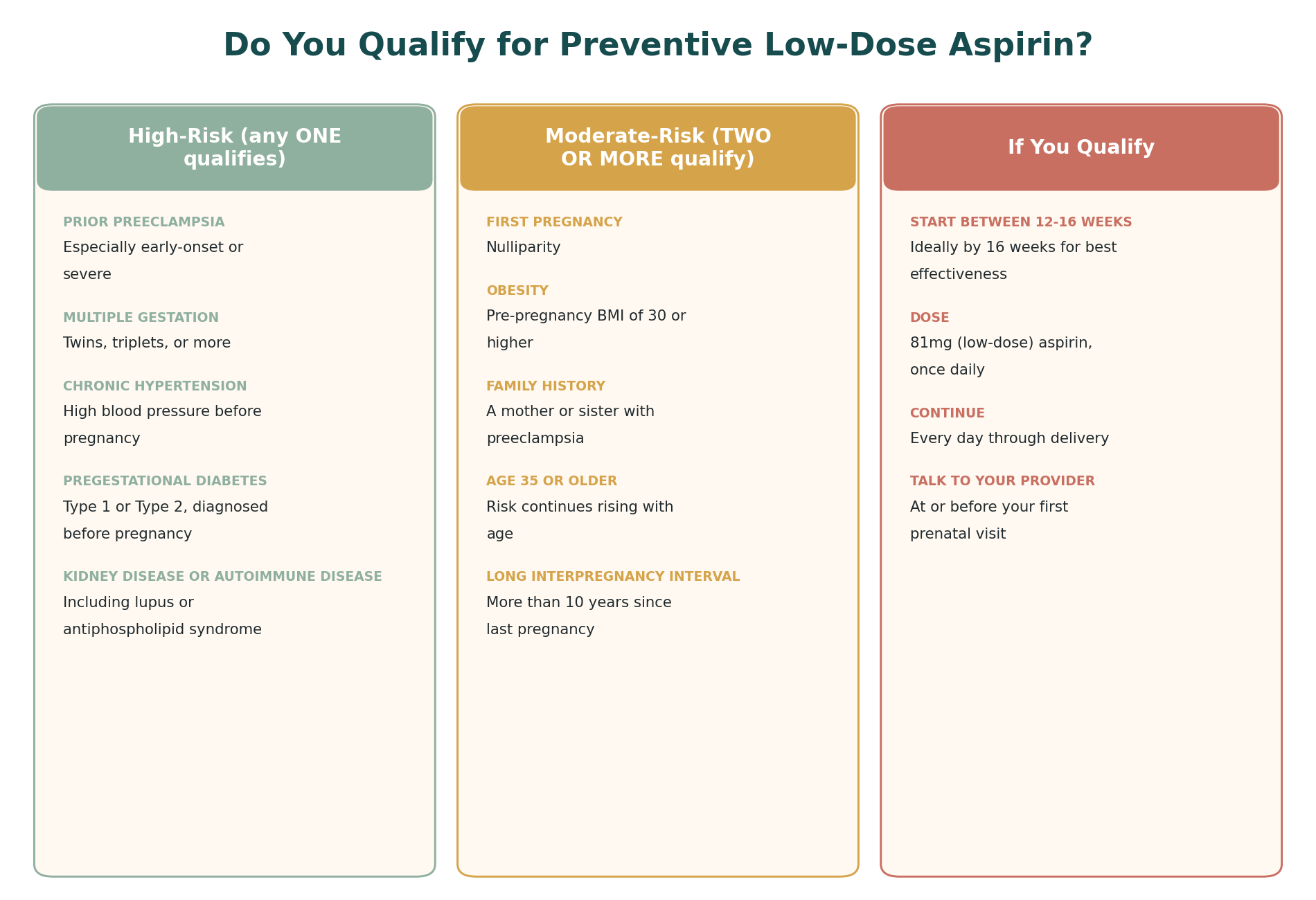
Low-Dose Aspirin
Who It’s Recommended For
Low-dose aspirin (81 milligrams daily) is recommended for anyone with at least one high-risk factor, or two or more moderate-risk factors, from the lists covered in the risk factors section above — this is a widely endorsed recommendation from organizations including ACOG and the U.S. Preventive Services Task Force.
When to Start and How Long to Continue
Aspirin is generally started between 12 and 16 weeks of pregnancy (ideally by 16 weeks, since starting later appears less effective) and continued daily through delivery — a window that spans the end of the first trimester and the start of the second trimester. This is a conversation worth having at or before your very first prenatal visit if you know you have qualifying risk factors, since the timing window is relatively narrow.
How Much It Helps
Clinical trials have shown low-dose aspirin meaningfully reduces the risk of developing preeclampsia in people who qualify for it, along with reducing related risks like preterm birth and fetal growth restriction — though it doesn’t eliminate risk entirely, which is why continued monitoring still matters even while taking it.
Other Strategies With Weaker or Mixed Evidence
Calcium Supplementation
Calcium supplementation has shown some benefit for preeclampsia prevention in research from populations with low dietary calcium intake, but the evidence is less consistent in populations with typically adequate calcium intake, like much of the United States; ask your provider whether this is relevant to your specific diet and situation.
Diet and Exercise
General prenatal health measures — regular physical activity as approved by your provider, a balanced diet, and managing pre-existing conditions like chronic hypertension or diabetes well — support overall pregnancy health and may contribute modestly to risk reduction, though none of these alone prevents preeclampsia with the same level of evidence as low-dose aspirin for someone who qualifies for it. Our healthy pregnancy guide covers these general, evidence-based habits in full, which this article doesn’t repeat.
What Doesn’t Prevent Preeclampsia
Common Misconceptions
No specific diet, vitamin, or lifestyle change outside of the strategies above has been shown to reliably prevent preeclampsia on its own. If you’re offered a specific supplement or diet plan with strong preeclampsia-prevention claims beyond calcium and general prenatal health, it’s reasonable to ask your provider whether the evidence actually supports that specific claim.
Why This Matters
Preeclampsia developing despite doing “everything right” is not a sign you did something wrong — as covered in the causes section, the underlying process begins very early in pregnancy and isn’t fully within anyone’s control.
Key Takeaways
- Low-dose aspirin (81mg daily), started between 12 and 16 weeks, is the best-evidenced preventive strategy for anyone meeting the high- or moderate-risk criteria.
- Calcium supplementation may help in populations with low dietary calcium intake; general healthy prenatal habits support overall pregnancy health but aren’t proven preeclampsia-prevention strategies on their own.
- Developing preeclampsia despite taking every reasonable preventive step is not a sign of personal failure.
Future Pregnancies After Preeclampsia
If you’ve had preeclampsia once, one of the first questions that comes up is what this means for a future pregnancy.
Recurrence Risk
General Figures
Overall recurrence risk after one preeclampsia pregnancy is commonly cited at around 15% to 20% for a future pregnancy, though this varies based on how early and how severe the first episode was — recurrence risk is meaningfully higher, sometimes cited around 40% or more, after an early-onset or particularly severe first case.
What Influences Your Individual Risk
How early your preeclampsia developed in the prior pregnancy, whether it included severe features or HELLP syndrome, and any ongoing or newly developed risk factors (like chronic hypertension) all factor into your individual recurrence risk more precisely than the general population figures above.
What Changes in a Future Pregnancy’s Care Plan
Automatic Aspirin Eligibility
A prior preeclampsia diagnosis is itself a high-risk factor that qualifies you for preventive low-dose aspirin in a future pregnancy, as covered in the prevention section — this is one of the more directly actionable parts of planning a future pregnancy after a preeclampsia history.
Earlier and Closer Monitoring
Many providers recommend starting prenatal care earlier and monitoring blood pressure more closely from early in a subsequent pregnancy for anyone with a preeclampsia history, rather than waiting for symptoms or a routine screening to flag an issue.
Preconception Planning
Addressing Modifiable Risk Factors
If you’re planning a future pregnancy, working with your provider on modifiable risk factors — managing chronic hypertension or diabetes well, working toward a healthy weight if relevant, and addressing any other health conditions — before conceiving again is a reasonable, proactive step.
A Conversation Worth Having Early
Discussing your preeclampsia history and your plans for a future pregnancy with your provider, ideally before conceiving again, lets you build a specific monitoring and prevention plan from the very start rather than catching up to it mid-pregnancy.
Key Takeaways
- Overall recurrence risk is commonly cited around 15% to 20%, higher after an early-onset or severe first case.
- A prior preeclampsia diagnosis automatically qualifies you for preventive low-dose aspirin in a future pregnancy.
- Preconception planning — addressing modifiable risk factors and discussing your history with your provider early — helps build a proactive monitoring plan from the start.
Special Situations
A few specific circumstances shift how preeclampsia is assessed and managed, even though the core guidance throughout this guide still applies.
Chronic Hypertension With Superimposed Preeclampsia
How This Differs From “Regular” Preeclampsia
If you entered pregnancy with already-diagnosed high blood pressure, a new preeclampsia diagnosis on top of it is called superimposed preeclampsia, identified by new or significantly worsening blood pressure control, new proteinuria, or new organ involvement developing during pregnancy, rather than blood pressure simply being elevated from a pre-existing baseline.
Why This Needs Careful, Individualized Tracking
Because your blood pressure was already a known factor going into pregnancy, your care team needs clear documentation of your pre-pregnancy baseline and close tracking of any new changes to accurately identify when superimposed preeclampsia has developed, rather than assuming any elevation is just your usual pattern.
Preeclampsia in a Twin or Multiple Pregnancy
Higher Risk, Earlier Onset
As covered in the risk factors section, carrying twins or more significantly raises preeclampsia risk, and when it occurs in a multiple pregnancy, it often develops earlier and can progress more unpredictably than in a single-baby pregnancy.
What This Means for Monitoring
If you’re carrying multiples, your care team will typically build closer blood pressure and symptom monitoring into your prenatal care from earlier in pregnancy specifically because of this elevated and earlier-onset risk.
Early-Onset Preeclampsia (Before 34 Weeks)
Why It’s Considered Its Own Category
Preeclampsia developing before 34 weeks is generally considered more severe and higher-risk than later-onset cases, associated with a higher likelihood of severe features, HELLP syndrome, and significant prematurity-related complications for the baby if early delivery becomes necessary.
The Difficult Balance This Creates
Early-onset cases often create a genuinely difficult balancing act between the risks of continuing the pregnancy and the risks of a very early delivery — this is exactly the kind of individualized decision covered in the treatment section, usually made collaboratively between you, your obstetric team, and often a maternal-fetal medicine specialist.
HELLP Syndrome or Preeclampsia Without Significant Hypertension
A Less Common but Important Pattern
As covered in the HELLP section, a meaningful minority of severe cases present with normal or only mildly elevated blood pressure, which can delay recognition if providers or patients are watching primarily for blood pressure changes rather than the symptom pattern itself.
Why Symptom Awareness Still Matters Here
This is a specific reason this guide treats right-upper-quadrant pain, nausea, and feeling generally unwell as warning signs in their own right, regardless of what a blood pressure reading shows at the same visit.
Key Takeaways
- Chronic hypertension with superimposed preeclampsia requires careful comparison against your known pre-pregnancy baseline to identify new changes accurately.
- Twin and multiple pregnancies carry higher and often earlier preeclampsia risk, warranting closer monitoring from earlier in pregnancy.
- Early-onset preeclampsia (before 34 weeks) and HELLP without significant hypertension are both recognized special patterns that deserve individualized, specialist-involved care.
Emotional Support and Coping
A preeclampsia diagnosis, especially a severe one, can upend what you expected the rest of your pregnancy or delivery to look like, and the emotional weight of that deserves real attention.
Common Emotional Responses
Fear and Uncertainty
Fear for your own health, your baby’s health, or both at once is an entirely understandable response to a preeclampsia diagnosis, particularly if it comes with hospitalization, an early delivery, or a NICU stay for your baby.
Grief Over a Different Pregnancy or Birth Than Expected
If preeclampsia changed your birth plan, cut your pregnancy shorter than you’d hoped, or separated you from your baby for medical reasons after delivery, grieving that specific loss — even while being grateful for a safe outcome overall — is a normal and valid response, not a contradiction.
Where to Find Support
Hospital Social Work and Mental Health Resources
Many hospitals with labor and delivery or NICU services have social workers available specifically to support families navigating a complicated pregnancy or delivery, regardless of your specific diagnosis or outcome.
Condition-Specific Support Organizations
Organizations focused specifically on preeclampsia and related pregnancy complications can connect you with others who’ve navigated a similar diagnosis, and often maintain updated, patient-friendly educational resources alongside peer support.
Mental Health Support
The National Maternal Mental Health Hotline (1-833-9-HELP4MOM) provides free, confidential support for mental health concerns during and after pregnancy, including the distress a frightening diagnosis or complicated delivery can understandably bring. If you’re ever having thoughts of harming yourself, the 988 Suicide & Crisis Lifeline (call or text 988) is available any time, free and confidential.
Supporting a Partner or Loved One Through This
What Helps
Taking symptoms and warning signs seriously alongside them, helping track appointments and home blood pressure readings, and simply being present during a hospital stay or NICU visits are all genuinely supportive, concrete ways to help.
Checking In On the Emotional Side, Too
Beyond the practical logistics, asking directly how someone is feeling about a frightening or disrupted pregnancy experience — and really listening to the answer — matters just as much as handling the medical and logistical details well.
Key Takeaways
- Fear, uncertainty, and grief over a different pregnancy or birth than expected are all normal, valid responses to a preeclampsia diagnosis.
- Hospital social work, condition-specific support organizations, and the National Maternal Mental Health Hotline (1-833-9-HELP4MOM) are available specifically for this kind of support.
- The 988 Suicide & Crisis Lifeline is available any time for anyone having thoughts of self-harm.
Glossary of Terms in This Guide
Diagnosis and Measurement Terms
Preeclampsia
New-onset high blood pressure after about 20 weeks of pregnancy, combined with proteinuria or other signs of organ involvement.
Gestational Hypertension
New-onset high blood pressure after 20 weeks without proteinuria or other organ involvement; can progress into preeclampsia.
Proteinuria
Protein detected in the urine, a sign of kidney involvement and one of the diagnostic criteria for preeclampsia.
Severe Features
A specific set of criteria (very high blood pressure, low platelets, liver or kidney involvement, pulmonary edema, certain neurological symptoms) that, if present, classify preeclampsia as more severe and change the management plan.
Protein-to-Creatinine Ratio
A single-sample urine test used to estimate 24-hour protein excretion more quickly than a full urine collection; a ratio of 0.3 or higher is diagnostic for proteinuria.
Related Conditions
HELLP Syndrome
A severe variant of preeclampsia involving Hemolysis, Elevated Liver enzymes, and Low Platelets.
Eclampsia
New-onset seizures during pregnancy or shortly after delivery, related to preeclampsia and not explained by another cause; always a medical emergency.
Superimposed Preeclampsia
Preeclampsia developing on top of pre-existing chronic hypertension, identified by new worsening or new organ involvement beyond the known baseline.
Postpartum Preeclampsia
Preeclampsia developing for the first time after delivery, most often within 48 hours but possible up to about six weeks postpartum.
Treatment and Monitoring Terms
Expectant Management
Continuing a pregnancy under close monitoring rather than delivering immediately, used for stable preeclampsia without severe features.
Magnesium Sulfate
A medication used to prevent and treat seizures in preeclampsia with severe features and eclampsia; not a blood-pressure medication.
Corticosteroids (Betamethasone)
Medication given before an anticipated early delivery to speed up fetal lung development and reduce newborn breathing complications.
Non-Stress Test
A fetal monitoring test that tracks the baby’s heart rate pattern over a period of time to assess well-being.
Biophysical Profile
An ultrasound-based assessment combining fetal heart rate, movement, muscle tone, and amniotic fluid level to evaluate fetal well-being.
Frequently Asked Questions
These questions cover common follow-up questions about preeclampsia that aren’t already addressed in full above, organized by theme.
Getting Started: The Basics
Can preeclampsia happen before 20 weeks?
It’s uncommon but can occur, usually in association with specific underlying conditions (like certain placental or molar pregnancy abnormalities); the large majority of cases develop after 20 weeks, which is why that’s used as the general diagnostic threshold.
Is preeclampsia the same thing as toxemia?
“Toxemia” is an older, now largely retired term that was historically used for what’s now called preeclampsia; you may still encounter it in older materials or from older relatives, but it refers to the same general condition.
Causes and Risk
If I don’t have any risk factors, can I still get preeclampsia?
Yes — while risk factors raise the odds, preeclampsia can and does occur in people with no identifiable risk factors at all, which is part of why universal screening at prenatal visits matters for everyone.
Does stress cause preeclampsia?
Everyday stress is not established as a direct cause of preeclampsia; the underlying process is believed to begin with placental blood vessel development very early in pregnancy, independent of stress levels.
Symptoms: Follow-Up Questions
Is normal pregnancy swelling the same as preeclampsia swelling?
Not usually — mild swelling in the feet and ankles, especially by evening, is a normal part of pregnancy; sudden swelling, facial or hand swelling, or rapid swelling over a day or two is the pattern more specific to preeclampsia.
Can preeclampsia cause no symptoms at all, even as it progresses?
Yes, which is part of what makes it concerning — some people have minimal or no symptoms even with meaningfully elevated blood pressure, which is exactly why routine screening, not how you feel, is what catches many cases.
Diagnosis: Follow-Up Questions
Can I be diagnosed with preeclampsia from one single high blood pressure reading?
Generally no — diagnosis typically requires confirmation on two readings at least four hours apart, specifically to rule out a single inaccurate or stress-related reading.
Does a dipstick urine test alone confirm proteinuria?
A dipstick is a useful initial screen, but a protein-to-creatinine ratio or 24-hour urine collection gives a more precise, quantitative confirmation, and is typically used before finalizing a diagnosis based on proteinuria specifically.
Severe Features, HELLP, and Eclampsia: Follow-Up Questions
Can you have severe features without feeling particularly unwell?
Yes — blood pressure and lab-based severe features (like a platelet count or creatinine level) can be present without matching, obvious symptoms, which is why repeat lab testing matters even when you feel relatively okay.
Does HELLP syndrome always include high blood pressure?
No — as covered earlier, a meaningful minority of HELLP cases present with normal or only mildly elevated blood pressure, which is why the specific symptom pattern (right-upper pain, nausea, feeling unwell) matters in its own right.
Treatment and Delivery: Follow-Up Questions
Will I definitely need a cesarean if I have preeclampsia?
No — preeclampsia alone doesn’t require a cesarean, and induction with a goal of vaginal delivery is often attempted first and frequently succeeds.
How long does expectant management typically continue before delivery becomes necessary?
This varies widely by individual trends in blood pressure, labs, and fetal status — it can range from days to several weeks for stable cases without severe features, with your care team reassessing continuously rather than working from a fixed calendar.
Postpartum and Recovery: Follow-Up Questions
How long should I watch for postpartum preeclampsia symptoms?
Up to about six weeks after delivery, though the highest-risk window is generally the first one to two weeks; your discharge instructions should specifically cover this, and it’s reasonable to ask your care team to confirm this explicitly before you leave.
Will my blood pressure medication need to continue indefinitely?
Not necessarily — many people are able to taper off blood pressure medication within weeks of delivery as their numbers normalize, guided by your provider’s assessment of your actual readings rather than a fixed timeline.
Long-Term Health and Future Pregnancies: Follow-Up Questions
Do I need to see a cardiologist after having preeclampsia?
Not necessarily right away, but mentioning your history to your primary care provider so they can factor it into your ongoing cardiovascular risk assessment is a reasonable, proactive step; they can refer you to a cardiologist if your specific risk profile warrants it.
Does having preeclampsia once mean I’ll definitely get it again?
No — recurrence risk is elevated but far from certain, commonly cited around 15% to 20% overall, meaning the majority of people who’ve had preeclampsia once do not have it again in a subsequent pregnancy.
Preeclampsia and Other Pregnancy Complications
Is preeclampsia the same thing as gestational diabetes?
No — they’re distinct conditions. Preeclampsia is a blood-pressure and organ-involvement condition; gestational diabetes is a blood-sugar condition. They share some risk factors and both are screened for at prenatal visits, but having one doesn’t mean you have or will develop the other; see our gestational diabetes guide for that condition specifically.
Can you have preeclampsia and gestational diabetes at the same time?
Yes — it’s possible to have both, and having gestational diabetes is itself a modest risk factor for preeclampsia, which is part of why both are tracked throughout prenatal care rather than treated as mutually exclusive possibilities.
Trimester-Specific Questions
Can preeclampsia start in the first trimester?
It’s rare, generally only in association with specific underlying conditions; the vast majority of cases are diagnosed well after the first trimester has ended, consistent with the 20-week general threshold covered earlier in this guide.
Is preeclampsia more common in the second trimester or third trimester?
It’s diagnosed more often in the third trimester overall, though second-trimester onset does occur and, when it does, is generally considered more concerning because of how much of pregnancy remains; see our second trimester guide and third trimester guide for what’s typical at each stage more broadly.
Multiples, IVF, and Specific Populations
Is preeclampsia riskier with twins than with a single baby?
Yes — as covered in the special situations section, preeclampsia in a twin or multiple pregnancy tends to develop earlier and can progress less predictably than in a single-baby pregnancy, so monitoring is typically more frequent from earlier on.
Does IVF itself cause preeclampsia, or is it the underlying fertility factors?
This is still being actively researched; the elevated risk associated with IVF pregnancies may reflect underlying fertility-related factors, placental implantation differences, or characteristics of the population using IVF, rather than the IVF procedure itself being a direct cause.
Mental Health and Support
Is it normal to feel anxious during every subsequent prenatal visit after a preeclampsia scare?
Yes — heightened anxiety around blood pressure checks and appointments after a frightening diagnosis or near-miss is a common response; naming this directly to your care team can help them support you through it, including by explaining results clearly and promptly.
How is emotional recovery from preeclampsia different from postpartum depression?
They can overlap but aren’t the same — recovery from a frightening diagnosis is often tied to processing that specific event, while postpartum depression is a distinct clinical condition with its own symptom pattern and timeline; our postpartum depression guide covers how that condition is recognized and treated.
Medications and Safety
Is it safe to take ibuprofen for a headache if I have preeclampsia?
Not necessarily — NSAIDs like ibuprofen are sometimes avoided or used cautiously with preeclampsia because of their effects on blood pressure and kidney function; check with your provider before taking any pain reliever, since acetaminophen is often the preferred option instead.
Can I take my regular blood pressure medication if I become pregnant without telling my doctor first?
No — some blood pressure medications used outside of pregnancy aren’t considered safe during it; if you have chronic hypertension and are pregnant or planning to be, talk to your provider promptly about which specific medications are appropriate.
Hospital Stay and Logistics
How long is a typical hospital stay for preeclampsia?
This varies enormously by severity and gestational age — anywhere from a few days around a relatively straightforward delivery to several weeks of antepartum monitoring for an early, stable, severe case; your care team can give you a realistic estimate based on your specific trajectory.
Can my partner or support person stay with me during a hospital admission for preeclampsia?
Most hospitals accommodate a support person staying for at least part or all of an antepartum or postpartum admission; ask your specific unit about their visitor and overnight-stay policies, which vary by hospital.
Understanding Your Specific Numbers and Lab Results
What blood pressure number specifically triggers a call to my provider at home?
This varies by your specific care plan, but many providers ask patients to call for a systolic reading of 150 or 160 or higher, or a diastolic reading of 100 or 110 or higher, measured at home; confirm the specific numbers that apply to your plan directly with your provider.
My platelet count is slightly low but not under 100,000 — is that a severe feature?
Not by the standard severe-feature threshold, which is specifically below 100,000 per microliter; a mildly low count above that threshold is still tracked closely but doesn’t on its own meet the severe-features definition.
Preeclampsia and Your Baby’s Outcomes
Will my baby need to stay in the NICU if I have preeclampsia?
Not necessarily — this depends primarily on how early your baby is delivered and their specific condition at birth; a baby delivered at or near term due to preeclampsia often needs no NICU time at all, while a baby delivered very preterm typically will.
Does preeclampsia affect my baby’s long-term development?
Most babies affected by a parent’s preeclampsia, especially those born at or near term, go on to develop typically; risks are more closely tied to how preterm a baby is born and any related growth restriction than to preeclampsia as a label on its own.
Billing, Records, and Advocating for Yourself
Can I request a second opinion if I disagree with my preeclampsia management plan?
Yes — a second opinion, ideally from a maternal-fetal medicine specialist if one wasn’t already involved, is a reasonable and available option if you have concerns about your specific plan, especially for a complex or early-onset case.
How do I make sure my symptoms are taken seriously if I feel like I’m not being heard?
Being specific and direct (naming the exact symptom, when it started, and how it compares to anything you’ve felt before), bringing a written list to appointments, and, if needed, explicitly asking “could this be preeclampsia” are all reasonable ways to advocate clearly for yourself.
Partner and Family Questions
How can a partner help during a preeclampsia hospital stay?
Helping track appointments and questions, taking notes during conversations with the care team, handling logistics at home, and simply being present are all genuinely valuable, alongside checking in on how the pregnant partner is coping emotionally.
Should other children in the family be told what’s happening if a parent is hospitalized for preeclampsia?
Age-appropriate, honest information generally serves children better than no information at all, similar to guidance for other serious pregnancy complications; a hospital social worker or child-life specialist, where available, can help find the right words for your children’s specific ages.
Preeclampsia Myths and Misconceptions
Is it true that only first-time mothers get preeclampsia?
No — while a first pregnancy carries somewhat higher baseline risk, preeclampsia can and does occur in second, third, or later pregnancies, particularly for people with other risk factors like chronic hypertension or a prior preeclampsia history.
Does preeclampsia only happen to people who are overweight?
No — while a higher pre-pregnancy BMI is a documented risk factor, preeclampsia occurs across the full range of body sizes, including people at a lower or average weight with no other risk factors at all.
