
An ectopic pregnancy happens when a fertilized egg implants and begins growing somewhere outside the main cavity of the uterus — in more than 90% of cases, inside a fallopian tube. It is never a pregnancy that can be carried to term, and in the small but real number of cases where it goes unrecognized until the tube ruptures, it becomes one of the few true emergencies in early pregnancy: a source of internal bleeding that can become life-threatening within hours. That combination — a condition that can feel like an ordinary early pregnancy right up until it suddenly isn’t — is exactly why recognizing the warning signs matters more here than almost anywhere else in this site’s coverage of pregnancy.
This guide exists to make sure you know those warning signs before you need them, whether you’re reading because you just got a positive test and something about how you feel doesn’t sit right, because you have a risk factor you want to understand, or because you’ve already been told “pregnancy of unknown location” and you’re trying to make sense of what that means while you wait for answers. It covers what an ectopic pregnancy is and why it can’t become a viable pregnancy, who’s at higher risk and why half of all cases happen with no risk factor at all, how doctors actually diagnose it with hCG trends and ultrasound, every current treatment option from watchful waiting to methotrexate to surgery, what recovery and future fertility typically look like, and — because this is a genuine loss as well as a medical event — how people cope with it. None of that is more urgent than the first thing below.
For additional clinical background, the American College of Obstetricians and Gynecologists (ACOG) publishes a patient FAQ on ectopic pregnancy. MedlinePlus, a service of the U.S. National Library of Medicine, also maintains a detailed medical encyclopedia entry on ectopic pregnancy.
Call 911 or go to the emergency room right now if you have:
- Severe, sharp, or worsening pain on one side of your lower abdomen or pelvis — especially if it’s different from ordinary cramping and doesn’t ease up.
- Pain in your shoulder or neck (often called shoulder-tip pain) — particularly if it’s worse when you lie down or take a deep breath. This specific, unusual symptom is caused by internal bleeding irritating the diaphragm, and it is one of the most reliable signs of a ruptured ectopic pregnancy.
- Dizziness, lightheadedness, fainting, or feeling like you might pass out — especially together with pain. These can be signs of internal bleeding and shock.
- A rapid heartbeat, clammy or pale skin, or a sense that something is seriously wrong, with or without visible bleeding.
If you have a known or possible pregnancy and any of these signs — particularly the combination of one-sided pain, shoulder pain, and dizziness — do not wait to see if it passes, do not finish reading this article first, and do not try to drive yourself if you feel faint. Call 911 or have someone take you to the nearest emergency room immediately. This pattern can mean a fallopian tube has ruptured and is bleeding internally, which is a surgical emergency. The rest of this guide will still be here when you’re safe.
If none of that applies to you right now, here’s the orientation you need before going further. Most ectopic pregnancies are diagnosed before rupture ever happens, through a combination of blood testing and ultrasound, often after a positive pregnancy test and some combination of pelvic pain and abnormal bleeding — not the dramatic emergency triad above. That earlier, calmer picture is what the majority of this guide is about: what symptoms actually look like in that window, how an ectopic pregnancy gets told apart from a normal early pregnancy or a routine miscarriage, and what the realistic path through diagnosis and treatment involves.
Key takeaways
- An ectopic pregnancy implants outside the uterine cavity — almost always in a fallopian tube — and can never develop into a viable, full-term pregnancy, regardless of how normal it feels at first.
- It accounts for roughly 2% of all reported pregnancies in the United States, according to the American College of Obstetricians and Gynecologists (ACOG), though the true number is hard to pin down because many cases are managed entirely as outpatients.
- About half of people diagnosed with an ectopic pregnancy have no identifiable risk factor at all — a prior ectopic pregnancy, tubal damage, smoking, and fertility treatment all raise risk, but their absence doesn’t rule it out.
- The emergency triad — severe one-sided pain, shoulder-tip pain, and dizziness or fainting — signals possible tubal rupture and is a call-911-now situation, not a wait-and-watch one.
- Diagnosis relies on quantitative hCG blood tests and transvaginal ultrasound together, often across more than one visit, because a single test rarely gives a definitive answer in very early pregnancy.
- Treatment ranges from monitoring to a single medication injection to surgery, depending on your hCG level, symptoms, and how early it’s caught — and most people go on to have a healthy pregnancy afterward.
- This is a real loss, not only a medical event. If you’re grieving an ectopic pregnancy, that grief is valid, and our miscarriage guide has more on coping with early pregnancy loss generally.
What Is an Ectopic Pregnancy?
“Ectopic” simply means “out of place.” In a typical pregnancy, a fertilized egg travels through the fallopian tube and implants in the uterine lining, where the uterus’s blood supply and expandable muscular wall can support weeks and then months of growth. In an ectopic pregnancy, the fertilized egg implants somewhere else instead — and nowhere else in the body has the structure to support a continuing pregnancy the way the uterus does.
Why It Can Never Become a Viable, Full-Term Pregnancy
What “Ectopic” Means
According to MedlinePlus (a service of the National Library of Medicine, part of the National Institutes of Health), an ectopic pregnancy is one in which “the fertilized egg grows in the wrong place outside the uterus.” The embryo itself develops the same way at first — implantation, early cell division, early hormone production — which is exactly why early symptoms and even an early positive pregnancy test can look completely ordinary. What’s different is only the location, but that difference changes everything about what can happen next.
Why the Fallopian Tube Can’t Support a Growing Pregnancy
A fallopian tube is a narrow, muscular passage, not an organ built to stretch and expand the way the uterus is. As Mayo Clinic explains, when a pregnancy continues to grow inside the tube, the tube can eventually stretch beyond what its tissue can tolerate and rupture, tearing blood vessels in the process and causing internal bleeding. There is no point at which a tubal pregnancy “catches up” or relocates into the uterus on its own — it either stops growing on its own, is treated before rupture occurs, or ruptures. None of those outcomes includes a continuing, viable pregnancy.
Where Ectopic Pregnancies Implant
Tubal Pregnancy — By Far the Most Common Site
The overwhelming majority of ectopic pregnancies — well over 90% by most clinical estimates — implant in a fallopian tube, which is why “tubal pregnancy” and “ectopic pregnancy” are often used almost interchangeably in casual conversation, even though tubal pregnancy is technically one specific type. Most of this guide focuses on tubal ectopic pregnancy specifically, since it’s both the most common presentation and the one with the clearest, most established diagnostic and treatment pathway.
Rarer Sites: Ovarian, Cervical, Abdominal, and Cesarean Scar Pregnancy
Less commonly, a fertilized egg implants on an ovary, in the cervix, somewhere in the abdominal cavity, or — in someone with a prior cesarean delivery — within the scar tissue from that earlier surgery. MedlinePlus lists the ovaries, abdominal cavity, and cervix among the possible non-tubal sites. Each of these carries its own management nuances that a specialist handles differently from a standard tubal pregnancy; cesarean scar pregnancy is covered separately later in this guide because it’s distinct enough, and increasingly relevant enough given rising cesarean rates, to merit its own explanation.
How Common Is Ectopic Pregnancy?
Today’s Best Estimate
According to ACOG’s clinical practice guidance, ectopic pregnancy accounts for approximately 2% of all reported pregnancies in the United States — in other words, roughly 1 in every 50 confirmed pregnancies. That makes it uncommon, but not rare enough to dismiss as something that “basically never happens,” and common enough that every obstetric practice in the country evaluates and treats it regularly.
Why the True Number Is Hard to Pin Down
ACOG notes that the true incidence of ectopic pregnancy is difficult to establish precisely, because a meaningful share of cases are diagnosed and managed entirely in outpatient settings — a blood draw here, an ultrasound there, sometimes a single injection — and never generate a hospital admission record of the kind that national statistics have historically relied on. Older CDC surveillance data (covering 1970 through 1989, the most detailed historical national dataset available) found the reported rate rising from 4.5 to 16.0 ectopic pregnancies per 1,000 reported pregnancies over that twenty-year span — an increase researchers attributed largely to improved diagnostic technology (especially earlier, more sensitive pregnancy testing and ultrasound) catching cases that would previously have gone undiagnosed, rather than to a true quadrupling of underlying risk.
Why Ectopic Pregnancy Is a Medical Emergency
Most of what makes ectopic pregnancy different from other early-pregnancy conditions covered on this site isn’t the diagnosis itself — it’s what can happen if it isn’t caught before a fallopian tube ruptures. Understanding that mechanism is part of why the emergency symptoms at the top of this guide matter as much as they do.
What Happens Inside Your Body If a Tube Ruptures
Internal Bleeding and Why It’s Dangerous
A fallopian tube carries blood vessels along its length. When a growing ectopic pregnancy stretches the tube past its limit and it tears, those vessels tear too, and blood begins to collect in the pelvis and abdomen rather than being visible as external vaginal bleeding the way you might expect. MedlinePlus describes this directly: a ruptured ectopic pregnancy “can cause internal bleeding, which can be a life-threatening emergency that needs immediate surgery.” Because this bleeding happens inside the abdominal cavity, the amount of blood lost can be substantial before it becomes obvious externally — which is exactly why the internal warning signs (pain, shoulder-tip pain, dizziness) matter more than how much visible bleeding you’re seeing.
How Fast Things Can Change
Before rupture, an ectopic pregnancy can sit relatively stable for days, sometimes longer, while being monitored or treated. After rupture, the situation changes from “monitor and treat” to “surgical emergency” over a matter of hours, as ongoing internal bleeding leads toward shock — a state in which blood pressure drops and organs don’t receive enough blood flow. This is the single most important fact in this entire guide: there usually isn’t a long runway between “something feels wrong” and “this is now a true emergency” once rupture begins, which is why acting on the warning signs immediately, rather than monitoring them for a while first, is the right call every time.
Ectopic Pregnancy’s Place in Maternal Mortality
What the Data Actually Shows
According to ACOG, ruptured ectopic pregnancy accounted for approximately 2.7% of all pregnancy-related deaths in the United States during 2011–2013 and was identified as the leading cause of hemorrhage-related maternal mortality. Among people who present to care with first-trimester bleeding or pain, ACOG notes that ectopic pregnancy is ultimately diagnosed in as many as 18% of cases — a reminder of just how often this specific symptom combination deserves a real workup rather than reassurance alone. Historical CDC data covering 1970–1989 found that ectopic pregnancy was associated with approximately 13% of all pregnancy-related deaths during that period, underscoring how significant a contributor it has long been to preventable maternal death specifically in the first trimester.
Why Early Recognition Is the Single Biggest Factor in Outcome
The same historical CDC data shows something genuinely encouraging alongside the mortality figures: the case-fatality rate for ectopic pregnancy — the share of diagnosed ectopic pregnancies that resulted in death — fell from 35.5 deaths per 10,000 ectopic pregnancies in 1970 to 3.8 per 10,000 by 1989, a decline of roughly 90%. That improvement happened almost entirely because of earlier diagnosis: better pregnancy tests, earlier and more sensitive ultrasound, and wider clinical awareness of the condition let providers catch and treat far more cases before rupture. The condition itself hasn’t become less dangerous once it ruptures — recognizing it sooner is what changed the outcome, and that’s just as true for you individually as it was for the population data. Knowing the warning signs, and acting on them immediately, is the modern version of exactly what drove that improvement.
What Makes This Different From “Just Waiting to See”
Why Home Monitoring Doesn’t Work Here
With many uncomfortable pregnancy symptoms, waiting a day or two to see whether something resolves on its own is a reasonable approach — our general pregnancy symptoms guide covers plenty of discomforts that fall into that category. An ectopic pregnancy is different because the underlying problem (tissue growing somewhere it can’t safely continue growing) does not resolve by waiting, and because the one dangerous turning point — rupture — doesn’t reliably announce itself with a gradual warning you’d have time to act on calmly. There is no home test, app, or symptom-tracking approach that can substitute for the blood work and ultrasound described later in this guide.
Why “I Feel Mostly Fine” Isn’t Reassuring on Its Own
One of the more counterintuitive, and more dangerous, aspects of ectopic pregnancy is that it can feel largely unremarkable right up until it doesn’t. Per MedlinePlus, early signs can be indistinguishable from a normal pregnancy — a missed period, breast tenderness, mild nausea — before more specific symptoms appear. That’s precisely why this guide leads with the emergency signs rather than burying them at the end: feeling generally fine is not the same as being in the clear, and the specific signs described above are far more reliable than how “off” or “normal” you feel in general.
Red-Flag Symptoms: Recognizing a Possible Tubal Rupture
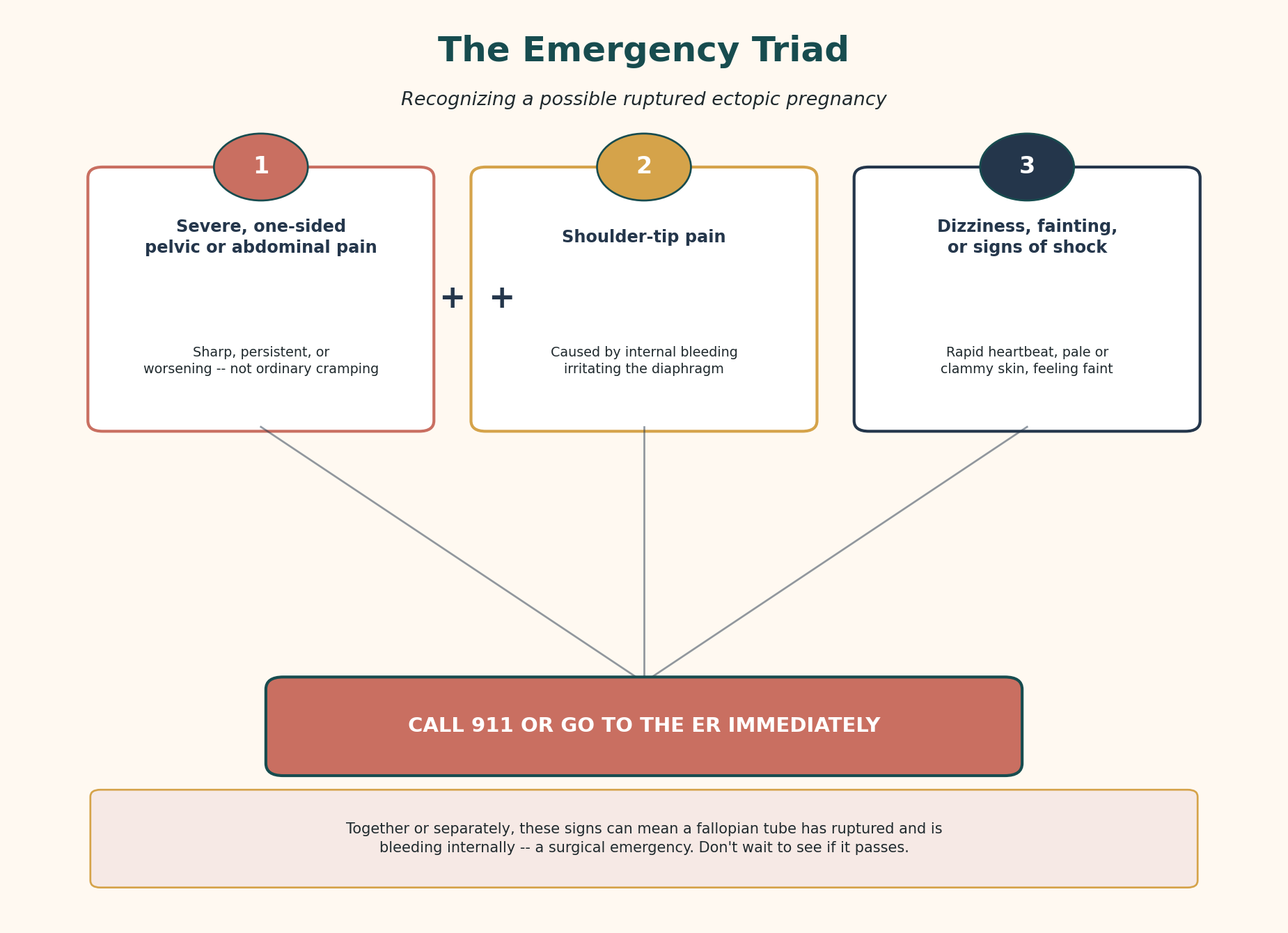
The emergency callout at the top of this guide isn’t decorative — it’s the single most clinically important paragraph here. This section goes into more depth on each of those three signs individually, because understanding why each one matters makes it easier to recognize and act on them with confidence rather than hesitation.
The Emergency Triad
Severe, One-Sided Pelvic or Abdominal Pain
Ordinary early-pregnancy cramping, the kind covered in our pregnancy symptoms guide, tends to be mild, comes and goes, and is usually felt centrally or without a strong one-sided pattern. Pain from an ectopic pregnancy, by contrast, is often felt distinctly on one side — the side where the affected tube is — and tends to be sharp, persistent, or steadily worsening rather than a brief ache that passes. Mayo Clinic lists “severe abdominal or pelvic pain” as a hallmark emergency symptom, and the one-sided quality specifically is one of the more clinically useful details to mention when you call for help, since it points providers toward the tube rather than toward more generalized causes.
Shoulder-Tip Pain
This is the symptom most people have never heard of until they need to recognize it, which is exactly why it belongs in a prominent callout rather than a footnote. When internal bleeding from a ruptured tube collects under the diaphragm, it can irritate the phrenic nerve, which also supplies sensation to the shoulder — producing pain that’s felt in the shoulder or neck despite the actual source being in the pelvis and abdomen. Mayo Clinic specifically names shoulder pain as a symptom that can occur “if blood leaks from the tube,” and it’s considered one of the more specific indicators of significant internal bleeding precisely because there’s no obvious reason a pregnancy complication would otherwise cause shoulder pain. If you notice unexplained shoulder or neck pain alongside pelvic pain or a known pregnancy, treat it as significant rather than coincidental.
Dizziness, Fainting, and Other Signs of Shock
Feeling lightheaded, faint, or like you might pass out — especially paired with pain — can reflect blood loss significant enough to start affecting your blood pressure and the blood flow reaching your brain. MedlinePlus lists “dizziness or fainting” among the core emergency symptoms of ectopic pregnancy, and other signs of shock can include a racing heartbeat, pale or clammy skin, rapid breathing, and a general sense that something is seriously wrong even if you can’t articulate exactly what. These signs matter more, not less, if they’re new or escalating rather than something you’ve dealt with chronically — a sudden change is the key signal.
What to Do the Moment You Notice These Signs
Call 911 Rather Than Driving Yourself Whenever Possible
If you’re experiencing dizziness or feel like you could faint, driving yourself to an emergency room introduces a real risk of losing consciousness behind the wheel. Calling 911 means trained personnel can begin assessing and stabilizing you en route, and it also means the receiving hospital gets advance notice that you’re coming in with a possible surgical emergency, which can shorten the time to treatment once you arrive. If you genuinely cannot call 911 for some reason, have someone else drive you immediately rather than waiting or trying to manage the symptoms yourself at home.
What to Tell Emergency Dispatchers and Staff
Say plainly that you are pregnant or think you might be pregnant, and describe the specific combination of symptoms — one-sided pain, shoulder pain, dizziness or fainting — rather than a general description like “stomach pain.” Naming “possible ectopic pregnancy” explicitly, if you suspect it, helps triage staff move quickly rather than working through a longer list of more common, less urgent possibilities first. If you know you have any of the risk factors described later in this guide, mention that too.
| Symptom pattern | What it can indicate | What to do |
|---|---|---|
| Missed period, breast tenderness, mild nausea, positive test | Normal early pregnancy in most cases — or an undiagnosed ectopic pregnancy that hasn’t yet caused distinguishing symptoms | Schedule a prenatal visit promptly; mention any risk factors you have |
| Light vaginal bleeding with mild, one-sided pelvic discomfort | Possible early sign of ectopic pregnancy, though also seen in normal pregnancy and early miscarriage | Same-day call to your provider — this combination warrants evaluation, not a wait-and-see approach |
| Severe or worsening one-sided abdominal or pelvic pain | Possible tubal pregnancy, with or without rupture | Same-day urgent evaluation; go to the ER if pain is severe or rapidly worsening |
| Severe one-sided pain + shoulder-tip pain + dizziness or fainting | Possible ruptured ectopic pregnancy with internal bleeding | Call 911 or go to the ER immediately — do not wait or drive yourself if faint |
| Heavy bleeding (soaking a pad within an hour), passing tissue, severe cramping, no one-sided or shoulder pain | More typical of an active miscarriage than an ectopic pregnancy, though either is possible | Same-day emergency or urgent care evaluation; see our miscarriage guide |
| Fainting, rapid heartbeat, pale or clammy skin, with or without obvious bleeding | Possible signs of shock from internal bleeding | Call 911 immediately |
Key takeaways: recognizing the emergency
- Ectopic pregnancy ruptures by tearing the fallopian tube, causing internal bleeding that isn’t always visible as external blood — which is why pain and dizziness matter more than how much bleeding you can see.
- The case-fatality rate for ectopic pregnancy fell roughly 90% over two decades, almost entirely because of earlier diagnosis — a reminder that recognizing symptoms sooner genuinely changes outcomes.
- Feeling generally fine is not reassuring on its own. Act on the specific red-flag symptoms, not on your general sense of whether something seems wrong.
Early Symptoms — and How They Differ From a Normal Pregnancy
This section is specifically about the gray zone: the days or weeks before anything resembling the emergency triad shows up, if it ever does. Most ectopic pregnancies are caught here, through a combination of subtle symptom differences and clinical testing, not through a dramatic emergency. Knowing what’s genuinely different — rather than what’s merely uncomfortable — is what lets you know when a same-day call is warranted.
Symptoms That Can Look Completely Normal at First
Missed Period, Nausea, Breast Tenderness
In its earliest days, an ectopic pregnancy produces hCG and early pregnancy hormones the same way a normally implanted pregnancy does, so it can cause the same missed period, breast tenderness, fatigue, and nausea that our general pregnancy symptoms guide covers in depth. A positive home pregnancy test cannot tell the difference between a pregnancy implanted in the uterus and one implanted in a fallopian tube — both produce a positive result, because both produce hCG. This guide does not re-cover that general symptom territory; if you want the full early-symptom picture independent of ectopic pregnancy specifically, that guide is the right place to start.
Why This Overlap Is Exactly What Makes Ectopic Pregnancy Dangerous
Because the earliest signs are indistinguishable from a normal pregnancy, it’s genuinely common for someone to feel reassured by a “normal-feeling” early pregnancy right up until a different symptom appears — and to then second-guess whether that new symptom is significant precisely because everything else felt fine. MedlinePlus’s own patient guidance makes this point directly: an ectopic pregnancy “can initially feel like a completely normal early pregnancy” before other signs appear. The practical takeaway isn’t to feel anxious about every normal symptom — it’s to know which specific changes deserve attention regardless of how normal everything else feels, which is what the rest of this section covers.
Symptoms That Lean Toward Ectopic Rather Than a Typical Early Pregnancy
One-Sided, Persistent, or Worsening Pain
Typical early-pregnancy cramping is usually mild, comes in brief waves, and isn’t clearly localized to one side. Pain that’s distinctly worse on one side, that doesn’t ease with rest, or that’s steadily getting worse rather than coming and going is a meaningfully different pattern — not automatically an emergency on its own, but a pattern that’s worth a same-day call rather than being chalked up to “normal stretching.” The longer that kind of pain continues or the more it intensifies, the more it belongs in the red-flag category covered earlier in this guide rather than the “worth a call” category covered here.
Bleeding That Doesn’t Match a Normal Pattern
Vaginal bleeding alongside a positive pregnancy test can mean several different things — normal implantation bleeding, a threatened or active miscarriage, or an ectopic pregnancy among them — and bleeding pattern alone usually isn’t enough to sort those possibilities out with confidence. What does matter is bleeding that’s accompanied by one-sided pain, that starts or worsens alongside new pelvic discomfort, or that occurs when you have known risk factors for ectopic pregnancy. Bleeding by itself, without pain, is less specifically concerning for ectopic pregnancy than the same bleeding paired with pain would be.
How This Compares With Normal Implantation Bleeding
What’s Different About the Bleeding Itself
Our implantation bleeding guide covers in detail what normal early spotting looks like: typically light, pink or brown rather than bright red, and resolving within a day or two around the time a period would be due. Bleeding related to an ectopic pregnancy can actually look deceptively similar to that normal pattern on its own — light, intermittent, unremarkable in color — which is part of why bleeding appearance by itself is a poor way to try to rule ectopic pregnancy in or out.
What’s Different About the Pain Alongside It
The more reliable distinguishing factor is what accompanies the bleeding, not the bleeding’s appearance. Normal implantation bleeding occurs without significant pain, or with only mild, generalized cramping. Bleeding alongside sharp, one-sided pain — regardless of how light that bleeding looks — is the combination that should prompt same-day evaluation, because it’s the pain pattern, not the blood, that points toward a tubal problem. If you’re trying to sort out whether what you’re experiencing fits a normal pattern at all, start with that guide’s detailed comparison tables, then come back here specifically for the pain-and-bleeding combination that sets ectopic pregnancy apart.
Ectopic Pregnancy vs. Miscarriage: Telling Them Apart
If you’re reading this guide because you’re worried about an early pregnancy loss, it’s worth saying plainly: most early pregnancy loss is a miscarriage, not an ectopic pregnancy. Ectopic pregnancy is less common, but it’s also the one variety of early loss that carries an immediate physical danger alongside the loss itself — which is exactly why telling the two apart matters, and why this section exists as the bridge between this guide and our dedicated miscarriage guide, which covers the general medical and emotional experience of early pregnancy loss in much greater depth than is repeated here.
Why These Two Get Confused
Overlapping Early Signs
Both a miscarriage and an ectopic pregnancy can present with vaginal bleeding and cramping in a confirmed early pregnancy, and both can follow a period of symptoms that initially felt like a completely normal pregnancy. Neither condition announces itself with a label attached — both typically require testing and imaging to sort out, which is part of why “is this a miscarriage or something else” is one of the most common early-pregnancy questions providers field.
Both Involve a Pregnancy That Won’t Continue
At the level of outcome, both a miscarriage and an ectopic pregnancy mean the pregnancy will not continue to term, and both can carry real grief regardless of how early they happen or how the medical facts eventually sort out. Our miscarriage guide covers that emotional terrain, the range of what miscarriage itself involves medically, and general early-loss support resources in far more depth than this guide does, because ectopic pregnancy’s emotional and medical content deserves its own article rather than a subset of that one.
Key Differences
Location Versus Viability
A miscarriage is a pregnancy that implanted correctly, in the uterus, but stopped developing or cannot continue for other reasons — a problem with viability, not location. An ectopic pregnancy is, by definition, a problem with location: it may have perfectly normal early cellular development, but it implanted somewhere that physically cannot sustain it. That distinction is why the two require fundamentally different evaluation (an ultrasound needs to confirm not just whether a pregnancy is progressing, but where it is) and different treatment entirely.
The Role of One-Sided Pain and Shoulder Pain
A typical miscarriage more often involves bleeding that becomes heavier over time, cramping that’s more centered or generalized, and the eventual passing of tissue — a pattern our miscarriage guide describes in full. Sharp, persistent pain on one side specifically, and especially shoulder-tip pain, is far more characteristic of ectopic pregnancy and is uncommon in a routine miscarriage. If you’re trying to triage your own symptoms before you can be seen, one-sided pain and shoulder pain are the two details most worth mentioning explicitly, since they’re the ones most likely to shift a provider’s evaluation toward ruling out ectopic pregnancy specifically and urgently.
Why You Need an Exam — Not Just Symptoms — to Tell Them Apart
What a Provider Checks That You Can’t Check Yourself
Confirming which of the two you’re experiencing (or whether it’s neither, and the pregnancy is continuing normally) requires quantitative hCG testing, often across more than one blood draw, and transvaginal ultrasound to directly locate the pregnancy — both described in detail in the diagnosis section below. Neither test is something you can approximate at home, and neither symptom pattern alone is reliable enough to substitute for them.
Why a Confident Guess at Home Isn’t Safe Here
It can be tempting, especially late at night or when an appointment feels hard to get quickly, to try to reason your way to an answer based on symptoms alone. Given that the two conditions require different treatment and that one of them (ectopic pregnancy) carries a real risk of sudden deterioration, this is one of the clearest cases in all of pregnancy medicine where “probably fine, I’ll wait and see” is the wrong default. A same-day call, at minimum, is the safer choice whenever you’re genuinely unsure which picture fits.
Risk Factors for Ectopic Pregnancy

Knowing your own risk factors is useful context, not a diagnostic tool — it can make you a little more alert to early symptoms, but it should never make you more dismissive of warning signs just because you don’t have any of the factors below, since roughly half of all ectopic pregnancies occur in people with no identifiable risk factor at all.
Factors That Meaningfully Raise Risk
A Prior Ectopic Pregnancy
This is the single strongest risk factor. According to ACOG, a history of one prior ectopic pregnancy carries roughly a 10% risk of recurrence in a future pregnancy (an odds ratio of about 3.0 compared with someone without that history), and a history of two or more prior ectopic pregnancies raises that risk to more than 25% (an odds ratio of roughly 11.17). If this applies to you, say so clearly and early with any new provider — it changes how closely a new pregnancy gets monitored from the very beginning, as covered in the future fertility section later in this guide.
Tubal Damage From Surgery, PID, or Infection
Anything that scars or distorts a fallopian tube’s internal structure can slow or trap a fertilized egg on its way to the uterus, increasing the chance it implants in the tube instead. ACOG and Mayo Clinic both identify prior pelvic or fallopian tube surgery and pelvic inflammatory disease (PID) — an infection, often caused by untreated chlamydia or gonorrhea, that can scar the fallopian tubes — as established risk factors. Endometriosis is listed as a risk factor by MedlinePlus as well, through a related mechanism of pelvic scarring and tubal distortion.
Smoking
Smoking before or during pregnancy is a well-documented risk factor named by both Mayo Clinic and Cleveland Clinic, thought to affect how normally the fallopian tubes function and move a fertilized egg toward the uterus.
Fertility Treatment and IVF
ACOG lists infertility history itself — independent of how a pregnancy is ultimately conceived — along with assisted reproductive technology (ART, including IVF) as risk factors, related in part to underlying tubal-factor infertility and to the transfer of multiple embryos. This doesn’t mean IVF causes ectopic pregnancy in a direct sense; it reflects that many people pursuing IVF already have tubal or other risk factors that contributed to their infertility in the first place. Ectopic pregnancy after IVF is covered in more depth later in this guide.
Pregnancy With an IUD or After Tubal Ligation
Both an IUD in place and a prior tubal ligation (“having your tubes tied”) are listed as risk factors by Mayo Clinic and MedlinePlus. This is a frequently misunderstood point covered in detail in the special situations section below — in short, these methods make pregnancy overall far less likely, but on the rare occasion that pregnancy does occur despite them, a disproportionate share of those pregnancies are ectopic.
Why About Half of Ectopic Pregnancies Happen With No Known Risk Factor
What This Means for You Personally
ACOG states plainly that “one half of all women who receive a diagnosis of an ectopic pregnancy do not have any known risk factors,” and Cleveland Clinic cites a similar figure. Oral contraceptive use, a failed attempt at emergency contraception, a prior abortion, a prior pregnancy loss, and a prior cesarean delivery are specifically noted by ACOG as factors that do not raise ectopic pregnancy risk — useful to know if you’re searching for a reason and coming up empty, or worrying unnecessarily about something that isn’t actually a risk factor.
Why Symptoms Matter More Than Your Risk Profile
Because having zero risk factors doesn’t meaningfully lower your risk the way you might expect, the practical lesson is to treat the symptom patterns described earlier in this guide — not your personal risk profile — as the thing that should drive whether you seek care. Someone with several risk factors and no symptoms doesn’t need emergency care; someone with no risk factors at all and the red-flag triad does. Symptoms, not statistics, are what should guide your next move.
| Risk factor | Why it raises risk |
|---|---|
| Prior ectopic pregnancy (one) | ~10% recurrence risk in a future pregnancy, per ACOG |
| Prior ectopic pregnancy (two or more) | More than 25% recurrence risk, per ACOG |
| Prior pelvic or tubal surgery | Can scar or distort the fallopian tube’s internal structure |
| Pelvic inflammatory disease (PID) or prior STI (chlamydia, gonorrhea) | Can cause tubal scarring and blockage |
| Endometriosis | Associated with pelvic scarring and tubal distortion |
| Smoking | May affect normal fallopian tube function |
| Infertility history / fertility treatment (IVF, ART) | Often related to underlying tubal-factor infertility; multiple embryo transfer |
| Pregnancy with an IUD in place | Pregnancy itself is rare with an IUD, but when it occurs, a disproportionate share are ectopic |
| Prior tubal ligation | Pregnancy after ligation is rare, but carries elevated ectopic risk when it occurs |
| Age over 35 | Listed as a risk factor by multiple patient-education sources |
| No known risk factor | True for roughly half of all people diagnosed — this does not rule out ectopic pregnancy |
Key takeaways: symptoms, miscarriage, and risk
- Early ectopic pregnancy symptoms can be identical to a normal pregnancy. The differentiating signal is one-sided, persistent, or worsening pain — not bleeding appearance, which can look deceptively normal.
- Most early pregnancy loss is a miscarriage, not an ectopic pregnancy — but telling the two apart reliably requires hCG testing and ultrasound, not symptoms alone. See our miscarriage guide for the broader picture of early pregnancy loss.
- About half of all ectopic pregnancies occur with no identifiable risk factor, so symptoms — not your personal risk profile — should drive whether you seek care.
How Ectopic Pregnancy Is Diagnosed
Diagnosing ectopic pregnancy is rarely a single test with an instant answer. It’s usually a process — sometimes resolved in one visit, sometimes stretched across several days of repeat testing — built around two tools used together: quantitative hCG blood testing and transvaginal ultrasound. Understanding how they work together explains why your provider might ask you to come back in 48 hours rather than giving you an answer on the spot, and why that waiting period, uncomfortable as it is, is a normal and safe part of getting this right.
Quantitative hCG Blood Testing
What a Normal Rise Looks Like
Unlike a home test’s positive-or-negative result, a quantitative blood test reports an exact hCG number, which lets a provider track the trend across more than one measurement. According to ACOG’s clinical guidance, a normally developing early pregnancy shows a predictable minimum rate of increase over 48 hours depending on the starting level: roughly a 49% increase when the initial level is below 1,500 mIU/mL, roughly a 40% increase between 1,500 and 3,000 mIU/mL, and roughly a 33% increase above 3,000 mIU/mL. These are minimum expected increases, not exact targets — a normal pregnancy can rise faster than these thresholds, but rising distinctly slower than them is a meaningful signal.
What a Slower, Plateaued, or Falling Level Suggests
An hCG rise that’s slower than the thresholds above, or a level that plateaus or falls, suggests a pregnancy that isn’t developing typically — which includes both ectopic pregnancy and early pregnancy loss as possibilities, not ectopic pregnancy specifically. ACOG notes that approximately 95% of people experiencing a spontaneous early pregnancy loss show an hCG decrease of 21–35% over two days, which is a genuinely different pattern from the slow-rise-but-not-falling pattern more typical of an ectopic pregnancy — part of why your provider interprets the exact shape of the trend rather than a single abnormal-looking number.
Transvaginal Ultrasound
What a Provider Is Looking For
A transvaginal ultrasound — performed with a probe placed in the vagina rather than over the abdomen, which gives a clearer picture of very early pregnancy structures — is used to directly locate the pregnancy. Per ACOG, a definitive ultrasound diagnosis of ectopic pregnancy requires visualizing a gestational sac with a yolk sac or embryo outside the uterus, most often within a fallopian tube. A normally located, intrauterine gestational sac with a yolk sac should typically be visible on transvaginal ultrasound between about 5 and 6 weeks of gestation — a timing detail that matters because looking too early, before a normal pregnancy would be expected to show up yet, can create confusing or alarming results that don’t actually mean anything is wrong.
The “Discriminatory Zone” — and Why It’s More Nuanced Than It Sounds
You may encounter the term “discriminatory zone” or “discriminatory level” — the hCG level above which a normally located pregnancy should be visible on ultrasound if one exists. It’s commonly cited in simplified terms as somewhere around 1,500–3,000 mIU/mL. ACOG’s more current guidance adds an important nuance many patient-facing explanations skip: this concept has been challenged, because using too low a threshold risks the serious mistake of treating a normal, simply-too-early-to-see-yet pregnancy as presumptively ectopic. ACOG specifically recommends that if this concept is used at all, the threshold should be set conservatively high — “as high as 3,500 mIU/mL” — specifically to avoid that misdiagnosis. In practice, this is exactly why a provider who’s being careful may ask you to wait and repeat testing rather than act on a single ultrasound that didn’t show a pregnancy yet, especially if your hCG level is still relatively low.
“Pregnancy of Unknown Location”: What It Means and What Happens Next
Why This Isn’t a Diagnosis on Its Own
If an early blood test confirms you’re pregnant but an ultrasound doesn’t yet show a pregnancy anywhere — not clearly in the uterus, not clearly in a tube — you may be told you have a “pregnancy of unknown location” (PUL). ACOG is explicit that PUL “should not be considered a diagnosis” in itself; it’s a transient, temporary state that exists only until follow-up testing clarifies what’s actually happening. It can resolve in any of several directions: a normal pregnancy that was simply too early to see yet, an early pregnancy loss, or an ectopic pregnancy.
What Monitoring Actually Involves — and How Safe It Is
For someone who is clinically stable and wants to continue the pregnancy if it’s normal, ACOG recommends a repeat transvaginal ultrasound, repeat hCG measurement, or both, rather than immediate treatment based on an incomplete picture. This waiting period understandably feels agonizing, but it’s also been studied directly: in one large series cited by ACOG, the risk of a tubal rupture occurring during this kind of diagnostic surveillance was as low as 0.03% among all women being monitored this way, and as low as 1.7% even among those who were ultimately diagnosed with an ectopic pregnancy. In other words, careful monitoring by a provider who is actively tracking your numbers is a genuinely safe approach for a stable patient with no concerning symptoms — it is categorically different from monitoring symptoms on your own at home without any testing at all, which this guide does not recommend under any circumstances.
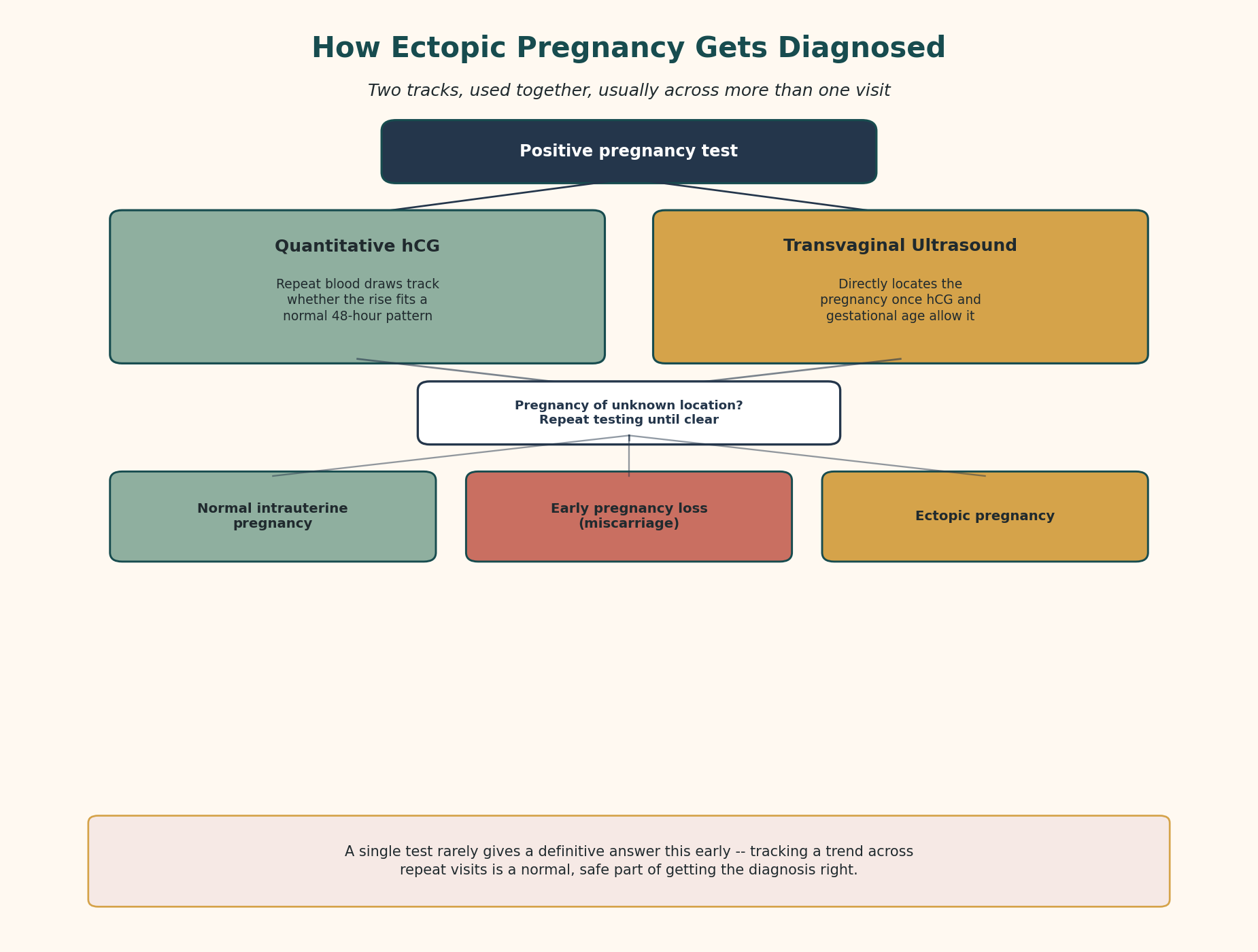
Treatment Options for Ectopic Pregnancy
Which treatment makes sense depends mainly on three things: how early it’s caught, your hCG level and trend, and whether you’re hemodynamically stable (meaning your blood pressure, heart rate, and overall circulation are holding steady) with no signs of rupture. There are three broad paths — expectant management, methotrexate, and surgery — and all three are legitimate, evidence-based options in the right circumstances. None of them is “better” in the abstract; the right one is the one that fits your specific numbers and symptoms.
Expectant Management
Who’s a Realistic Candidate
Expectant management means monitoring rather than actively treating, on the basis that some very early ectopic pregnancies resolve on their own. ACOG describes candidates as people who are asymptomatic, who show objective evidence the pregnancy is resolving (typically a plateauing or falling hCG level), and who understand and accept the risks involved, including the possibility of tubal rupture, hemorrhage, and the need for emergency surgery if that happens. It is not an option for anyone with symptoms, a rising hCG level, or any sign of instability.
What “Watching” Actually Means in Practice
This isn’t passive waiting — it’s active monitoring with repeat hCG measurements on a defined schedule. ACOG notes that when the initial hCG level is below 200 mIU/mL, about 88% of patients experience spontaneous resolution without any other intervention; success rates are lower at higher starting hCG levels. One small randomized trial, among patients with hCG below 2,000 mIU/mL, found expectant management was not statistically significantly less successful than single-dose methotrexate (59% versus 76% success). Reasons to abandon expectant management and move to active treatment include worsening or severe pain, an hCG level that isn’t declining as expected, or any sign of tubal rupture.
Methotrexate (Medical Management)
Who Is — and Isn’t — a Candidate
Methotrexate is a medication that stops rapidly dividing cells from growing, which is why it can be used to treat an early, unruptured ectopic pregnancy without surgery. ACOG describes candidates as people who are hemodynamically stable, have an unruptured mass, and have no absolute contraindications. Absolute contraindications include an intrauterine pregnancy, immunodeficiency, moderate to severe anemia or low blood counts, known sensitivity to methotrexate, active lung or peptic ulcer disease, significant liver or kidney dysfunction, and breastfeeding. Relative contraindications — factors that make methotrexate less likely to work, though not automatically disqualifying — include a ruptured ectopic pregnancy, hemodynamic instability, an inability to attend follow-up appointments, visible embryonic cardiac activity on ultrasound, a high initial hCG level, a mass larger than 4 cm on ultrasound, or refusing blood transfusion if it became necessary. On that last point specifically: ACOG cites systematic review evidence showing a methotrexate failure rate of 14.3% or higher when the pretreatment hCG level is above 5,000 mIU/mL, compared with 3.7% when it’s below that level — which is why many protocols treat 5,000 mIU/mL as a practical ceiling for considering methotrexate at all.
How the Medication Works and What Monitoring Looks Like
Methotrexate is given by injection, not taken as a pill. ACOG describes several accepted dosing protocols — a single-dose regimen (one injection, with hCG rechecked on days 4 and 7, and a repeat dose if the level hasn’t fallen by at least 15% in that window), a two-dose regimen (injections four days apart, used more often when the starting hCG is relatively high), and a fixed multiple-dose regimen (four injections on alternating days, paired with a rescue medication called folinic acid). Overall treatment success across observational studies ranges from roughly 70% to 95%, and resolution — meaning hCG falls all the way to a nonpregnant level — usually takes 2 to 4 weeks but can take up to 8 weeks. You’ll have blood drawn repeatedly during this window; this isn’t a sign anything is going wrong, it’s simply how the treatment is confirmed to be working.
Side Effects, and the Pain That’s Expected vs. the Pain That Isn’t
The most common side effects with multiple-dose regimens are gastrointestinal — nausea, vomiting, and mouth soreness. ACOG also notes something genuinely important to know in advance: “it is not unusual for women treated with methotrexate to experience abdominal pain 2–3 days after administration,” thought to result from the medication’s effect on the pregnancy tissue itself, not from rupture. This is exactly the kind of detail that can cause unnecessary panic if you don’t know it’s expected — but it does not mean you should assume every instance of pain after methotrexate is harmless on its own judgment. The distinguishing features are the same as elsewhere in this guide: pain that’s mild-to-moderate and doesn’t come with shoulder pain, dizziness, or fainting is more consistent with an expected medication effect; pain that’s severe, worsening, or accompanied by the red-flag signs described earlier warrants the same emergency response regardless of whether you’ve recently received methotrexate. When in doubt, call your provider or go to the ER — don’t try to self-diagnose which category your pain falls into.
What to Avoid During Treatment
ACOG’s patient counseling guidance for methotrexate treatment includes avoiding folic acid supplements and folic-acid-fortified foods and avoiding NSAIDs (like ibuprofen), both of which can reduce the medication’s effectiveness; avoiding vigorous activity and sexual intercourse until resolution is confirmed, due to a theoretical risk of triggering rupture; avoiding alcohol, narcotic pain medications, and gas-producing foods; and avoiding sun exposure, since methotrexate can increase sensitivity to sunlight. You’ll also be counseled to avoid becoming pregnant again during treatment and for at least one full ovulatory cycle afterward, per FDA labeling, with some providers recommending a longer three-month window — a point covered further in the recovery section below.
Surgical Treatment
Salpingostomy (Tube-Sparing Surgery)
Salpingostomy removes the ectopic pregnancy tissue through a small incision in the fallopian tube while leaving the tube itself in place, with the goal of preserving it for future fertility. Mayo Clinic describes it as one of two laparoscopic (minimally invasive) surgical options. ACOG notes that salpingostomy is generally considered when future fertility is a priority and the other fallopian tube is damaged, such that removing this tube entirely would make future pregnancy depend on assisted reproduction. After salpingostomy, hCG is monitored with repeat blood draws to confirm all of the ectopic tissue was removed; if there’s concern that some was left behind, a single preventive dose of methotrexate may be used.
Salpingectomy (Removing the Tube)
Salpingectomy removes the ectopic pregnancy along with part or all of the affected fallopian tube. ACOG notes this approach is generally preferred when there’s severe damage to the tube or significant bleeding from the surgical site, and that it can reasonably be chosen even when future fertility is desired, provided the other fallopian tube is healthy. Randomized trials comparing the two surgical approaches found no statistically significant difference in subsequent intrauterine pregnancy rates or repeat ectopic pregnancy rates between them, though separate cohort studies found salpingostomy associated with a somewhat higher rate of future intrauterine pregnancy alongside a higher rate of repeat ectopic pregnancy (10% versus 4%) — a trade-off worth discussing directly with your surgeon if you have a say in which approach is used and both tubes are otherwise viable options.
When Emergency Surgery Is the Only Option
Surgery is not optional, and the discussion above about preference between approaches becomes secondary, whenever a patient is hemodynamically unstable, has symptoms of an actively bleeding ruptured ectopic pregnancy, or shows signs of significant internal bleeding. In that situation, per ACOG, the priority shifts entirely to stopping the bleeding safely, which is usually accomplished laparoscopically but is performed through an open abdominal incision (laparotomy) when a patient is unstable, bleeding heavily, or when laparoscopic visualization isn’t adequate. This is the clinical endpoint of the emergency symptoms described earlier in this guide — exactly why recognizing and acting on them early matters as much as it does.
| Approach | Typical candidate | What it involves |
|---|---|---|
| Expectant management | Asymptomatic, very low and falling/plateauing hCG (often under 200 mIU/mL), willing to accept risk of rupture | Close monitoring with repeat hCG measurements; no medication or surgery unless the picture changes |
| Methotrexate | Hemodynamically stable, unruptured, hCG generally under 5,000 mIU/mL, no contraindications | One or more injections; follow-up hCG monitoring over 2–8 weeks until it reaches a nonpregnant level |
| Salpingostomy (tube-sparing surgery) | Desires future fertility, other tube is damaged, stable enough for planned surgery | Laparoscopic removal of the pregnancy; tube left in place and monitored for complete resolution |
| Salpingectomy (tube removal) | Severe tube damage, significant bleeding risk at the surgical site, or other tube is healthy | Laparoscopic (or, if unstable, open) removal of the pregnancy and the affected tube |
| Emergency surgery | Hemodynamically unstable, signs of rupture or significant internal bleeding | Immediate surgery, laparoscopic or open depending on stability and bleeding, to stop internal bleeding |
Key takeaways: diagnosis and treatment
- Diagnosis relies on quantitative hCG trends and transvaginal ultrasound together, often across repeat visits — a single test rarely gives a definitive answer in very early pregnancy, and that waiting period is a normal, safe part of getting it right.
- “Pregnancy of unknown location” is a temporary status, not a diagnosis — and monitoring it under medical supervision carries a documented rupture risk well under 2%, even among cases that turn out to be ectopic.
- Treatment ranges from monitoring to a single methotrexate injection to surgery, chosen based on your hCG level, symptoms, and stability — not a one-size-fits-all protocol.
Recovery After Treatment
What recovery looks like depends heavily on which treatment path you were on, and in both cases, physical recovery and the emotional process described later in this guide tend to move on different timelines — it’s common to feel physically fine well before you feel emotionally ready, or the reverse.
Physical Recovery After Methotrexate
The Hands-On Timeline
There’s no incision to heal after methotrexate, but that doesn’t mean recovery is instant. Expect some fatigue, possible nausea, and — as covered in the treatment section above — expected abdominal discomfort around 2 to 3 days after the injection. Most people can resume ordinary daily activities within days, but ACOG’s counseling guidance to avoid vigorous activity and intercourse applies until your care team confirms the ectopic tissue has fully resolved, not just until you personally feel back to normal.
Follow-Up hCG Monitoring Until You’re Fully Clear
The real marker of “recovered” after methotrexate is a nonpregnant hCG level, not a feeling. That typically takes 2 to 4 weeks and can take up to 8, with blood draws at intervals your provider sets based on your specific numbers. It’s normal for this to feel like a long tail on an otherwise resolved situation — try to treat each blood draw as confirmation the treatment is working rather than a fresh source of anxiety each time.
Physical Recovery After Surgery
Laparoscopic Recovery
Laparoscopic salpingostomy or salpingectomy — performed through several small incisions rather than one large one — generally allows for a shorter recovery than open surgery, with many people resuming light activities within one to two weeks, though individual timelines vary by overall health, how much tissue was involved, and your surgeon’s specific guidance.
Recovery After Emergency or Open Surgery
Open abdominal surgery (laparotomy), used for unstable patients or significant internal bleeding, involves a longer hospital stay and a longer recovery than the laparoscopic approach, simply because of the larger incision and because it’s typically performed in the context of a more acute, higher-blood-loss situation to begin with. Your surgical team will give you a specific, individualized recovery timeline and activity restrictions based on exactly what was done and how much blood loss occurred; this is not a situation where general guidance is a substitute for that direct conversation.
Emotional Impact and Coping
It’s possible to come through an ectopic pregnancy with a textbook “good” medical outcome — caught early, treated successfully, no lasting physical complication — and still be genuinely devastated. Both things can be true at once, and neither cancels the other out.
A Grief That’s Often Misunderstood
Why It’s a Real Loss, Not Just a “Medical Event”
Mayo Clinic’s own patient guidance says this plainly: the emotional toll of an ectopic pregnancy “rivals the experience of women who experience a miscarriage or neonatal loss.” This is still a pregnancy you may have wanted, hoped for, or already begun imagining a future around — the fact that the pregnancy was never going to be medically viable doesn’t make the loss of it any less real. If people around you focus only on your physical safety (“thank goodness you’re okay”) without acknowledging the loss itself, that gap between how you feel and how the situation is being framed by others is common, and it’s reasonable to name it directly if it’s happening to you.
Processing Loss Alongside Fear About Future Fertility
If treatment involved losing a fallopian tube, grief over the pregnancy itself can get tangled up with a separate, forward-looking fear about future fertility. Mayo Clinic notes this combination directly — the loss compounded by “the anxiety of not being able to conceive in the future.” The future fertility section below addresses that fear with the actual evidence, which is more reassuring than most people expect, but the fear itself is worth naming and sitting with rather than rushing past, even once you’ve read the data.
Finding Support
Who to Talk To
Mayo Clinic describes a normal grief process after pregnancy loss as potentially lasting several weeks, and names a predictable range of feelings — numbness, sadness, guilt, anger, and apprehension about the future — as expected, not abnormal. Basic self-care during that window matters: adequate sleep, regular movement, decent nutrition, and avoiding alcohol, drugs, and cigarettes as coping mechanisms, per Mayo Clinic’s guidance. Beyond self-care, talking with your partner, a trusted friend, or others who’ve experienced ectopic pregnancy specifically (rather than loss in general) can help with the particular combination of relief, grief, and fear that’s common after this specific diagnosis.
When Grief Needs More Than Time
If sadness, anxiety, or intrusive worry about a future pregnancy is severely affecting your daily functioning, sleep, or relationships well beyond the first few weeks, that’s a reasonable point to ask your provider for a referral to a therapist or counselor experienced in reproductive loss, rather than assuming you should be able to move past it on your own timeline. This is true whether your loss was an ectopic pregnancy, a miscarriage, or any other kind of early pregnancy loss — our miscarriage guide covers general early-pregnancy-loss coping strategies and support resources in more depth than repeated here, and is worth reading even though your loss was specifically ectopic, since much of the emotional experience and the practical support landscape (support groups, counseling referrals, how to talk to family) overlaps substantially.
Future Fertility and Pregnancy After an Ectopic Pregnancy
This is usually the question underneath every other question once the immediate medical situation is resolved: can I still have a healthy pregnancy after this? For most people, the honest, evidence-based answer is reassuring.
Your Realistic Chances of a Healthy Pregnancy
What the Evidence Shows
Mayo Clinic states directly that “most women who experience ectopic pregnancy and treatment will achieve a successful pregnancy in the future, even if they’ve lost one fallopian tube.” This holds across treatment types — ACOG notes that available evidence, while limited, suggests methotrexate treatment doesn’t have an adverse effect on subsequent fertility or on ovarian reserve, and that tube-sparing surgery and tube removal show no significant difference in overall tubal preservation, tubal patency, or future pregnancy rates in randomized comparisons.
Does Losing a Tube Change the Odds?
Having one healthy fallopian tube remaining is generally enough to conceive, since ovulation alternates between ovaries and either tube can pick up an egg released from either ovary in many cases. Mayo Clinic’s guidance notes that pregnancy rates after tube-sparing surgery are similar to pregnancy rates after tube removal, as long as the remaining tube is healthy — which is part of why the choice between salpingostomy and salpingectomy, described earlier in the treatment section, is a genuinely individualized decision rather than one with an automatically “better” answer for fertility.
Recurrence Risk
After One Prior Ectopic Pregnancy
As covered in the risk factors section, a single prior ectopic pregnancy carries roughly a 10% risk of recurrence in a future pregnancy, per ACOG and Mayo Clinic. That means the large majority of people with one prior ectopic pregnancy go on to have a future pregnancy that implants normally — but it also means this history is worth flagging clearly and early with any new provider, because it changes how your next pregnancy gets monitored from the very start.
After Two or More
Recurrence risk rises further after multiple prior ectopic pregnancies — ACOG cites more than a 25% recurrence risk after two or more. If this applies to you, a more detailed conversation with a reproductive specialist about your specific tubal anatomy and future options, potentially including IVF with embryo transfer directly into the uterus, is a reasonable next step before trying to conceive again.
What Early Monitoring Looks Like Next Time
Telling Your New Provider
Mention a prior ectopic pregnancy as soon as you have a positive test in any future pregnancy, even before your first scheduled prenatal visit — many practices will move up your first ultrasound specifically because of this history, rather than waiting for the typical scheduling timeline described in our gestational-age guide.
Earlier Ultrasound and hCG Checks
Earlier monitoring generally means an earlier transvaginal ultrasound — often timed to directly confirm the pregnancy’s location as soon as it’s realistically visible — and sometimes serial hCG tracking in the meantime, following the same logic described in the diagnosis section above. This isn’t a sign your provider expects a problem; it’s simply the appropriately cautious default for anyone with this specific history.
Key takeaways: recovery, emotions, and future fertility
- Physical recovery and emotional processing often move on different timelines. Feeling physically fine doesn’t mean you have to feel emotionally “done,” and the reverse is just as normal.
- This is a real loss, not only a medical event — grief after an ectopic pregnancy is valid even when the physical outcome is good. Our miscarriage guide has more on coping with early pregnancy loss broadly.
- Most people go on to have a healthy pregnancy after an ectopic pregnancy, even after losing a fallopian tube. Recurrence risk is roughly 10% after one prior ectopic pregnancy and rises after two or more — worth naming clearly to any future provider.
Special Situations
A few specific circumstances come up often enough, and get misunderstood often enough, to deserve their own direct explanation.
Ectopic Pregnancy With an IUD in Place
Why the Percentages Can Sound Scarier Than They Are
ACOG notes that up to 53% of pregnancies that occur with an IUD in place are ectopic — a statistic that sounds alarming out of context, but needs an important qualifier: IUDs are highly effective at preventing pregnancy overall, so pregnancy with an IUD in place is itself rare to begin with. The 53% figure describes the composition of that small number of pregnancies that do occur, not your overall odds of having an ectopic pregnancy simply because you have an IUD. In other words, an IUD doesn’t raise your absolute risk of ectopic pregnancy in any meaningful way for most people — it shifts the relative proportion within the rare event of IUD pregnancy specifically.
What to Do If You Have an IUD and a Positive Test
If you have an IUD in place and get a positive pregnancy test for any reason, contact your provider promptly rather than waiting for a routine appointment, specifically because of this elevated relative likelihood. This is also covered from the bleeding-and-testing angle in both our implantation bleeding guide and our pregnancy test guide, which both flag IUD-plus-positive-test as a combination warranting a prompt rather than routine visit.
Ectopic Pregnancy After IVF or Other Fertility Treatment
Why the Risk Is Higher
As noted in the risk factors section, ACOG identifies assisted reproductive technology as a risk factor, related to both underlying tubal-factor infertility in many IVF patients and to the practice of transferring more than one embryo in some cycles. This is an association with the underlying reasons someone needed fertility treatment in the first place, more than a direct effect of the IVF process itself.
What Monitoring Usually Looks Like After ART
Fertility clinics typically track quantitative hCG closely after a positive result specifically to watch for the trend patterns described in the diagnosis section above, and many move to an early ultrasound sooner than a typical, non-fertility-treatment pregnancy would get one — partly standard protocol for confirming implantation and ruling out multiples, and partly extra vigilance given the elevated ectopic risk in this group.
Heterotopic Pregnancy (One Ectopic, One in the Uterus)
Why It’s Rare but More Likely After Fertility Treatment
A heterotopic pregnancy is the rare situation where one embryo implants normally in the uterus while a second, separate embryo implants ectopically at the same time — most often seen after fertility treatment involving multiple embryo transfer, since that’s the main scenario where more than one embryo is implanting simultaneously in the first place.
Why It Can Be Missed Early On
Because an ultrasound confirming a normal intrauterine pregnancy can create a sense that everything has been fully checked, a coexisting ectopic pregnancy can occasionally be missed on an initial scan, particularly if the exam focused on confirming the uterine pregnancy rather than ruling out an additional one elsewhere. This is one of the reasons the red-flag symptoms described earlier in this guide still matter even after you’ve seen a reassuring ultrasound — a confirmed normal pregnancy in the uterus doesn’t, by itself, rule out a second ectopic pregnancy occurring alongside it, especially after fertility treatment.
Cesarean Scar Pregnancy
What It Is
A cesarean scar pregnancy occurs when a fertilized egg implants within the scar tissue from a prior cesarean delivery, embedded in the lower uterine wall rather than in the main uterine cavity or a fallopian tube. Like other ectopic pregnancies, it cannot develop into a viable, full-term pregnancy and carries a serious risk of uterine rupture and severe hemorrhage if it continues to grow, since scar tissue is weaker than the surrounding uterine muscle.
Why It’s Managed Differently From a Tubal Pregnancy
Because of its location directly within the uterine wall rather than in an easily accessible tube, cesarean scar pregnancy requires specialized management, typically from a maternal-fetal medicine or gynecologic specialist experienced with this specific condition, and treatment decisions (medication, surgical removal, or a combination) are made on a more individualized basis than the relatively standardized tubal-pregnancy pathways described earlier in this guide. If you’ve had a prior cesarean delivery and are told your pregnancy may be located in or near your cesarean scar, ask directly about your specific provider’s experience managing this condition, since outcomes are closely tied to specialized expertise.
Gestational Timing: When Ectopic Pregnancy Is Usually Found
If you’re trying to understand where “ectopic pregnancy risk” fits into the broader timeline of early pregnancy, this short section connects the dots between the diagnostic windows described earlier in this guide and the week-by-week dating concepts covered in our gestational-age guide.
The Typical Diagnosis Window
Why It’s Rarely Diagnosed Before 4 Weeks
Before roughly 4 weeks of gestation (measured from the first day of your last period, the same convention used throughout our gestational-age guide), hCG levels in any pregnancy — ectopic or not — are typically still too low for a home test to reliably detect, let alone for an ultrasound to locate anything. Ectopic pregnancy isn’t usually diagnosable this early simply because pregnancy itself often isn’t yet confirmable this early.
Why It’s Rarely Still Undetected After 12 Weeks
By around 12 weeks, an ectopic pregnancy has either been diagnosed through the hCG-and-ultrasound process described earlier in this guide, resolved on its own, or — in the small number of unrecognized cases — progressed to the point of rupture, which tends to force diagnosis through an emergency presentation rather than routine testing. Most diagnoses happen well before this point, typically somewhere in the 4-to-8-week window, which is why early prenatal contact matters as much as it does for anyone with a positive test.
Why Early, Accurate Dating Matters Here More Than in a Typical Pregnancy
How Dating Affects Interpreting hCG and Ultrasound
Both the hCG-rise expectations and the ultrasound-visibility timelines described in the diagnosis section above are tied to gestational age, not just to a number in isolation. An hCG level that would be reassuringly normal at what you believe is 5 weeks could look abnormally low if you’re actually only at 4 weeks — which is exactly why providers lean on trends across repeat testing rather than a single number compared against a single assumed gestational age.
Where to Go for Dating and Gestational-Age Context
If your main question right now is about how gestational age is calculated, what the different dating methods are, or how far along a given hCG level or ultrasound finding typically corresponds to, our dedicated gestational-age guide covers that territory in full rather than repeating it here — this guide’s job is specifically the ectopic-pregnancy-relevant implications of timing, not the general dating mechanics themselves.
When to Call Your OB vs. When to Go to the ER
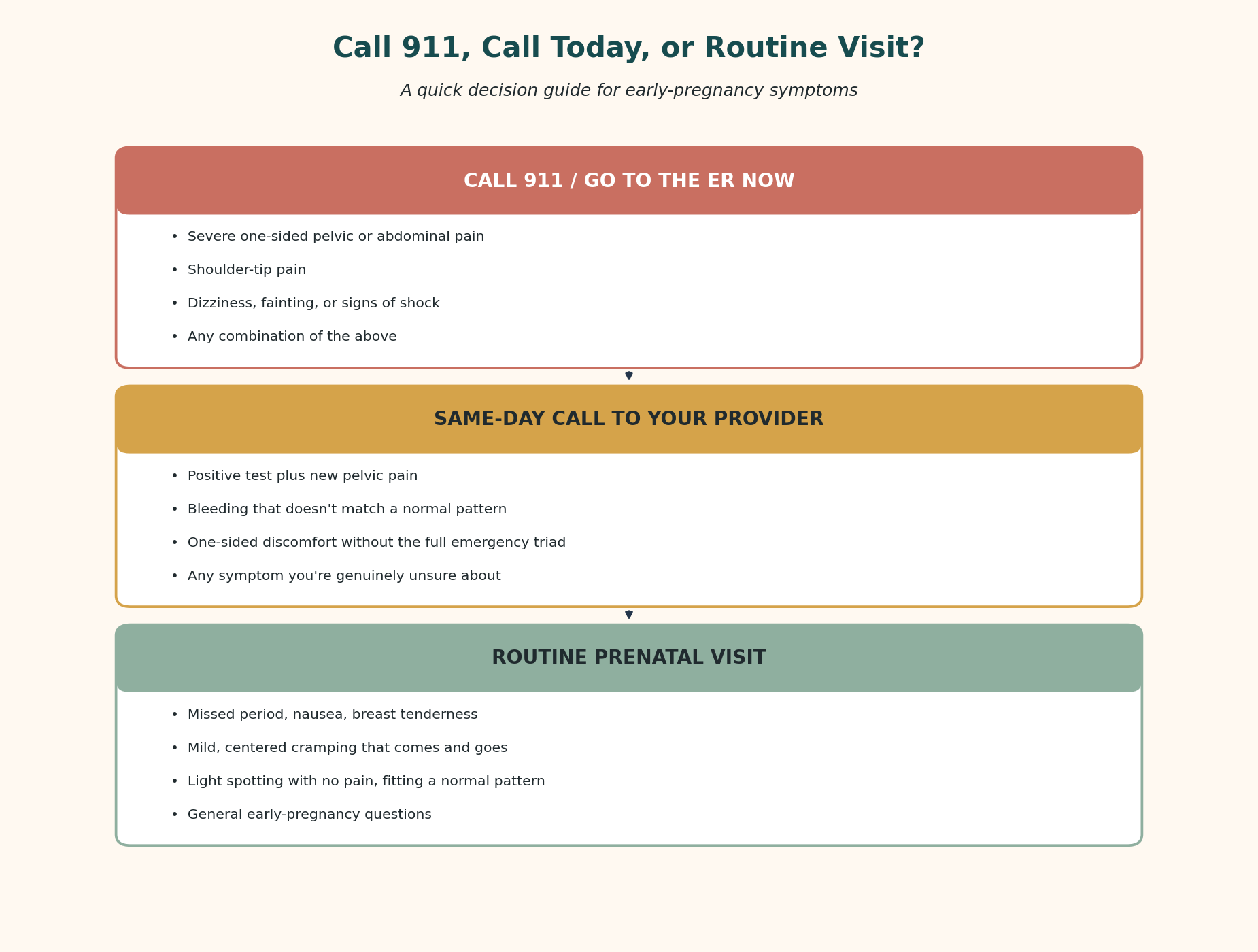
This section pulls the decision logic from across the entire guide into one place, since “which number do I actually call” is the single most practical question underlying everything above.
Call 911 or Go to the ER Immediately
The Non-Negotiable Signs
Severe or worsening one-sided pelvic or abdominal pain, shoulder-tip pain, dizziness, fainting, or any other sign of shock (rapid heartbeat, pale or clammy skin) — alone or, especially, in combination — mean emergency care now, covered in full detail in the red-flag symptoms section earlier in this guide. This applies whether or not you’ve confirmed you’re pregnant yet, whether or not you’re currently in treatment for a diagnosed ectopic pregnancy, and whether or not the pain feels “probably fine.”
Don’t Wait for a Callback
If you’ve called your provider’s office about these specific symptoms and haven’t heard back within a short window, don’t keep waiting by the phone — go to the emergency room directly. A callback delay is a scheduling issue; the symptoms themselves don’t wait for scheduling.
Same-Day Call to Your Provider
Positive Test Plus Any Concerning Symptom
A positive pregnancy test combined with new pelvic pain, any bleeding that doesn’t fit the normal pattern described in our implantation bleeding guide, or any symptom that feels meaningfully different from ordinary early-pregnancy discomfort warrants a same-day call, even if nothing about it rises to the emergency-triad level covered above.
Bleeding or Pain That Doesn’t Fit the Emergency Picture but Still Worries You
You don’t need to be certain something is wrong to justify a same-day call — uncertainty itself is a reasonable basis for one. Providers would rather field a same-day call that turns out to be nothing than have someone wait at home with something that needed earlier attention.
If You’re Not Even Sure You’re Pregnant Yet
Testing and Confirming First
If you haven’t yet confirmed a pregnancy but suspect one and are also experiencing concerning symptoms, test first if you reasonably can, but don’t let an unclear or negative test talk you out of seeking care if the symptoms themselves — particularly the red-flag triad — are present; our pregnancy test guide covers general testing accuracy and timing in depth, and a negative home test does not rule out a pregnancy complication requiring urgent evaluation if your symptoms are significant.
What to Do With a Confusing Test Result
If you’ve gotten inconsistent results across repeat home tests, or a positive test followed by an unexpected negative, our guide to a missed period with a negative pregnancy test covers that specific troubleshooting territory. If any of that confusion is happening alongside pelvic pain or abnormal bleeding, treat the symptoms as the priority and seek same-day evaluation regardless of what your most recent home test showed.
Key takeaways: special situations and timing
- An IUD doesn’t meaningfully raise your overall chance of ectopic pregnancy — it shifts the composition of the rare pregnancies that occur despite one. The same logic applies to tubal ligation.
- Fertility treatment, heterotopic pregnancy, and cesarean scar pregnancy each carry their own nuances worth discussing directly with a specialist familiar with your history.
- Ectopic pregnancy is typically diagnosed between about 4 and 12 weeks of gestation — rarely earlier, since pregnancy itself often isn’t yet confirmable, and rarely still undetected later, since it has usually resolved, been treated, or ruptured by then.
Common Mistakes and Misconceptions
A few recurring patterns in how people misjudge their own symptoms or an ectopic pregnancy diagnosis are worth naming directly, since avoiding them is sometimes as valuable as any single fact in this guide.
Mistakes in How People Interpret Symptoms
“It’s Probably Just Gas or a Cyst”
One-sided pelvic pain has several possible causes that genuinely are benign — an ovarian cyst, gas, round ligament stretching — which is exactly what makes it tempting to default to the harmless explanation. The problem isn’t that those explanations are implausible; it’s that symptoms alone can’t reliably distinguish them from ectopic pregnancy, which is why a same-day evaluation, not a confident guess, is the appropriate response to new, persistent, or worsening one-sided pain in anyone who is or might be pregnant.
“The Bleeding Is Light, So It Can’t Be Serious”
As covered in the early symptoms section above, bleeding associated with ectopic pregnancy can look deceptively light and unremarkable. Using bleeding volume as your main gauge of how worried to be is one of the most common and most dangerous misreadings of this condition — the pain pattern alongside the bleeding is the more reliable signal, not the bleeding’s appearance.
Mistakes in How People Respond
Waiting to See If It Gets Worse
With many pregnancy symptoms, a reasonable default is to wait a day or two and see if things settle. Applying that same default to possible ectopic pregnancy symptoms is the single most common and most consequential mistake covered in this guide — the entire logic of the “why this is an emergency” section above is that this specific condition doesn’t reliably give you a comfortable amount of warning before a true emergency develops.
Assuming a Clear Ultrasound Too Early Rules It Out
As covered in the diagnosis section, an ultrasound performed before hCG has risen high enough, or before gestational age reaches the point where a normal pregnancy would be visible, can look inconclusive or empty without that meaning anything is wrong — and, less intuitively, it also can’t fully rule out an ectopic pregnancy at that same early point. If you had an early ultrasound that didn’t show a clear answer, “wait and repeat” is often the correct next step your provider recommends, not a sign you were dismissed or that nothing more needs to happen.
Questions Worth Asking Your Care Team
Walking into an appointment with specific questions ready can make a confusing, high-stress process feel more manageable, whichever stage of diagnosis or treatment you’re in.
Questions About Diagnosis
If You’re in the “Pregnancy of Unknown Location” Stage
Useful questions include: What’s my current hCG level, and what would make you more or less concerned at my next check? When exactly should I come back, and what symptoms should make me come in sooner than that? What’s your plan if my numbers still aren’t clear at the next visit?
If You’re Told to Come Back for a Repeat Test
Ask specifically: What result would point toward a normal pregnancy, what would point toward loss, and what would point toward ectopic pregnancy? What symptoms, specifically, should prompt me to come in before my scheduled follow-up rather than waiting?
Questions About Treatment
If Methotrexate Is Recommended
Ask: What’s my specific hCG level, and which dosing protocol are we using? What side effects should I expect versus what should prompt a call? When exactly can my partner and I try to conceive again safely?
If Surgery Is Recommended
Ask: Are you recommending salpingostomy or salpingectomy, and why, given my specific anatomy and the condition of my other tube? What does recovery look like specifically for the procedure you’re planning? What does this mean for monitoring in any future pregnancy?
Frequently Asked Questions
Getting Started: The Basics
Is ectopic pregnancy the same thing as a miscarriage?
No. A miscarriage is a pregnancy that implanted normally in the uterus but stopped developing. An ectopic pregnancy implanted in the wrong place from the start — most often a fallopian tube — regardless of whether the tissue itself was developing normally. See the dedicated comparison section above and our miscarriage guide for the full picture of early pregnancy loss generally.
Can an ectopic pregnancy turn into a normal pregnancy if it’s caught early enough?
No. There’s no treatment or waiting period that relocates an ectopic pregnancy into the uterus. Once a fertilized egg has implanted outside the uterine cavity, the pregnancy cannot become viable, regardless of how early it’s identified. Early identification changes your treatment options and safety, not the ultimate outcome for that specific pregnancy.
Risk Factors: Follow-Up Questions
I have several risk factors but no symptoms. Should I be doing anything differently right now?
Having risk factors with no symptoms doesn’t require any different action than any other early pregnancy — confirm the pregnancy, schedule prenatal care promptly, and mention your history clearly so your provider can consider earlier monitoring if appropriate. It does not mean you should expect an ectopic pregnancy or change your day-to-day behavior while waiting.
Does a family history of ectopic pregnancy raise my own risk?
The well-established risk factors are personal history (your own prior ectopic pregnancy, tubal damage, infections, and similar), rather than family history specifically — mention any personal risk factors to your provider regardless of family history.
hCG and Blood Testing Questions
Why does my hCG number matter so much if it’s “just a hormone level”?
Because, as covered in the diagnosis section above, both the expected rate of rise and the point at which an ultrasound should be able to see a pregnancy are directly tied to this number. It’s one of the two central pieces of information (alongside ultrasound findings) that providers use to track whether a pregnancy is developing normally, has been lost, or may be ectopic.
Can stress or anxiety affect my hCG levels and throw off the results?
hCG is produced by pregnancy tissue itself, not by your emotional state, so there’s no established mechanism by which everyday stress would meaningfully alter your results.
Ultrasound Questions
Is a transvaginal ultrasound painful?
Most people describe it as uncomfortable rather than painful — some pressure during probe placement and positioning, but not typically significant pain. Tell the technician or provider if you’re experiencing real pain during the exam, since that itself can be useful clinical information.
Why would my provider use a transvaginal ultrasound instead of the regular kind over my belly?
A transvaginal ultrasound gives a clearer, closer view of very early pregnancy structures — including the uterus, ovaries, and fallopian tubes — than an abdominal ultrasound can provide at this early stage, which is why it’s the preferred tool for locating a very early pregnancy specifically.
Pregnancy of Unknown Location: Follow-Up Questions
How long does the “pregnancy of unknown location” stage usually last?
It varies by individual case — sometimes resolved within days with a repeat ultrasound or two, sometimes longer if hCG trends are themselves ambiguous. Your provider will typically give you a specific timeline for your next check based on your current numbers rather than a generic estimate.
Is it dangerous to wait through the pregnancy-of-unknown-location stage?
For a stable patient with no concerning symptoms, the data cited in the diagnosis section above — rupture occurring in well under 2% even among those ultimately diagnosed with ectopic pregnancy during this kind of monitored surveillance — indicates it’s a genuinely safe approach when done under medical supervision with scheduled follow-up, not an unsupervised wait-and-see.
Expectant Management Questions
If I choose expectant management, how often will I need blood draws?
Your provider will set a specific schedule based on your starting hCG level and how it’s trending, typically every few days initially. This isn’t a one-time decision — it’s an ongoing monitoring relationship until your numbers confirm resolution.
Can I change my mind partway through expectant management and switch to methotrexate or surgery?
Yes — expectant management is reassessed continuously based on your symptoms and hCG trend, and switching to active treatment is always an option if your numbers aren’t resolving as expected, if you develop symptoms, or if you simply decide the waiting itself isn’t right for you.
Methotrexate: Practical Questions
How many injections of methotrexate will I need?
It depends on which protocol your provider uses and how your hCG responds — anywhere from a single injection to up to four doses across the different protocols described in the treatment section above, with additional doses given only if your hCG isn’t falling as expected after the prior one.
Can I take Tylenol for pain after methotrexate, or does that interfere too?
NSAIDs like ibuprofen are specifically flagged as something to avoid, since they can reduce methotrexate’s effectiveness; acetaminophen (Tylenol) isn’t part of that specific caution, but confirm directly with your provider what’s appropriate for your situation before taking anything.
Methotrexate: Side Effects and Safety
Is methotrexate the same medication used for cancer or autoimmune conditions?
Yes — methotrexate is used at different doses for several conditions, including certain cancers and autoimmune diseases like rheumatoid arthritis, because of its effect on rapidly dividing cells. The dose and purpose in ectopic pregnancy treatment are specific to this use and don’t carry the same risk profile as higher, longer-term doses used for other conditions.
Will methotrexate affect my hair or make it fall out?
Hair loss (alopecia) is listed as a rare side effect in the doses used for ectopic pregnancy treatment, per ACOG’s clinical guidance — uncommon, but possible. It’s one of several less common effects worth mentioning to your provider if you notice it.
Surgery: Practical Questions
Will I be asleep for ectopic pregnancy surgery?
Yes — laparoscopic and open surgical treatment for ectopic pregnancy are performed under anesthesia, per Mayo Clinic’s patient guidance, not as an awake or local-anesthesia procedure.
How many incisions does laparoscopic surgery involve?
Laparoscopic surgery is performed through several small incisions in the abdomen, typically allowing instruments and a camera to be inserted without the single larger incision an open surgery (laparotomy) would require.
Surgery: Recovery Questions
How long will I be in the hospital after laparoscopic surgery versus emergency open surgery?
Laparoscopic surgery for a stable, unruptured ectopic pregnancy often involves a shorter hospital stay than emergency surgery for a ruptured one, which may require a longer stay depending on how much blood loss occurred and how much monitoring is needed afterward. Your surgical team will give you a specific expected timeline based on what was actually done.
When can I shower or bathe after surgery?
This depends on the specific incisions and your surgeon’s instructions — ask directly before you leave the hospital or at your follow-up visit, since guidance can vary by exact surgical technique and any drains or dressings involved.
Pain: What’s Normal and What Isn’t
How do I tell the difference between normal post-treatment pain and a new emergency?
The distinguishing features covered throughout this guide stay the same: pain that’s mild-to-moderate, expected for your specific treatment, and not accompanied by shoulder pain, dizziness, or fainting is more likely an expected part of recovery. Pain that’s severe, rapidly worsening, or accompanied by those other signs warrants the same emergency response regardless of where you are in treatment or recovery.
Is cramping after methotrexate the same as the “expected pain” mentioned earlier?
It can be — mild to moderate cramping or abdominal discomfort 2 to 3 days after a methotrexate dose is a recognized, expected effect, as covered in the treatment section above. If you’re unsure whether what you’re feeling fits that expected pattern or something more concerning, call your provider rather than trying to decide alone.
Bleeding Questions
Is spotting after methotrexate treatment normal?
Vaginal spotting is listed among the recognized effects of methotrexate treatment by ACOG’s clinical guidance. As with pain, spotting that’s light and doesn’t worsen is more consistent with an expected effect; heavy bleeding or bleeding accompanied by the red-flag signs described earlier in this guide should prompt the same urgent response regardless of recent treatment.
How much bleeding is too much after surgery?
Soaking through a pad within an hour, passing large clots, or bleeding that’s steadily increasing rather than tapering are patterns worth reporting to your surgical team promptly. Ask specifically what threshold they want you to call about before you’re discharged, since individual guidance can vary.
The Emergency Room Experience
What tests will the ER likely run if I go in with suspected ectopic pregnancy symptoms?
Expect a pregnancy test if one hasn’t already confirmed pregnancy, quantitative hCG blood work, a pelvic exam, and a transvaginal ultrasound, along with blood tests checking for anemia or significant blood loss, consistent with the diagnostic approach described in the diagnosis section above.
Should I eat or drink before going to the ER in case I need surgery?
If there’s a real possibility of needing surgery soon, it’s generally safer to avoid eating or drinking once you’re heading to the ER, since an empty stomach is preferred for anesthesia safety. Don’t delay seeking care to address this, though — getting there promptly matters more than this detail, and staff will guide you once you arrive.
Emotional and Mental Health Questions
Is it normal to feel relieved and devastated at the same time?
Yes — feeling relief that a dangerous medical situation is resolved alongside genuine grief over the pregnancy loss is a common and completely normal combination, not a contradiction you need to resolve. Both feelings can be true at once.
How long is too long to still be grieving this?
There’s no fixed timeline that applies to everyone. Mayo Clinic describes a grief process that can take several weeks as within the normal range; if intense grief, anxiety, or distress is persisting well beyond that and significantly affecting your daily functioning, that’s worth raising with your provider for a possible counseling referral, as covered in the emotional impact section above.
Planning for a Future Pregnancy
How soon after methotrexate can my partner and I start trying to conceive again?
FDA labeling recommends waiting at least one full ovulatory cycle after methotrexate treatment, with some providers recommending a longer window (some suggest around three months) out of additional caution, as covered in the treatment section above. Confirm the specific timing your provider recommends based on your treatment and hCG resolution.
How soon after surgery can we start trying again?
General guidance, including from Cleveland Clinic, suggests waiting around three months to allow the affected tube time to heal and to reduce the risk of another ectopic pregnancy, though your surgeon may have a specific recommendation based on your particular procedure and recovery.
Fertility Treatment and IVF-Specific Questions
Does IVF cause ectopic pregnancy, or does it just reveal an existing risk?
It’s more the latter — as covered in the risk factors section above, the association largely reflects that many people pursuing IVF already have tubal-factor infertility or other underlying risk factors, plus the effect of transferring more than one embryo in some cycles, rather than IVF directly causing ectopic pregnancy through some separate mechanism.
Does transferring a single embryo instead of multiple embryos lower ectopic pregnancy risk?
Reducing the number of embryos transferred reduces the chance of a heterotopic pregnancy specifically (since that requires more than one embryo implanting), though it doesn’t eliminate ectopic pregnancy risk entirely, since any single transferred embryo can still implant ectopically regardless of how many were transferred.
IUD-Specific Follow-Up Questions
Should I have my IUD removed immediately if I get a positive test?
This is a decision to make with your provider based on your specific situation, including whether the pregnancy is confirmed to be in the uterus or elsewhere, and isn’t something to decide or do on your own. Contact your provider promptly, as covered in the special situations section above, rather than attempting removal yourself.
Does an IUD increase my overall chance of getting pregnant at all, ectopic or otherwise?
No — IUDs are highly effective contraception, meaning they substantially lower your overall chance of any pregnancy, ectopic or otherwise, compared with no contraception. The statistic about IUD pregnancies skewing ectopic describes the composition of the rare pregnancies that do occur, not an increase in your overall pregnancy risk.
Heterotopic and Cesarean Scar Pregnancy: Follow-Up Questions
If my ultrasound confirmed a normal pregnancy in my uterus, do I still need to worry about heterotopic pregnancy?
For most people, no — heterotopic pregnancy is rare outside the context of multiple embryo transfer during fertility treatment. If you conceived through IVF with more than one embryo transferred, it’s reasonable to confirm with your provider that a thorough check for an additional, ectopic pregnancy was part of your ultrasound, as covered in the special situations section above.
Can cesarean scar pregnancy happen after just one prior cesarean, or does it require multiple?
It has been reported after a single prior cesarean, though a specialist can speak to your individual risk based on your surgical history.
Myths and Misconceptions, Addressed Directly
Myth: Ectopic pregnancy only happens to people with obvious risk factors.
False — as covered in the risk factors section above, roughly half of all cases occur with no identifiable risk factor at all. Anyone who is pregnant should know the warning signs, regardless of their personal risk profile.
Myth: If my pregnancy test is strongly positive, that rules out ectopic pregnancy.
False — a home pregnancy test detects hCG, which an ectopic pregnancy produces just like a normally implanted one. Test strength or speed of a positive result says nothing about where the pregnancy is located.
Glossary of Terms
Diagnosis and Medical Terms
Ectopic pregnancy
A pregnancy that implants and begins growing outside the main cavity of the uterus, most often in a fallopian tube, which cannot develop into a viable, full-term pregnancy.
Tubal pregnancy
An ectopic pregnancy located specifically within a fallopian tube — the most common type, accounting for the large majority of all ectopic pregnancies.
hCG (human chorionic gonadotropin)
The pregnancy hormone detected by pregnancy tests, produced by placental tissue after implantation. Its rate of rise, rather than a single level, is used to help assess whether an early pregnancy is developing typically.
Quantitative hCG test
A blood test that reports an exact hCG number, allowing a provider to track the trend across repeat measurements, in contrast to a home test’s simple positive-or-negative result.
Transvaginal ultrasound
An ultrasound performed with a probe placed in the vagina, giving a clearer image of very early pregnancy structures than an ultrasound performed over the abdomen.
Discriminatory zone (discriminatory level)
The hCG level above which a normally located, intrauterine pregnancy should be visible on transvaginal ultrasound if one exists; current clinical guidance favors a conservatively high threshold to avoid misdiagnosis.
Pregnancy of unknown location (PUL)
A temporary clinical state in which pregnancy is confirmed by hCG but hasn’t yet been located on ultrasound — not itself a diagnosis, but a status that resolves with repeat testing.
Pseudogestational sac
A collection of fluid or blood within the uterine cavity that can resemble a true gestational sac on ultrasound, sometimes seen in association with ectopic pregnancy.
Treatment and Anatomy Terms
Methotrexate
A medication that stops rapidly dividing cells from growing, used by injection to treat an early, unruptured ectopic pregnancy without surgery, in carefully selected candidates.
Expectant management
A monitoring-only approach for selected, asymptomatic cases where hCG is low and falling or plateauing, based on the possibility of spontaneous resolution without medication or surgery.
Salpingostomy
A tube-sparing surgical procedure that removes ectopic pregnancy tissue through a small incision in the fallopian tube, leaving the tube itself in place.
Salpingectomy
A surgical procedure that removes the ectopic pregnancy along with part or all of the affected fallopian tube.
Laparoscopy
A minimally invasive surgical approach using several small incisions and a camera, generally allowing for a shorter recovery than open abdominal surgery.
Laparotomy
Open abdominal surgery through a single larger incision, typically reserved for hemodynamically unstable patients, significant internal bleeding, or when laparoscopic visualization isn’t adequate.
Hemodynamically stable / unstable
A clinical description of whether blood pressure, heart rate, and circulation are holding steady (stable) or showing signs of significant blood loss or shock (unstable) — a key factor in choosing between monitoring, medication, and emergency surgery.
Heterotopic pregnancy
A rare situation in which one embryo implants normally in the uterus while a separate embryo implants ectopically at the same time, seen more often after fertility treatment involving multiple embryo transfer.
Cesarean scar pregnancy
A pregnancy that implants within the scar tissue from a prior cesarean delivery, embedded in the uterine wall rather than the main uterine cavity or a fallopian tube; it cannot develop into a viable pregnancy and requires specialized management.
Shoulder-tip pain
Pain felt in the shoulder or neck caused by internal bleeding irritating the diaphragm and the nearby phrenic nerve, considered one of the more specific warning signs of a ruptured ectopic pregnancy.
The bottom line
An ectopic pregnancy implants outside the uterus — almost always in a fallopian tube — and can never develop into a viable, full-term pregnancy, no matter how normal it feels at first. Most cases are caught through hCG and ultrasound before anything dangerous happens, and treatment ranges from monitoring to a single injection to surgery, with most people going on to have a healthy pregnancy afterward. The one thing worth carrying forward above everything else in this guide: severe one-sided pain, shoulder-tip pain, and dizziness or fainting — together or separately — mean call 911 or go to the ER immediately, not wait and see. If your loss turns out to be a miscarriage rather than an ectopic pregnancy, our miscarriage guide picks up from there with the broader medical and emotional picture of early pregnancy loss.
About pregnancyadoption.com
pregnancyadoption.com publishes free, judgment-free information on pregnancy, pregnancy options, and adoption for anyone trying to understand what’s happening in their body or what choices are available to them. We are not a law firm, an adoption agency, or a medical practice — we’re an independent editorial resource, and we don’t place children, provide legal representation, or profit from which path a reader ultimately chooses.
This article covers a medical emergency-awareness topic and is written to a source-tiering standard (government and medical-authority sources first, established nonprofits second, commercial sources never used as factual authority) and requires medical review by a licensed clinician before publication. Read our full About & Editorial Guidelines page for details on our review process, sourcing standards, and how to report a correction.
Medical and Legal Disclaimer
This article is provided for general educational purposes only and does not constitute medical, legal, financial, or tax advice, and does not constitute adoption-placement services. Reading this content does not create a doctor-patient, attorney-client, agency-client, or any other professional relationship between you and pregnancyadoption.com, its authors, or its reviewers. Always seek the advice of a licensed physician or other qualified health provider regarding a medical condition, a licensed attorney regarding a legal right, and a qualified tax or financial professional regarding cost, benefit, or tax information referenced here. Never disregard or delay seeking professional guidance because of something you have read on this page. If you believe you may be experiencing a medical emergency, call 911 or your local emergency number immediately.
Legal and financial rules referenced in this article vary significantly by U.S. state and change over time. Wherever this article references a state-variable legal or financial rule, it deliberately avoids stating a specific figure as universal and instead points to an actively maintained source or a licensed professional. We make reasonable efforts to verify accuracy but make no warranty, express or implied, as to the completeness, reliability, or timeliness of any information on this page. Links to third-party websites are provided for convenience only; we do not control and are not responsible for the content, accuracy, or privacy practices of external sites.
To the fullest extent permitted by applicable law, pregnancyadoption.com and its authors, editors, and reviewers disclaim all liability for any loss, injury, or damage of any kind arising from reliance on the information in this article. Read our full Medical and Legal Disclaimer for complete terms.
Sources and further reading
This guide draws on patient-education and clinical guidance from the following organizations. Individual circumstances vary — use this guide to prepare good questions for your own health care provider, not as a substitute for individualized medical advice.
- American College of Obstetricians and Gynecologists (ACOG) — Practice Bulletin No. 191: Tubal Ectopic Pregnancy
- Mayo Clinic — Ectopic Pregnancy: Symptoms & Causes
- Mayo Clinic — Ectopic Pregnancy: Diagnosis & Treatment
- MedlinePlus (National Institutes of Health) — Ectopic Pregnancy
- Cleveland Clinic — Ectopic Pregnancy: Causes, Symptoms & Treatment
- CDC, Morbidity and Mortality Weekly Report — Ectopic Pregnancy — United States, 1990–1992 (historical surveillance data, 1970–1989 trends)
- CDC, Morbidity and Mortality Weekly Report — Current Trends Ectopic Pregnancy Surveillance, United States, 1970–1989
